


Understanding the Significance of Ekadashi
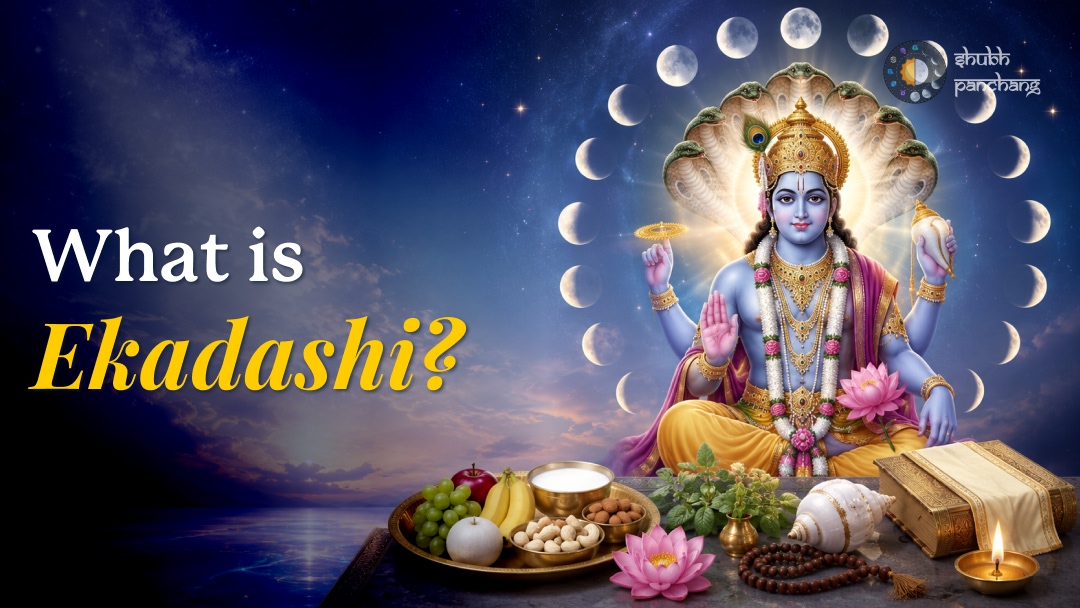
Ekadashi is the eleventh lunar day (Tithi) of each of the two lunar phases occurring in a Hindu calendar month—the Shukla Paksha (waxing moon) and the Krishna Paksha (waning moon). There are typically 24 Ekadashis in a calendar year, though this number increases to 26 during an Adhik Maas (intercalary month). This day is widely regarded as one of the most auspicious times for spiritual discipline, fasting, and the worship of Lord Vishnu, serving as a period for internal purification and devotional focus.
Etymology and Meaning of the Term
The word Ekadashi is a Sanskrit term derived from 'Eka', meaning one, and 'Dasha', meaning ten, which together signify the 'eleventh' day of the lunar fortnight. In the Vedic tradition, this day is not merely a numerical date but a personified energy that assists devotees in conquering their senses. According to the Padma Purana, observing the Ekadashi Vrat helps a person transcend the influence of the eleven senses (five sense organs, five organs of action, and the mind), leading to heightened consciousness and spiritual clarity.
The Divine Connection with Lord Vishnu
Lord Vishnu is the presiding deity of Ekadashi, and the day is often referred to as 'Hari Vasara' or the day of Lord Hari. Devotees observe this fast to please Vishnu and seek his blessings for spiritual growth, peace, and eventual liberation from the cycle of rebirth. The spiritual framework suggests that on this day, the mind and body are more receptive to devotional practices, making it an ideal time for chanting, meditation, and reading sacred texts associated with the preservation of the universe.
The Mythological Origin of Ekadashi
The origin of Ekadashi is narrated in several Puranas, most notably the story of the goddess Ekadashi emerging from Lord Vishnu to slay the demon Mura. During the Krita Yuga, a powerful demon named Mura terrorized the three worlds, prompting the Devas to seek Vishnu's protection. While Vishnu was resting, a divine female power manifested from his energy and defeated the demon. Pleased by her prowess, Vishnu named her Ekadashi and granted a boon that those who honor her by fasting on this day would be cleansed of their past misdeeds and gain divine merit.
Spiritual Benefits and Inner Purification
The spiritual significance of Ekadashi lies in the purification of the body, mind, and soul through voluntary restraint. By abstaining from food and sensory distractions, a devotee reduces the 'Rajasic' and 'Tamasic' tendencies within, allowing 'Sattva' (purity and goodness) to flourish. This self-discipline is believed to strengthen the will and foster a deeper connection with the divine. It is considered a holistic practice where the physical act of fasting supports the mental act of meditation, creating a balanced path for spiritual evolution.
Common Types of Ekadashi Fasting
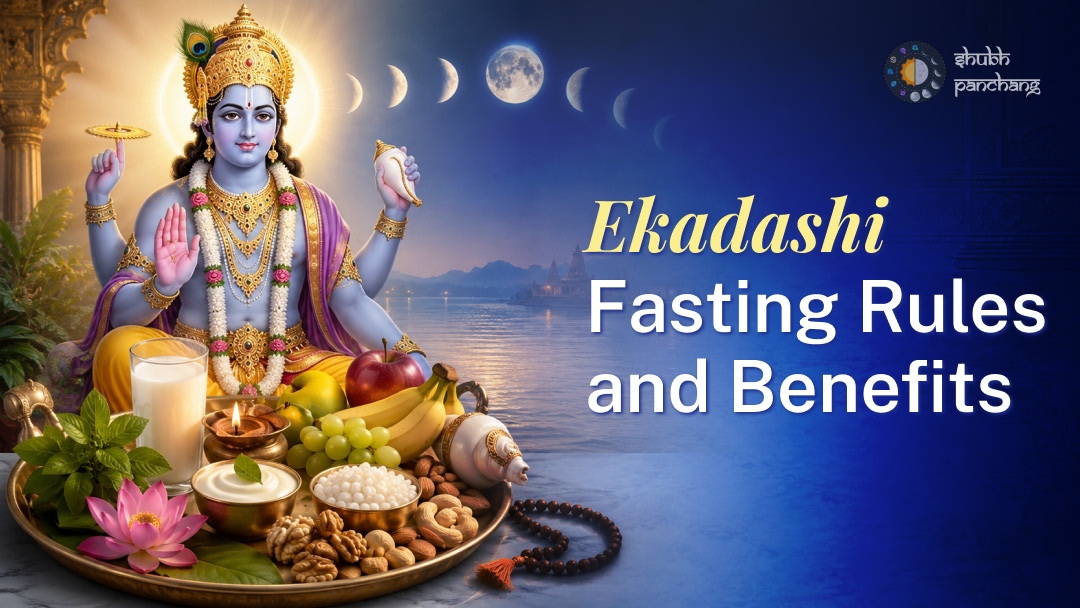
Devotees observe the Ekadashi fast in various ways depending on their health, tradition, and level of spiritual commitment. The most rigorous form is the 'Nirjala' fast, which is observed without consuming even a drop of water, such as the famous Bhim Ekadashi/ Nirjala Ekadashi. Other common methods include 'Phalahari' fasting, where one consumes only fruits, milk, and nuts, or a 'Sattvic' fast that avoids prohibited grains and legumes while allowing specific fasting-friendly ingredients.
Traditional Rituals and Observances
Rituals on Ekadashi typically begin with an early morning holy bath (Snana) to purify the body before starting the puja. Devotees light a ghee lamp, offer yellow flowers, and perform Aarti to Lord Vishnu, often reciting the Vishnu Sahasranama or the Bhagavad Gita. Visiting a Vishnu temple and spending the night in 'Jagran' (devotional vigil) are traditional practices aimed at keeping the mind constantly fixed on the divine. Avoiding negative speech, anger, and worldly distractions is considered as important as the physical fast itself.
Dietary Rules and Prohibited Foods
Dietary discipline is a central pillar of Ekadashi, with the primary rule being the total avoidance of grains and cereals like rice, wheat, and lentils. Tradition holds that certain negative energies reside in grains on this day, making them unsuitable for consumption by seekers. Onions, garlic, and heavy spices are also excluded from the diet. Instead, devotees may consume 'Sama' rice, sabudana, buckwheat (kuttu), water chestnut flour (singhara), fruits, and dairy products to maintain their energy while keeping the digestive system light and pure.
Importance of Dwadashi and Parana
The completion of the Ekadashi fast occurs on the following day, known as Dwadashi, through a ritual called Parana. It is essential to break the fast after sunrise and within the specific Parana window calculated according to local sunrise timings. Before breaking the fast, it is customary to perform a short puja and offer food or charity to the needy or to Brahmanas. For specific timing details, one should refer to the local calendar for dates like Varuthini Ekadashi to ensure the ritual is completed correctly.
Scientific and Ayurvedic Perspective
From an Ayurvedic standpoint, Ekadashi fasting provides a necessary periodic rest to the digestive system, helping to detoxify the body and improve metabolic efficiency. Many believe that the lunar cycles influence the fluid levels in the human body, similar to the tides in the ocean. Fasting during the eleventh day of the lunar cycle helps maintain biological equilibrium, reduces bloating, and enhances mental clarity. This ancient practice aligns with modern understanding of intermittent fasting as a tool for cellular repair and mental discipline.
Major Ekadashis and Modern Relevance
While every Ekadashi is holy, certain ones carry immense regional and spiritual importance, such as Devshayani Ekadashi, which marks the start of the four-month holy period of Chaturmas. In the modern world, Ekadashi serves as a vital reminder of the importance of simplicity, self-control, and mindfulness. It offers a structured way for individuals to disconnect from modern stressors and reconnect with their inner selves, proving that these ancient Vedic rhythms remain deeply relevant for holistic well-being today.