


The Role of Panchang in Family Traditions
Panchang is an essential part of Hindu tradition used to determine auspicious dates, festivals, vrats, and timings for important family rituals and ceremonies. Families traditionally consult a Panchang before performing rituals because of the Vedic belief in aligning life events with favorable natural and celestial rhythms. According to the Surya Siddhanta, time is not merely a linear progression but a series of cycles influenced by the movements of the Sun and Moon. By selecting a time that matches these rhythms, practitioners believe they can foster harmony and success for the ceremony. This practice ensures that significant milestones, from naming a child to moving into a new home, begin on a foundation of clarity and positive intent rather than during chaotic or unfavorable periods.
Five Components: Understanding Tithi and Nakshatra
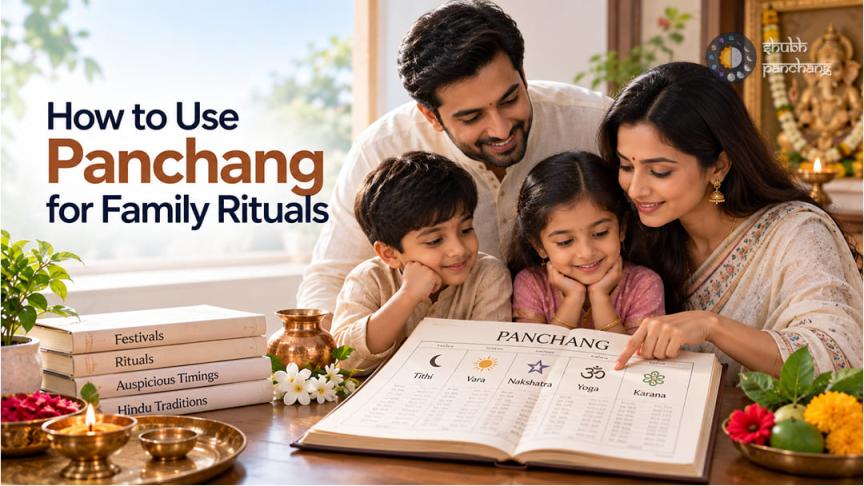
The word Panchang translates to 'five limbs,' referring to the five distinct elements of timekeeping that influence a day's quality. These five components are Tithi (lunar day), Vara (weekday), Nakshatra (constellation), Yoga (mathematical union), and Karana (half of a tithi). Each element plays a specific role in identifying a shubh muhurat for family events. For instance, the Tithi indicates the phase of the moon, which is vital for festivals and vrats, while the Nakshatra determines the emotional and mental temperament of the day. In the Muhurta Chintamani, specific nakshatras are prescribed for activities like wearing new clothes or starting education. Understanding these five pillars allows a family to see beyond the basic date and understand the nuanced characteristics of a specific hour.
Common Family Rituals Requiring Shubh Muhurat
Hindu life is marked by various Sanskaras or rites of passage that require precise timing to be most effective. A naming ceremony (Namkaran), for example, is typically performed on the 11th or 12th day after birth, provided the Nakshatra is favorable. Other critical events include Annaprashan (the first feeding of solid food), Mundan (first haircut), and Upanayanam (sacred thread ceremony). Marriage ceremonies and engagements are perhaps the most well-known events where families meticulously check the Panchang to ensure compatibility and longevity. Additionally, rituals like Griha Pravesh (housewarming), baby showers, and even Shraddha (ancestor rituals) follow specific lunar rules. Using accurate Panchang utilities helps families avoid the Holashtak period before Holi or the Kharmas period, during which many auspicious ceremonies are traditionally paused.
Critical Timings: Rahu Kaal and Abhijit Muhurat
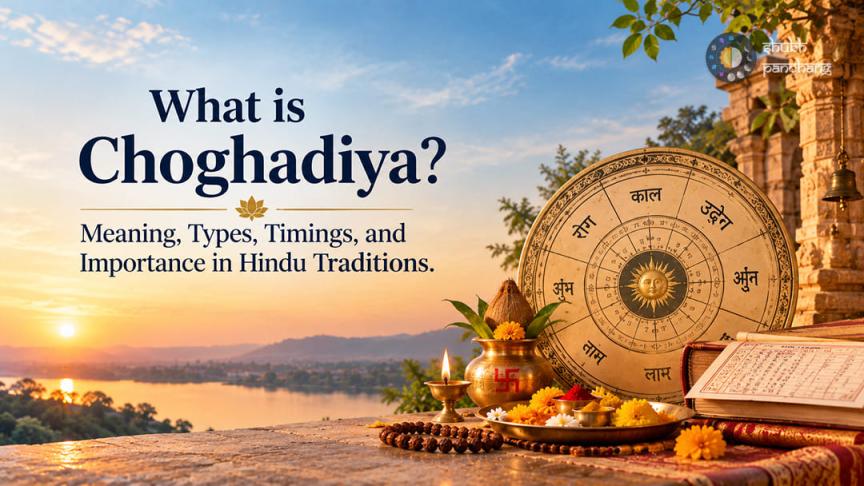
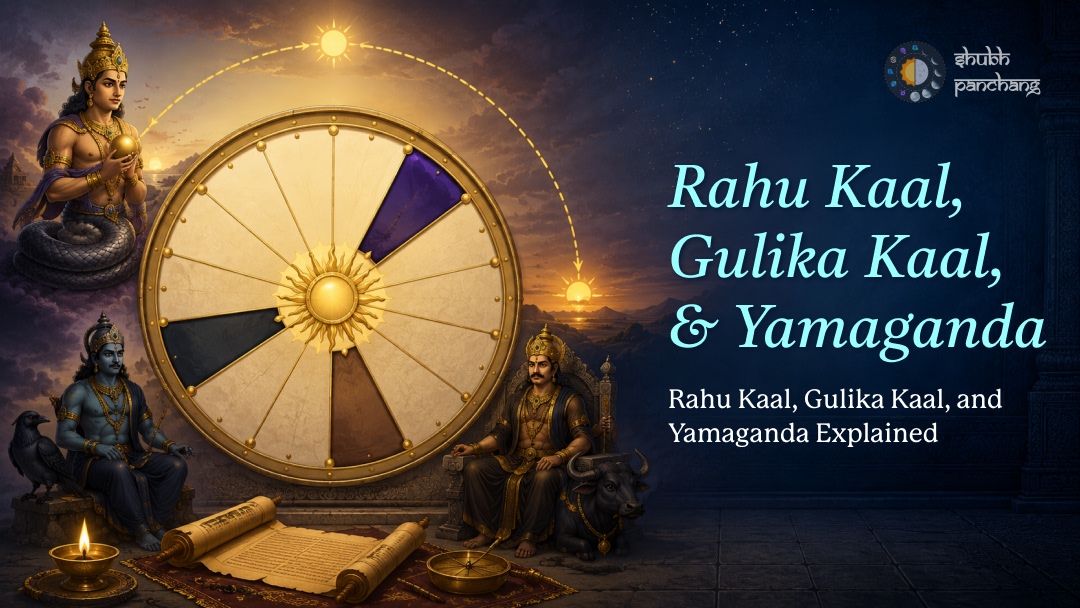
Beyond the general quality of the day, certain specific windows of time are prioritized or avoided in Hindu households. Rahu Kaal is a period lasting approximately 90 minutes each day that is considered inauspicious for starting new ventures or performing major rituals; it is the time when the shadow planet Rahu is said to exert its influence. Conversely, the Abhijit Muhurat, occurring around midday when the Sun is at its peak, is considered highly auspicious and can often override minor negative planetary influences. Families also frequently consult the daily Choghadiya timings to find specific shubh (good), amrit (best), or labh (gain) windows for smaller tasks like buying jewelry or signing documents. For spiritual practices, the Brahma Muhurat—roughly 1.5 hours before sunrise—is favored for its calm and sattvic qualities, as noted in several Puranic texts.
Why Location and Regional Tradition Matter
A common mistake for beginners is using a generic calendar without considering their specific location. Because the Panchang is based on the Drik Ganit (दृक् गणित) method, which relies on actual astronomical observations of sunrise and sunset, timings vary significantly between cities. A Tithi might end at 10:00 AM in Delhi but at 10:45 AM in Kolkata due to the difference in solar positions. Furthermore, India follows different regional calendar systems: the Purnimanta system (month ends on Purnima) is common in North India, while the Amanta system (month ends on Amavasya) is followed in South and West India. When calculating the auspicious Hora periods or Vara, these local variations are critical for accuracy. Consulting a location-specific tool ensures that the rituals are performed exactly when the planetary alignments are in place for that specific geography.
Step-by-Step Guide to Selecting a Ritual Date
Selecting a date for a family ritual can be simplified into a three-step process for beginners. First, identify the desired month and check for general 'Shubh' days for that specific ritual, such as Vivah (marriage) or Mundan muhurats listed in the calendar. Second, check for major 'Doshas' or avoidable periods like Rahu Kaal or Panchak, which may restrict certain activities. Third, confirm the specific Tithi and Nakshatra to ensure they align with the family's requirements. For example, a Friday (Shukravar) paired with a 'Shubh' Choghadiya is often preferred for buying a new vehicle or beginning a business. This systematic approach, often referred to as the 3-Check Muhurat Method, helps families move from confusion to clarity. It is always recommended to cross-reference these findings with a local priest or an online almanac that provides precise ending times for Tithis and Nakshatras.
Overcoming Misconceptions and Modern Usage
One of the most common misconceptions is that the Panchang is intended to create fear or anxiety about 'bad luck.' In reality, traditional texts like the Nirnaya Sindhu present these timings as a guide to help humans act in sync with the environment, much like a gardener plants seeds during the right season. It is a tool for mindfulness and devotion rather than a system of superstition. In the modern era, families no longer need to carry heavy printed almanacs; they can access real-time data through mobile apps and websites. These platforms provide instant access to daily Tithi, sunrise-sunset data, and specialized muhurats, making it easier for the younger generation to preserve their cultural heritage. Ultimately, using the Panchang helps celebrate life’s milestones with a sense of gratitude and connection to the vast cycles of time defined by Vedic wisdom.