


What is Sankranti in the Hindu Calendar?
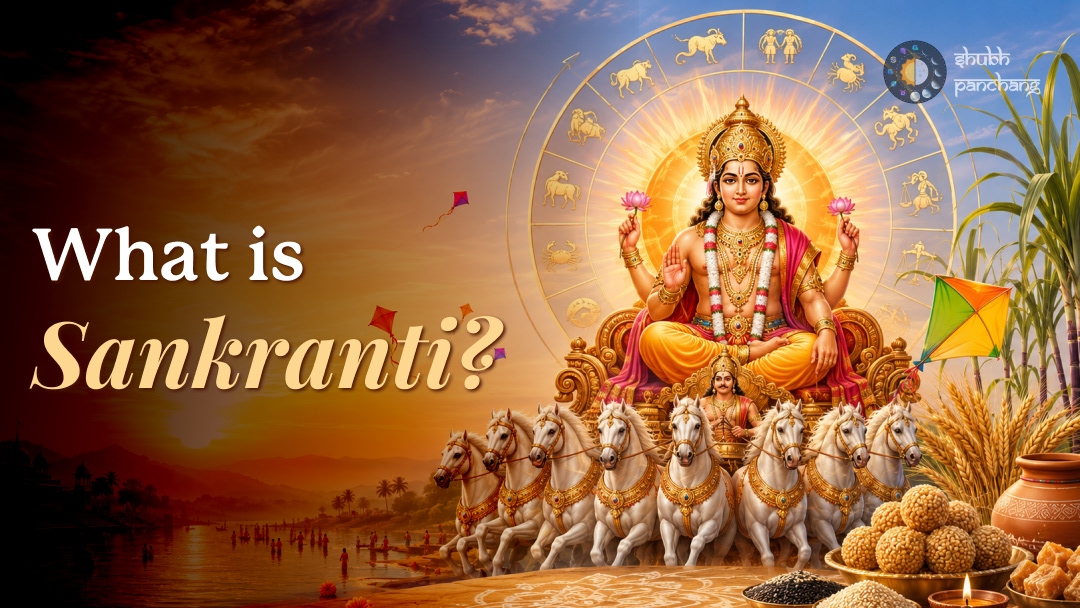
Sankranti refers to the specific moment when the Sun transits from one zodiac sign (Rashi) to another in the Hindu solar calendar. There are twelve Sankrantis in a single solar year, each marking the commencement of a new solar month. While the lunar calendar focuses on the movement of the Moon (tithis), the solar calendar, as described in the Surya Siddhanta, relies on these solar ingress points to define time. These transits are considered highly significant in Vedic timekeeping because they represent a shift in the celestial energy affecting the Earth. Among the twelve, Makar sankranti | Uttarayan is the most widely celebrated, though every Sankranti carries its own unique religious and astronomical weight.
Etymology and Literal Meaning of Sankranti
The word Sankranti is derived from the Sanskrit root 'Sankramana', which signifies movement, transition, or the act of passing from one place to another. In the context of Vedic astrology and astronomy, it denotes the Sun's entry into a new house of the zodiac. Traditionally, these transitions are viewed as periods of change where the old cycle ends and a new one begins. According to Hindu scriptures like the Dharmasindhu, the time immediately preceding and following the actual moment of transit is considered particularly auspicious for spiritual activities, charity, and purification rituals. This transition is not merely a physical event in the sky but is believed to have a profound impact on the human psyche and the environment.
Astronomical Basis of Solar Transits
Sankranti is fundamentally an astronomical event based on the Sun’s apparent path along the ecliptic through the twelve constellations of the zodiac. Unlike lunar months which vary in length, solar months are determined by the time it takes the Sun to cross 30 degrees of the zodiac. Hindu astronomy uses the Sidereal zodiac (Nirayana), which accounts for the precession of the equinoxes. This differs from the Tropical zodiac used in Western astrology. The twelve Sankrantis are categorized into four groups based on the Sun’s position: Two Ayanas (Makar and Karka), two Vishuva (Mesha and Tula), and eight others known as Vishnupadi and Shadshitimukhi Sankrantis. Each of these categories dictates different types of ritualistic observances and medicinal recommendations.
Makar Sankranti: The Transition into Capricorn
Makar Sankranti occurs when the Sun enters the zodiac sign of Capricorn (Makara) and typically falls on January 14th or 15th every year. This specific transit marks the beginning of the Sun's northward journey, known as Uttarayan. Astronomically, this period coincides with the gradual increase in daylight hours in the Northern Hemisphere. In the Bhagavad Gita and various Puranas, Uttarayan is described as a period of light and path to liberation. It symbolizes the end of the dark phase of winter and the arrival of a period filled with warmth and growth. Because it signals the change in season and the start of the harvest, it is celebrated with immense fervor across the Indian subcontinent.
Regional Variations: From Pongal to Lohri
The celebration of the Sun’s transit is a pan-Indian phenomenon, though it is known by diverse names and involves varied local customs. In Tamil Nadu, it is celebrated as Pongal, a four-day harvest festival dedicated to the Sun God and cattle. In Punjab and parts of Northern India, the eve of the transit is celebrated as Lohri, involving bonfires and traditional folk songs to mark the end of the peak winter. In Gujarat, the festival is famously known as Uttarayan, characterized by massive kite-flying competitions. Meanwhile, in Assam, it is called Magh Bihu, and in West Bengal, it is Poush Sankranti. Despite the different names, the core theme remains the same: expressing gratitude for a bountiful harvest and welcoming the Sun's renewed strength.
Spiritual and Cultural Significance of the Transit
Sankranti serves as a reminder of the constant flux of the universe and the importance of aligning oneself with cosmic cycles. Spiritually, it represents the transition from darkness to light and from ignorance to knowledge. The practice of taking a 'Shahi Snan' or holy dip in sacred rivers like the Ganga, Yamuna, or Godavari is central to this day. It is believed that bathing during the 'Punya Kaal' (auspicious window) of the Sankranti washes away past karmas and purifies the subtle body. Charity (Dana) is another crucial pillar; donating sesame seeds, jaggery, clothes, and food to the needy is said to bring manifold blessings. The day encourages a sense of community, forgiveness, and the renewal of social bonds.
Traditional Rituals and Dietary Practices
Rituals on Sankranti are designed to harmonize the human body with the changing environment. Offering water (Arghya) to the Sun God at dawn is a primary practice. In many households, colorful Rangolis are drawn at the entrance to welcome prosperity. The consumption of sesame (Til) and jaggery (Gur) is a signature tradition across India. These ingredients are chosen for their specific properties:
| Ingredient | Traditional Purpose | Significance |
|---|---|---|
| Sesame (Til) | Heat-generating | Balances Vata and Kapha during winter |
| Jaggery (Gur) | Energy-boosting | Provides essential minerals and warmth |
| Khichdi | Easily digestible | Symbolizes a wholesome, balanced start |
The exchange of 'Til-Gul' sweets is accompanied by the phrase 'Til-gul ghya, god god bola', which encourages sweet speech and harmonious relationships for the coming year.
Agricultural Importance and Seasonal Transition
Sankranti is intrinsically linked to the agrarian cycle of India, marking the time when the winter crops (Rabi crops) are ready for harvest or have been sown and show signs of growth. For the farming community, the Sun's transit represents the return of the life-giver, ensuring that the fields will flourish. Rituals often involve worshipping farming equipment and cattle, acknowledging their role in human survival. From an Ayurvedic perspective, this transition period requires a shift in lifestyle. As the Sun moves north, the 'Ritu Sandhi' (junction of seasons) occurs, and traditional practices like oil massages (Abhyanga) and specific seasonal diets help the body adapt to the rising temperature, preventing seasonal ailments.
The Symbolic Movement of Uttarayan
In Hindu philosophy, the northward movement of the Sun, or Uttarayan, symbolizes the ascent of the soul toward higher consciousness. It is often contrasted with Dakshinayan (the southward journey), which is associated with the path of ancestors and worldly duties. The Mahabharata highlights the importance of this period through the story of Bhishma Pitamaha, who waited for the onset of Uttarayan to leave his mortal coil, seeking a peaceful transition. This reflects the deep-rooted belief that the Sun’s position influences the spiritual merit of one's actions. Ultimately, Sankranti teaches the importance of living in harmony with nature's rhythms, recognizing that our lives are inextricably linked to the celestial movements of the cosmos.