


What is Amavasya? Meaning and Definition
Amavasya is the no-moon night in the Hindu lunar calendar, occurring when the Moon is not visible from Earth. It marks the culmination of the Krishna Paksha (dark fortnight) and the start of the Shukla Paksha (bright fortnight). In the Vedic timekeeping system, an Amavasya tithi occurs once every lunar month when the Sun and Moon are at the same celestial longitude. This day is regarded with profound reverence across India, serving as a bridge between the physical and spiritual realms. While the absence of moonlight may seem ominous to some, in the Vedic tradition, it is viewed as a period of stillness and potential. It is a time when the lunar energy is at its lowest, allowing individuals to turn their focus inward. Scriptural texts like the Surya Siddhanta provide the mathematical basis for calculating the exact moment of Amavasya, ensuring that rituals are performed at the precise time when the tithi prevails.
The Astronomical Science Behind Amavasya
The astronomical occurrence of Amavasya is defined by the alignment of the Earth, Moon, and Sun, where the Moon is positioned between the other two bodies. According to the principles of दृक् गणित (Drik Ganit), this alignment means the side of the Moon illuminated by the Sun faces away from our planet, rendering it invisible to the naked eye. This precise conjunction is what defines the end of one lunar month and the transition into the next. In ancient texts like the Surya Siddhanta, this state is described as the conjunction where the Moon's digits are diminished. This dark moon phase is not merely a physical event but a marker for various agricultural, social, and spiritual cycles. Because the gravitational pull of the Sun and Moon are combined on this day, it also influences the Earth's tides and, according to traditional belief, the fluid balances within the human body.
Spiritual Significance and Inner Transformation
The spiritual significance of Amavasya lies in its capacity for deep introspection and the purging of negative energies. In Hindu philosophy, the darkness of the night is not a symbol of evil but a representation of the unmanifested state of the universe. It is considered a powerful window for meditation (Dhyana) and silence (Mauna). Because the external light of the Moon is absent, the mind is encouraged to seek the inner light or Atma-Jyoti. Many practitioners believe that the lack of lunar influence on the mind—which is often associated with emotions—makes this an ideal day to practice self-discipline and mental grounding. It is a day to release old patterns, seek forgiveness, and set intentions for the upcoming waxing cycle. This period of Shoonya or emptiness provides the necessary space for spiritual renewal, allowing devotees to align their personal energy with the natural rhythm of the cosmos.
Amavasya and the Importance of Pitru Rituals
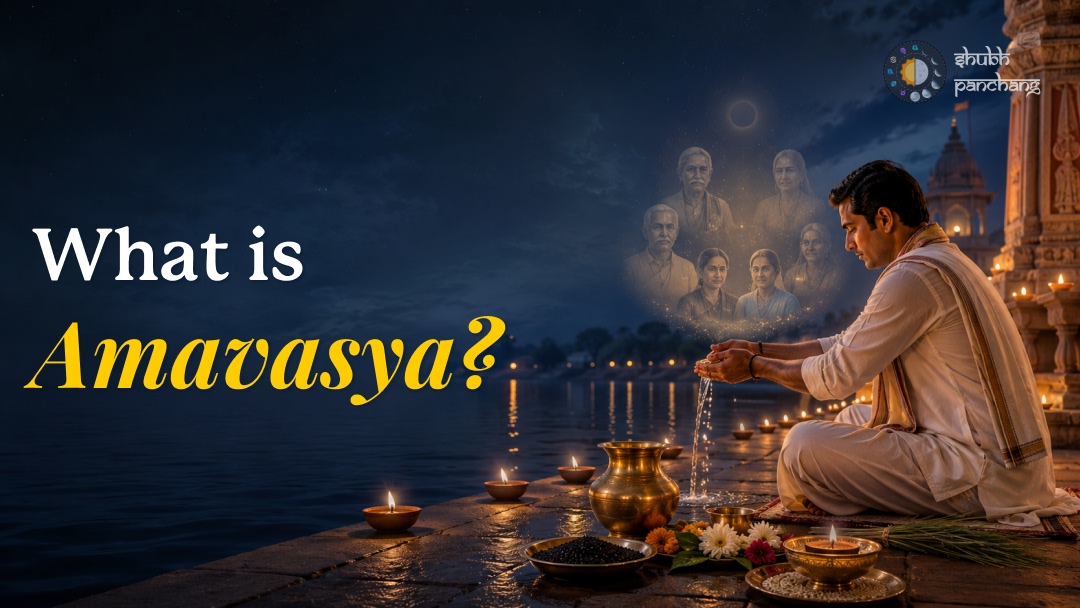
Amavasya is the primary day dedicated to the worship of ancestors, known as Pitrus, in the Hindu tradition. According to the Dharmasindhu and Nirnaya Sindhu, the spirits of our departed forefathers are believed to visit the Earthly plane during this tithi to receive offerings from their descendants. Performing rituals like Tarpan (offering water) and Pind Daan (offering rice balls) is considered essential to ensure the peace and progress of ancestral souls in the afterlife. By honoring the lineage, a devotee seeks ancestral blessings, which are said to bring prosperity, health, and harmony to the family. Mahalaya Amavasya, which falls during Pitru Paksha, is the most significant of these days, though every monthly Amavasya is suitable for these rites. These practices reinforce the concept of Rina or the spiritual debt one owes to their predecessors, emphasizing the continuity of life.
Essential Rituals and Practices for Amavasya
Rituals observed on Amavasya are designed to cleanse the body and spirit through specific acts of devotion and discipline. The day often begins with a holy bath (Snan) in sacred rivers like the Ganga or Yamuna, or by adding a few drops of Ganga Jal to bathing water at home, which is believed to wash away physical and spiritual impurities. Fasting (Vrat) is common, where many observe a partial or full fast to maintain internal purity and focus on prayer. Devotees often light oil lamps (diyas) or incense to dispel the physical darkness and symbolize the presence of the divine. Chanting specific mantras, such as the Gayatri Mantra or the Mahamrityunjaya Mantra, is recommended to stabilize the mind. Acts of Daan or charity, such as donating food, clothes, or grains to the needy, are highly merit-bestowing on this day, as it is believed that charity performed during the dark moon reaches the ancestors.
Deities Worshipped on the New Moon Night
Worshipping specific deities like Lord Shiva, Goddess Kali, and Shani Dev is particularly auspicious on Amavasya. Lord Shiva, who wears the crescent moon on his head, is the lord of time and transformation, making him the ideal deity to worship for overcoming challenges. Goddess Kali, the fierce form of the Divine Mother, is often worshipped during the dark nights to destroy ego and ignorance. Furthermore, since Amavasya is associated with the planet Saturn (Shani), many perform Shani Shanti Puja to alleviate planetary afflictions. Worshipping Shani Dev with mustard oil and black sesame seeds on a Shanishchari Amavasya—an Amavasya falling on a Saturday—is considered highly effective for seeking protection and justice. These prayers help devotees find strength during times when external celestial light is absent.
Important Amavasya Occasions: Diwali
One of the most famous and culturally significant Amavasya observances is Kartik Amavasya, which marks the festival of Diwali, the festival of lights. Despite being the darkest night of the year, it is celebrated with the maximum amount of light to symbolize the victory of knowledge over ignorance. On this day, Goddess Lakshmi is worshipped to invite prosperity and wealth into the household. The spiritual essence of celebrating such a grand festival on a no-moon day highlights the core Hindu philosophy that even in the deepest darkness, the light of the soul can shine brightly. This day also marks the return of Lord Rama to Ayodhya, further solidifying the themes of dharma and the triumph of good over evil.
Regional Customs and the Tradition of Charity
Regional customs across India involve feeding animals as a form of spiritual service and ancestral offering on Amavasya. It is a common practice to offer food to crows, as they are traditionally considered messengers of the Pitrus. Similarly, feeding cows (Gau Seva), dogs, and ants is seen as a way to serve the divine presence in all living beings. In many households, the first portion of the meal is set aside for these creatures before the family eats. This practice fosters a sense of compassion and interconnectedness with nature. In southern parts of India, specific offerings like sesame and water are used in Tila Tarpanam, while in the north, people might visit temples dedicated to their Kuldevi or Kuldevta to seek protection for the entire family line.
Psychological and Ayurvedic Perspectives
From an Ayurvedic and psychological perspective, the lunar cycle is believed to have a significant impact on the human psyche and biological rhythms. Ayurveda suggests that the transition of the moon influences the Soma or cooling energy in the body. During Amavasya, when lunar energy is absent, people may experience a drop in physical energy or a heightened sensitivity in their emotional state. Practicing silence (Mauna) and mindfulness is recommended to prevent the mind from becoming restless. Fasting on this day helps in detoxifying the digestive system, which is thought to be more sensitive during lunar shifts. By aligning one's lifestyle with these natural cycles, individuals can maintain a better balance of their Doshas and achieve a state of mental calmness and clarity.