


Understanding the Essence of Hindu Panchang
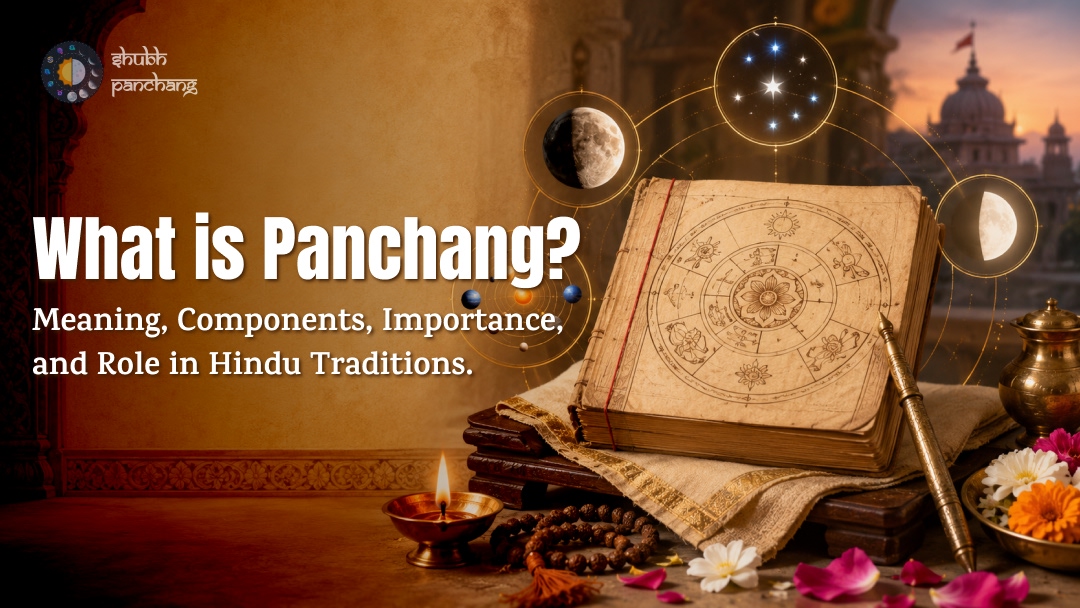
Panchang is the traditional Hindu calendar and astrological system used to determine important dates, festivals, muhurats, and religious observances. It functions as a sophisticated timekeeping tool that synchronizes human activity with the cycles of the sun, moon, and planets. Unlike a standard Gregorian calendar, which tracks solar dates alone, a Panchang provides a comprehensive look at the quality of time, helping devotees understand which moments are conducive to specific spiritual or physical actions. According to the Surya Siddhanta, time is cyclical and divine, and the Panchang acts as a bridge to align daily life with these cosmic rhythms.
The Etymology and Meaning of Panchang
The word Panchang is derived from the Sanskrit terms 'Pancha,' meaning five, and 'Anga,' meaning limbs or parts. This refers to the five essential astronomical elements that comprise the system: Tithi, Vara, Nakshatra, Yoga, and Karana. Historically, texts like the Muhurta Chintamani and Brihat Samhita emphasize that for any astrological calculation to be complete, all five limbs must be considered simultaneously. Each limb represents a different aspect of the celestial arrangement, and together they create a unique energetic signature for every moment of the day. This multi-dimensional approach ensures that religious events and personal milestones are observed at times that are mathematically and spiritually sound.
The Five Essential Components (Panchang Angas)
The five limbs of a Panchang are calculated based on the precise positions of the Sun and the Moon.
1. Tithi (Lunar Day)
A Tithi is determined by the angular distance between the Sun and the Moon. There are 30 Tithis in a lunar month, divided into two fortnights or Pakshas: Shukla Paksha (waxing) and Krishna Paksha (waning).
2. Vara (Weekday)
There are seven Varas, each ruled by a specific planet. For example, Ravivara is ruled by the Sun and Somavara by the Moon.
3. Nakshatra (Lunar Mansion)
The ecliptic is divided into 27 Nakshatras or constellations. The Nakshatra of the day is determined by the position of the Moon in a specific constellation at the time of sunrise.
4. Yoga
Yoga is calculated by adding the longitudes of the Sun and the Moon and dividing them into 27 equal parts. Each Yoga has a specific attribute that influences the day's temperament.
5. Karana
A Karana is half of a Tithi. There are 11 types of Karanas, and they are particularly important for determining the suitability of specific tasks and agricultural activities.
Astronomical Basis and Calculation Methods
The Panchang is rooted in Drik Ganit, a method of calculation based on actual planetary observations. This ensures that the timings for sunrise, sunset, and Tithis are accurate for a specific geographical location. The system accounts for the Earth's rotation and the elliptical orbits of celestial bodies. While traditional scripts like the Surya Siddhanta provide the foundational logic, modern Panchangs use sophisticated mathematical algorithms to provide precise timings for different cities. This astronomical rigor is why a Muhurat for a ceremony in Delhi will differ by several minutes from one in Mumbai, as the local sunrise and sunset are pivotal to the calculations.
Importance of Panchang in Daily Life
Panchang plays an indispensable role in planning Hindu religious and social events. It is the primary tool used to identify auspicious windows for marriage, housewarming (Griha Pravesh), and naming ceremonies. Beyond life events, it dictates the schedule for Vrats (fasts) like Ekadashi and festivals such as Diwali. For many, the daily Panchang is consulted before beginning a journey or a new business venture to avoid inauspicious periods like Rahu Kaal. By checking the Choghadiya or the Abhijit Muhurat, individuals aim to maximize the success and harmony of their endeavors.
Regional Variations Across India
While the fundamental principles remain the same, there are distinct regional variations in how Panchang is calculated and followed. In North India, the Purnimanta system is common, where the lunar month ends on a full moon day. Conversely, in South and West India, the Amanta system is followed, where the month ends on the new moon day (Amavasya). This leads to differences in the start dates of months, although the timing of festivals like the New year or major Vrats remains synchronized. Notable versions include the Gujarati Panchang, Tamil Panchang (Panchangam), and the Bengali Panjika, each incorporating regional solar or lunar nuances.
Modern Usage and Digital Evolution
The accessibility of Panchang has evolved from traditional printed almanacs and temple wall calendars to sophisticated digital platforms. Today, astrology software and mobile applications provide real-time updates based on GPS locations, making it easier for the global Hindu diaspora to follow traditions accurately. These tools often include built-in calculators for Rahu Kaal, Yamaganda, and Gulika Kaal. Despite the shift to digital, the underlying math remains faithful to the ancient Drik Ganit principles. This blend of ancient wisdom and modern technology ensures that the cultural and spiritual heritage of Hindu timekeeping continues to thrive in the 21st century.