
Overview
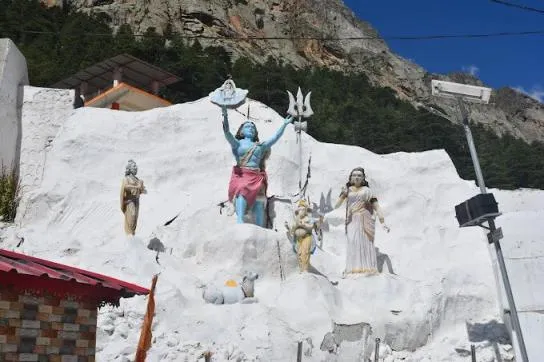
Yamunotri Temple is a Hindu shrine dedicated to the goddess Yamuna, set at about 3,293 metres in the Uttarkashi district of Uttarakhand, close to where the Yamuna River begins its course through the Garhwal Himalayas. It ranks among the four sites of the Chota Char Dham pilgrimage, alongside Gangotri, Kedarnath and Badrinath, and sits as the westernmost of the four, on a flank of the Bandarpunch massif. No road reaches the shrine directly; pilgrims travel by vehicle to Janki Chatti and then walk, ride a pony, or hire a palanquin for the final stretch. The goddess is worshipped here as a black marble image inside the temple's inner sanctum, and her darshan draws pilgrims mainly between May and October, when the shrine is open. For about six months each winter the site lies under snow and closes, a pattern that shapes much of how the pilgrimage circuit is timed.
Legend & Mythology
Temple tradition holds that the site's sanctity goes back to the sage Asit Muni, who is remembered for keeping a hermitage here and bathing daily in both the Ganga and the Yamuna. As old age made the journey to Gangotri too difficult for him, temple accounts describe a stream of the Ganga appearing opposite Yamunotri so that his practice could continue uninterrupted; a spot near the shrine is still pointed to as that stream today. Puranic tradition identifies Yamuna as the daughter of the sun god Surya and the twin sister of Yama, the god of death, which is why she is also called Yami in the Vedas. The peak overlooking the river's glacial source is named Kalind Parvat, an epithet drawn from her father Surya, tying the surrounding geography directly into her parentage. A separate strand of local tradition holds that Shani Dev, worshipped a short distance away in Kharsali village, is Yamuna's brother, and this kinship is re-enacted each year when her image is ceremonially escorted to and from his temple at the start and end of the winter closure.
Historical Journey
The present temple dates to 1839, when it was built under the patronage of Sudarshan Shah, the Tehri Garhwal ruler of that period; a smaller shrine is recorded to have stood at the same spot before this construction. Snow and flood damage struck the structure more than once in the decades that followed, and it had to be rebuilt each time. Regional accounts credit one such rebuilding, later in the 19th century, to Maharani Guleria of Jaipur, whose name is still associated with the shrine's reconstruction. Administration of the temple today falls under the Shri Badarinath-Kedarnath Temple Committee, which has overseen Yamunotri and Gangotri alongside the two larger Char Dham shrines since Uttarakhand restructured its temple governance in 2019. Ritual duties, including the daily puja and the distribution of prasad, are carried out by priests of the Uniyal family, a responsibility that has passed down through generations at the site.
Architecture & Sacred Geography
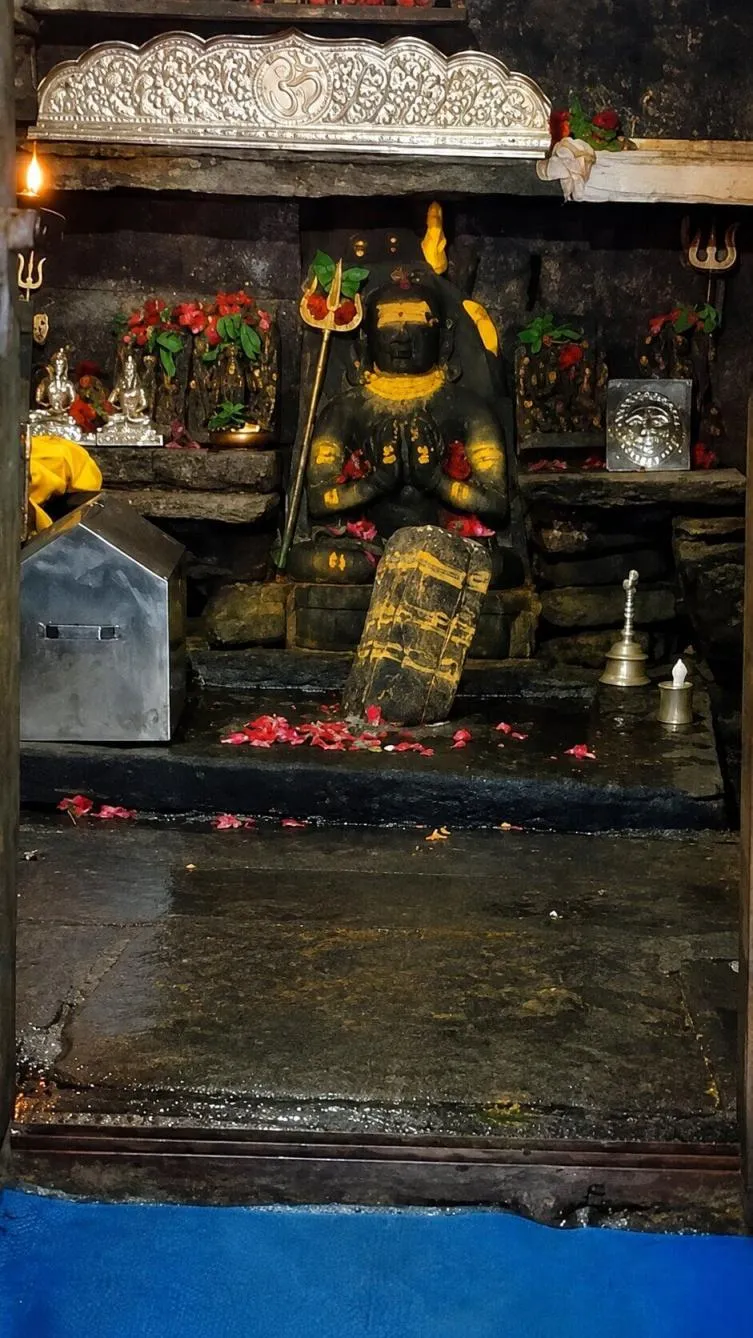
Yamunotri's temple is a compact stone structure with a pyramidal shikhara, the tapering tower that rises above most north Indian temple sanctums, built largely of granite to withstand its high-altitude setting near Bandarpunch. Inside the Garbha Griha, or inner sanctum, sits a black marble image of Yamuna, the focus of darshan for pilgrims who complete the trek. Two hot springs lie close by: Surya Kund, whose water runs close to boiling and is named for Yamuna's father Surya, and Gauri Kund, whose milder water is used for bathing. Near Surya Kund stands the Divya Shila, a rock that pilgrims worship before turning to the main deity. The river's actual glacial source, the Champasar Glacier on Kalind Parvat, lies about a kilometre further up at over 4,400 metres; because that spot is difficult to reach, the temple itself serves as the point where the river is formally worshipped.
Devotee Experience
Reaching Yamunotri is itself part of the pilgrimage, since the trek begins only after the road ends at Janki Chatti, about 6 km short of the shrine, or at Hanuman Chatti, roughly 13 km away by a longer route past Markandeya Tirth. Ponies, palanquins, and porters can be hired at either roadhead for pilgrims who cannot manage the climb on foot. At Surya Kund, many carry raw rice and potatoes tied in muslin cloth and lower them into the hot spring to cook before taking the food home as prasad, a practice unique to this shrine among the Char Dham. Daily worship follows a fixed rhythm, with Mangala Aarti performed in the morning and Shayan Aarti in the evening before the sanctum closes for the night. The shrine's season itself is bookended by ritual, opening on Akshaya Tritiya and closing on Yama Dwitiya, two days after Diwali, when Yamuna's ceremonial image is carried down to Kharsali village to spend the winter at the Shani Dev temple there.
- Kharsali, about 1 km from Yamunotri across the river, home to the goddess's ceremonial winter residence and one of India's oldest Shani Dev temples
- Janki Chatti, about 6 km away, the roadhead where the trek to Yamunotri begins, also known for its own warm spring
- Hanuman Chatti, about 13 km away, the alternate trekhead on the route that passes Markandeya Tirth, associated with the sage Markandeya and the Markandeya Purana
Photography of the temple exterior and surroundings is generally allowed, but as at other Char Dham shrines, visitors are typically asked not to photograph inside the Garbha Griha or during aarti. Modest clothing is expected, and warm layers are advisable given the temple's high-altitude, cold climate, especially in the mornings and evenings. Lodging near the shrine is limited to a few small ashrams and guest houses, and ponies, palanquins, and porters can be hired at Janki Chatti or Hanuman Chatti for the trek. Puja and prasad distribution are conducted by priests of the Uniyal family, and the temple closes to visitors for about six months every winter.
Timings
Timings can vary by season and special occasions - confirm locally before travelling.
Offerings
Devotees typically tie raw rice and potatoes in muslin cloth and cook them in the Surya Kund hot spring, carrying the cooked rice home as prasad, along with flowers offered to the goddess.
Getting there
Yamunotri Temple, Uttarkashi, Uttarakhand
Yog Nagari Rishikesh Railway Station → Yamunotri Temple(By train)
210 kmfrom Yog Nagari Rishikesh Railway Station
The nearest major railhead on the Char Dham route; onward travel to Janki Chatti is by road.
6 kmfrom Janki Chatti
Motorable road ends here; the temple is reached by a roughly 6 km trek on foot, pony, or palanquin.
215 kmfrom Dehradun Jolly Grant Airport
The nearest airport; taxis and buses cover the road distance to Janki Chatti before the trek begins.