
Overview
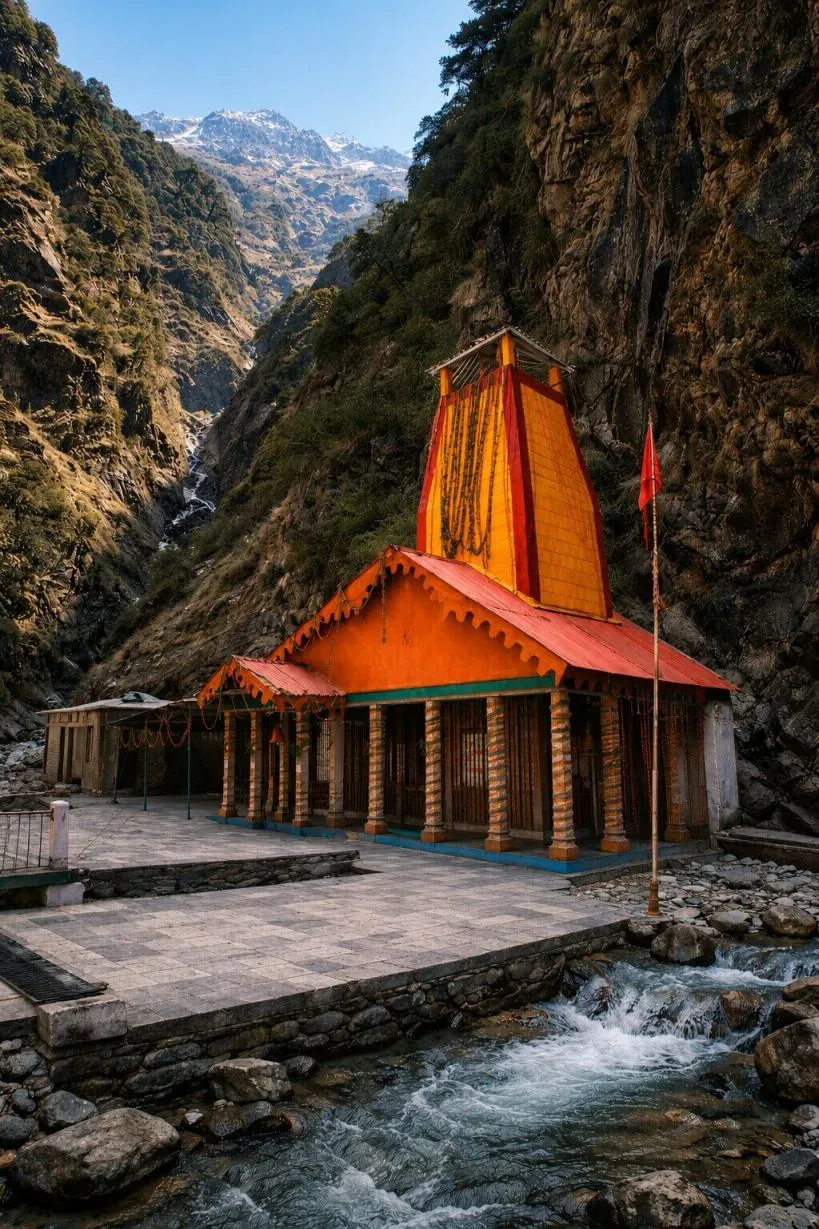
Panchsagar Temple, known locally as the Varahi Devi Temple, is a hillside shrine to the goddess Varahi in Devidhura village, Champawat district, Uttarakhand. It sits at roughly 1,850 metres in a belt of oak and deodar forest, about 45 km from the town of Lohaghat. Varahi is worshipped here as one of the Saptamatrikas, the seven mother-goddesses of Shakta tradition, and local Shakta tradition links the site to the network of Shakti Peethas found across India. On most days a small stream of visitors comes for darshan at the sanctum. Its idol stays veiled year-round. The temple's broader reputation rests on the Bagwal festival, a stone-throwing contest held in its courtyard every Raksha Bandhan. Pilgrims from across Kumaon and neighbouring Nepal converge for it, alongside travellers who combine the visit with other Chand-era temples in the district.
Legend & Mythology
Hindu tradition holds that the network of Shakti Peethas began with the death of the goddess Sati. When her father Daksha held a yagna and pointedly left out her husband Shiva, Sati attended anyway, was insulted, and gave up her life in the sacrificial fire. Shiva, overcome with grief, carried her body across the sky until Vishnu's discus cut it into pieces, and each place where a part fell became a Peetha. Regional accounts count Devidhura among the sites tied to this story, associating it with Panchsagar and the goddess's fallen teeth, though other traditions place that same identification near Varanasi, a reminder that more than one shrine in India lays claim to a given Peetha.
A second, more local legend explains the temple's best-known ritual. Local accounts describe how the goddess once demanded a yearly offering from four Kumaoni clans collectively called the Kham. One year the family in line for the offering was a widow with one grandson. Temple tradition holds that her devotion moved Varahi to spare the boy, asking instead for blood drawn through ritual combat between the clans each year. That exchange, according to the temple's caretakers, is remembered as the origin of Bagwal, the stone fight still staged below the temple walls every Raksha Bandhan.
Historical Journey
Temple tradition attributes the original consecration of the Varahi idol to the Katyuri dynasty, which ruled Kumaon before the Chand kings. Local accounts describe the Katyuri establishing the shrine in forest during a conflict with a group they call the Ruhi. The Chand dynasty, which later ruled Kumaon from Champawat for several centuries, is credited with adding two further idols to the temple, one of Champa Devi and another of a form of Mahakali known locally as Lal Jeebh Wali. The same dynasty's other temple-building is documented a short distance away in Champawat town, where a copperplate inscription dates the completion of the Baleshwar temple complex to 1423 CE. No matching inscription survives for the Devidhura shrine, so its history before recent centuries rests mainly on oral memory kept by its priests and by the four Kham clans who still perform Bagwal. By the twentieth century, the temple had become part of a Kumaoni pilgrimage and hill-station circuit that also took in Lohaghat and the Mayawati Ashram associated with Swami Vivekananda's disciples.
Architecture & Sacred Geography
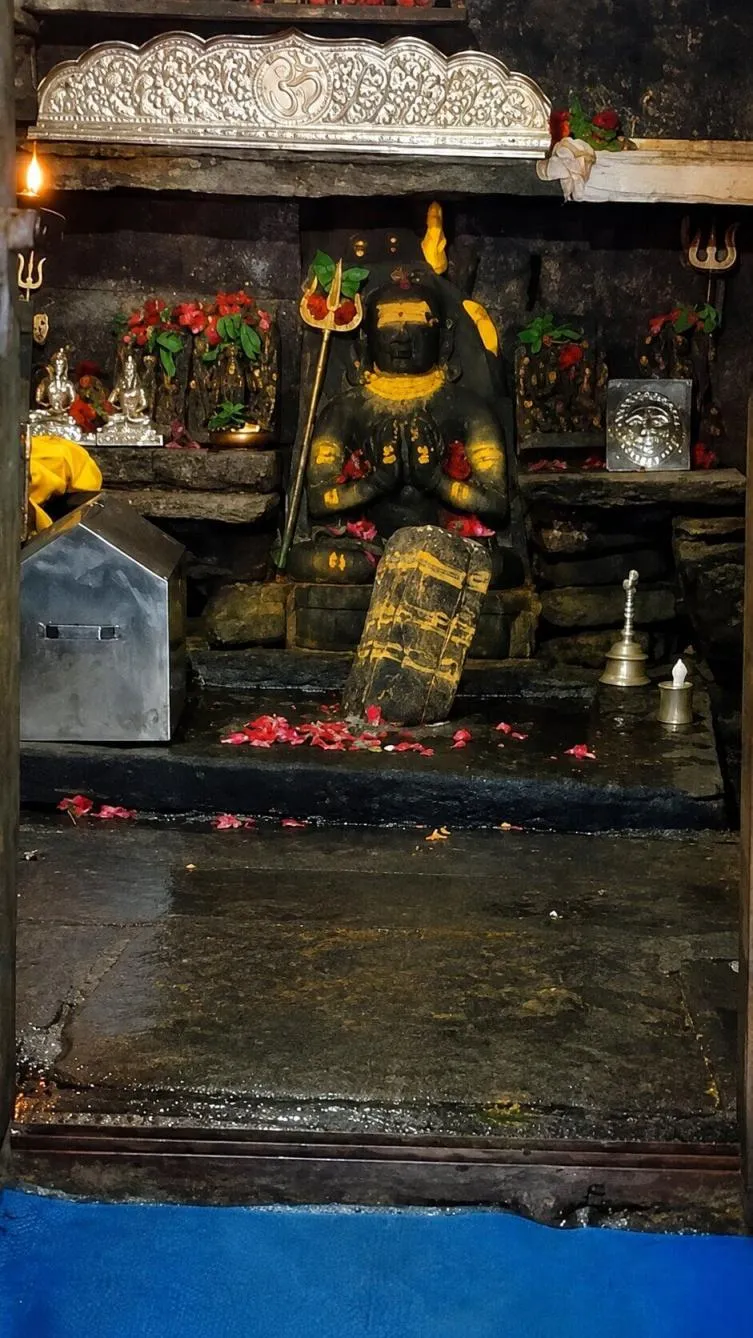
The temple stands on a stone platform about seven feet high, reached by six staircases, with the Garbha Griha, or inner sanctum, set behind a veranda of three North Indian-style arches. A conch-shaped shikhara, the tower rising over the sanctum roof and known locally as Shankhwa-Kaar, marks the shrine from a distance. A two-storey rest house for pilgrims stands beside the sanctum, and oak and cedar forest surrounds the complex, keeping it cool through most of the year. Inside the sanctum, the Varahi idol stays covered year-round; it is uncovered only during the Bagwal festival, when devotees are asked to keep a strip of black cloth over their own eyes while viewing it, following the belief that looking at the goddess directly can cause blindness. Sacred geography here has less to do with a river confluence than with elevation and isolation: at nearly 1,850 metres, the shrine sits apart from Champawat's other Chand-era temples, which cluster around the district headquarters roughly 75 km away.
Devotee Experience
On most days, a visit means darshan of the veiled idol inside a stone sanctum ringed by forest, usually finished within an hour. That changes completely every Shravan, when the Bagwal festival turns the courtyard into the site of a ritual stone fight between four Kumaoni clans, Gahadwal, Chamyal, Balik and Lamgadia. Two sides form, each protected by wooden shields called ferra, and pebbles fly for about twenty minutes until the temple priest calls a halt. In recent years, fruit and flowers have replaced some of the stone-throwing, though the practice continues in parts of the crowd. No deaths have been recorded from the practice despite how it looks from the sidelines, and pilgrims travel in from across Kumaon and from Nepal to watch or take part. Visitors who make the trip often extend it into the wider Chand-era circuit of Champawat district.
- Lohaghat, about 45 km away, a Kumaoni town that serves as the road stop before the climb up to Devidhura
- Baleshwar Temple, about 75 km away in Champawat town, a Chand-dynasty stone temple complex completed in 1423 CE per a surviving copperplate inscription
- Mayawati Ashram, about 50 km away, an Advaita Vedanta retreat founded in 1899 at the request of Swami Vivekananda
- Abbott Mount, about 50 km away, a hill settlement built by a British businessman in 1914 with surviving cottages and a 1942 church
Photography inside the sanctum is generally discouraged out of respect for the tradition that the veiled idol should not be viewed directly. Visitors are advised to check with temple staff before using cameras, especially during the Bagwal festival crowds. Modest, respectful attire is expected, as is customary at Kumaoni hill temples. A two-storey rest house for pilgrims adjoins the temple for those staying overnight. Specific rules on lockers or item deposits are not widely published, so visitors should carry minimal valuables and confirm current procedures with temple staff on arrival, particularly during the crowded Bagwal festival in Shravan.
Timings
Timings can vary by season and special occasions - confirm locally before travelling.
Offerings
Devotees typically offer fruit, flowers and sweets to Varahi. During the Bagwal festival, fruit and flowers are also thrown as part of the ritual, alongside the traditional stone-pelting.
Getting there
Panchsagar Temple, Champawat, Uttarakhand
Tanakpur Railway Station → Panchsagar Temple(By train)
125 kmfrom Tanakpur Railway Station
Buses and shared taxis from Tanakpur climb into the hills toward Champawat and on to Devidhura.
45 kmfrom Lohaghat
Shared taxis and buses run from Lohaghat up to Devidhura, a hill drive of a couple of hours.
180 kmfrom Pantnagar Airport
Taxis from Pantnagar make the mountain drive to Devidhura in roughly five to six hours.