
Overview
Gangotri Temple is a Hindu shrine dedicated to the goddess Ganga, located in Uttarkashi district, Uttarakhand, at roughly 3,100 metres in the Garhwal Himalaya. It sits on the bank of the Bhagirathi, the river that carries the name Ganga only after it joins the Alaknanda at Devprayag further downstream. The temple marks one of the four sites in the Chota Char Dham circuit, alongside Yamunotri, Kedarnath and Badrinath. Pilgrims travel here for darshan of the goddess and to collect water from the point regarded as the river's source. The shrine operates only part of the year, closing around Diwali and reopening on Akshaya Tritiya, since heavy snow cuts off the region through winter. During the closed months, priests carry the idol down to Mukhba village near Harsil, where worship continues until the temple reopens in spring.
Legend & Mythology
Temple tradition traces Gangotri to King Bhagirath, an ancestor of the Ikshvaku dynasty, who performed years of penance to bring the goddess Ganga down from the heavens to earth. His ancestors, the sixty thousand sons of King Sagara, had been reduced to ashes by the sage Kapila's curse, and only Ganga's water could free their souls from that state. The king meditated to persuade her to descend, and when she agreed, the force of her fall threatened to flood the earth. He then appealed to Shiva, who caught the river in his matted hair and released her in a gentler stream. Local accounts identify the Bhagirath Shila, a rock near the temple, as the site of this penance, and pilgrims still stop there before darshan of the goddess inside the sanctum. The story explains why devotees regard a dip at the river's source as an act reaching back to its mythic origin.
Historical Journey
The documented history of Gangotri Temple begins in the early nineteenth century, when the Gorkha general Amar Singh Thapa had the shrine built on the bank of the Bhagirathi during the Gorkha occupation of Garhwal. Amar Singh Thapa also arranged funds for approach paths and rest shelters, since the site sits far above any settled town. After Gorkha control of the region ended, care of the temple passed to local priestly families, and later repairs to the structure were carried out with support from the Maharaja of Jaipur, whose kingdom maintained long ties to Ganga worship. The Semwal family, based in Mukhba village near Harsil, has supervised rituals here for generations and continues to do so today. Administration of the shrine now falls to the Shri Gangotri Dham Mandir Samiti, a committee separate from the one that runs Kedarnath and Badrinath. Road access improved through the twentieth century, turning what had been a multi-day mountain trek into a drivable route from Uttarkashi.
Architecture & Sacred Geography
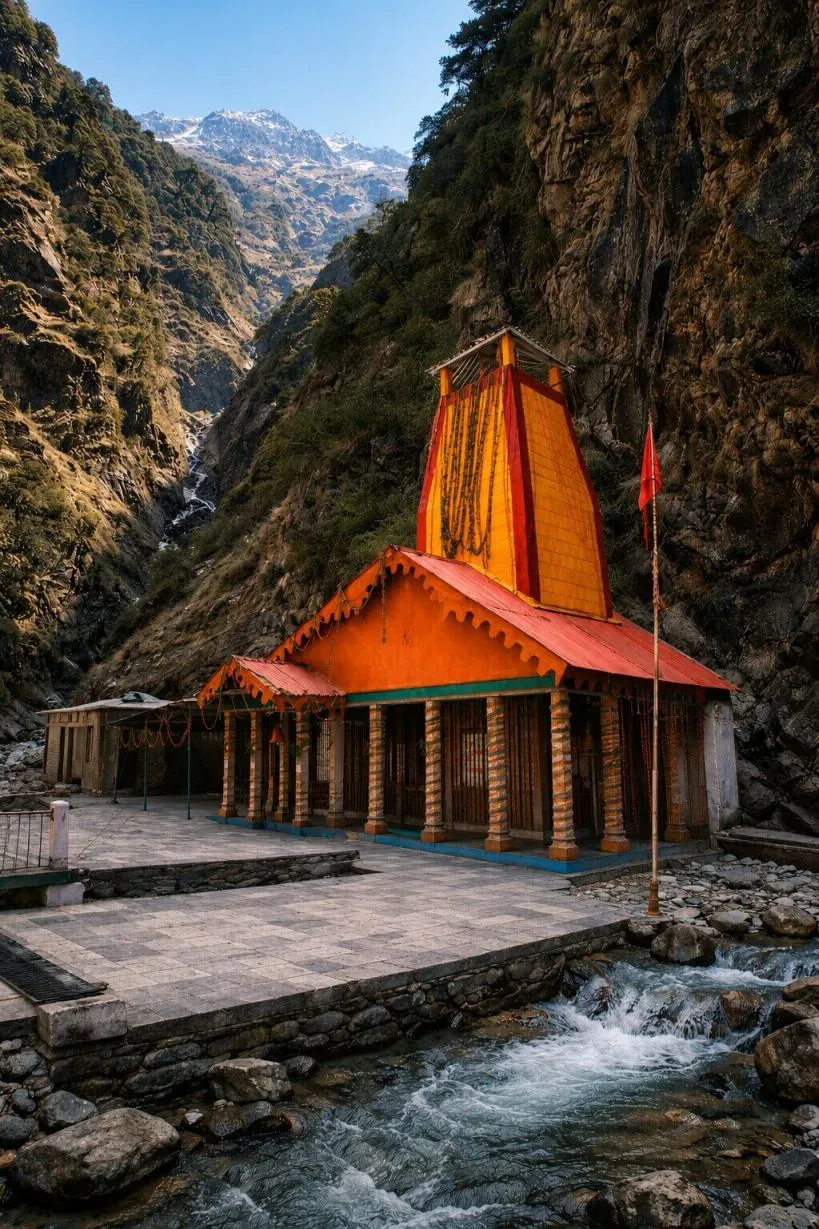
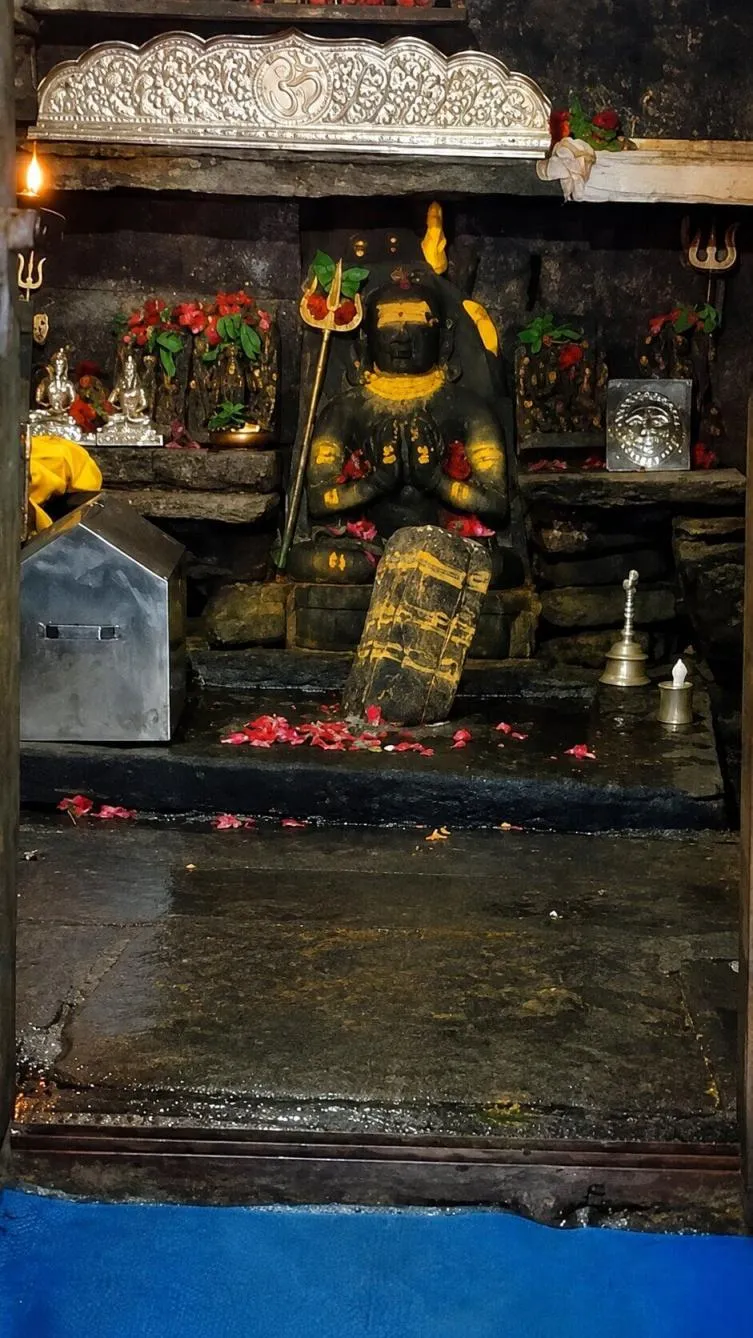
The temple is a modest hill shrine built of white marble and stone, rising through five small shikharas, the tapering spires typical of North Indian temple towers, each about 20 feet high. Its sanctum, the Garbha Griha, or inner chamber, sits on a raised platform and houses the main image of Ganga along with smaller images of Yamuna, Saraswati, Annapurna and Lakshmi, and figures of Bhagirath and the sage Adi Shankara. Deodar and pine trees surround the courtyard, and the Bhagirathi flows past close enough that its sound is constant during any visit. A short walk leads to the Bhagirath Shila, while the river's actual source, the Gaumukh glacier snout, lies further upstream and is reached only on foot. The structure has been repaired more than once given its exposure to Himalayan winters and occasional earthquakes, but its basic layout, a small sanctum fronted by an open Sabha Mandap, or assembly hall, has stayed largely the same.
Devotee Experience
A visit to Gangotri combines a short darshan inside a small hill temple with longer walks into glacier country that few other Char Dham stops offer. The Bhagirathi runs icy even in summer, and many pilgrims limit themselves to a ritual dip near the ghat rather than a full bath. Because the town sits above 3,000 metres, altitude sickness is a real risk for visitors arriving quickly from the plains, and most itineraries build in a night at Uttarkashi or Harsil to acclimatise before the final stretch. The temple holds a Mangala Aarti each morning and an evening aarti after the main darshan hours close. Beyond the temple itself, a few other pilgrimage and trekking sites round out a Gangotri visit.
- Bhairon Ghati, about 9 km from Gangotri, a village where the Bhagirathi meets the Jadh Ganga and pilgrims stop at its Bhairav Nath temple before or after Gangotri darshan
- Gaumukh, about 19 km on foot from Gangotri, the snout of the Gangotri Glacier and the physical source of the Bhagirathi river
- Mukhba, about 15 km from Gangotri near Harsil, the winter seat of the Ganga idol and home village of the temple's Semwal priests
- Kedar Tal, about 18 km on foot from Gangotri via Bhojwasa, a high-altitude glacial lake reached by experienced trekkers
There is no strict photography ban in the temple courtyard, but cameras and phones are generally kept away from the Garbha Griha (inner sanctum) during aarti and close darshan, as is customary at other Char Dham shrines. Modest, weather-appropriate clothing covering the shoulders and legs is expected. The town sits above 3,000 metres and stays cool even in summer, so warm layers are practical alongside standard temple etiquette. Gangotri Temple is accessible only from around Akshaya Tritiya in spring to Diwali in autumn each year, so visitors should confirm current yatra dates before travelling. The road from Uttarkashi can be affected by landslides during the monsoon months, so checking conditions in advance is advisable.
Timings
Timings can vary by season and special occasions - confirm locally before travelling.
Offerings
Devotees typically offer flowers and Gangajal, water drawn from the Bhagirathi, along with the fruit and sweets common as prasad at Char Dham shrines.
Getting there
Gangotri Temple, Uttarkashi, Uttarakhand
Rishikesh Railway Station → Gangotri Temple(By train)
250 kmfrom Rishikesh Railway Station
Rishikesh is the nearest railhead with regular trains from Delhi and Haridwar, with onward road travel via Uttarkashi to Gangotri.
100 kmfrom Uttarkashi Bus Stand
Uttarkashi is the last major town on the route and a common overnight stop before the final drive to Gangotri.
270 kmfrom Jolly Grant Airport, Dehradun
Taxis and buses from the airport area connect onward to Rishikesh and then up the Bhagirathi valley to Gangotri.