


Introduction to Nakshatras in Hindu Astrology
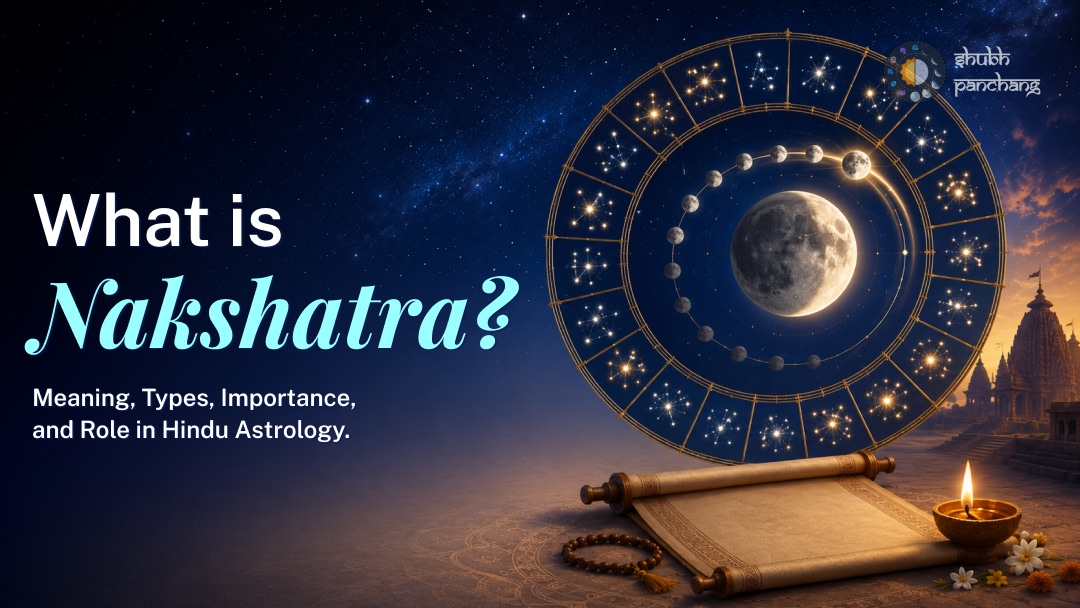
Nakshatras are the 27 lunar mansions or star sectors through which the Moon travels during its monthly cycle around the Earth. In the traditional Panchang system, Nakshatras serve as a fundamental pillar for timekeeping and astrological analysis. While the Sun stays in a zodiac sign (Rashi) for approximately one month, the Moon stays in a Nakshatra for about one day, making Nakshatras a more precise tool for understanding daily celestial influences. These constellations provide a detailed map of the sky, allowing Vedic practitioners to determine auspicious timings and analyze individual personality traits based on the Moon's position at birth.
The Meaning and Astronomical Basis of Nakshatras
The word Nakshatra is derived from the Sanskrit roots 'Naksha' meaning 'map' or 'pattern' and 'tra' meaning 'to guard' or 'protect.' Alternatively, it is often translated as 'that which does not decay.' Astronomically, the zodiac is a 360-degree circle which Vedic astrology divides into 27 equal parts of 13 degrees and 20 minutes each. According to the Surya Siddhanta, this division corresponds to the Moon's sidereal period. While there are 27 primary Nakshatras used in daily calculations, a 28th star named Abhijit is sometimes considered for specific spiritual and muhurat purposes, located between Uttara Ashadha and Shravana. Unlike the twelve zodiac signs (Rashis) which are solar-centric, Nakshatras are lunar-centric, focusing on the Moon’s deep psychological and emotional impact on human consciousness.
A Comprehensive List of the 27 Nakshatras
Each of the 27 Nakshatras possesses a unique identity defined by its ruling deity, planetary lord, and symbolic representation. The sequence begins with Ashwini and ends with Revati. Below is a structured overview of the Nakshatras as recognized in classical texts like the Muhurta Chintamani:
| Order | Nakshatra Name | Ruling Planet | Symbol |
|---|---|---|---|
| 1 | Ashwini | Ketu | Horse's Head |
| 2 | Bharani | Venus | Yoni (Vessel) |
| 3 | Krittika | Sun | Knife or Razor |
| 4 | Rohini | Moon | Chariot or Cart |
| 5 | Mrigashira | Mars | Deer's Head |
| 6 | Ardra | Rahu | Teardrop |
| 7 | Punarpasu | Jupiter | Quiver of Arrows |
| 8 | Pushya | Saturn | Cow's Udder or Wheel |
| 9 | Ashlesha | Mercury | Coiled Serpent |
| 10 | Magha | Ketu | Royal Throne |
| 11 | Purva Phalguni | Venus | Front Legs of a Bed |
| 12 | Uttara Phalguni | Sun | Four Legs of a Bed |
| 13 | Hasta | Moon | Hand or Fist |
| 14 | Chitra | Mars | Bright Jewel |
| 15 | Swati | Rahu | Young Sprout or Sword |
| 16 | Vishakha | Jupiter | Triumphal Arch |
| 17 | Anuradha | Saturn | Lotus or Staff |
| 18 | Jyeshtha | Mercury | Umbrella or Earring |
| 19 | Mula | Ketu | Bunch of Roots |
| 20 | Purva Ashadha | Venus | Winnowing Basket |
| 21 | Uttara Ashadha | Sun | Elephant's Tusk |
| 22 | Shravana | Moon | Ear or Three Footprints |
| 23 | Dhanishta | Mars | Drum or Flute |
| 24 | Shatabhisha | Rahu | Empty Circle or flowers |
| 25 | Purva Bhadrapada | Jupiter | Sword or Front of Funeral Cot |
| 26 | Uttara Bhadrapada | Saturn | Twins or Back of Funeral Cot |
| 27 | Revati | Mercury | Fish or Drum |
Role of Nakshatras in Birth Charts and Personality
The Janma Nakshatra, or birth star, is the constellation where the Moon was positioned at the exact moment of an individual's birth. In Vedic astrology, this is considered more significant than the Sun sign for determining the 'quality' of the mind and emotions. The Janma Nakshatra influences an individual's physical appearance, temperament, and innate strengths. For instance, those born under Ashwini are often characterized by speed and agility, while those under Rohini are known for their creativity and stability. The ruling deity of the Nakshatra also provides a spiritual archetype for the soul's journey; for example, Pushya, ruled by Brihaspati, is associated with nourishment and wisdom. Understanding one's birth star is essential for calculating the Vimshottari Dasha, which determines the timing of major life events.
Importance in Muhurat Selection and Daily Planning
Selecting an auspicious time for significant life events, known as Muhurat, relies heavily on the Nakshatra of the day. Certain Nakshatras are classified as 'Dhruva' (Fixed), 'Chara' (Movable), 'Ugra' (Aggressive), or 'Kshipra' (Swift). For example, the Pushya Nakshatra is considered highly auspicious for starting new businesses or purchasing gold, regardless of the day, except when it falls on certain weekdays like Friday or Sunday. Conversely, Nakshatras like Bharani or Magha are often avoided for travel or marriage but are considered suitable for activities requiring fierce action or honoring ancestors. By consulting Panchang Utilities, individuals can identify which star is active and align their actions with the prevailing celestial rhythm to ensure smoother outcomes.
Nakshatras in Marriage Compatibility and Naming
In the Hindu tradition of Guna Milan (horoscope matching), the Nakshatra plays a pivotal role. The 'Ashta Koota' matching system evaluates eight different aspects of compatibility, many of which—such as Varna, Vashya, Tara, Yoni, and Gana—are derived directly from the birth Nakshatras of the couple. This ensures that the emotional and psychological temperaments of the partners are in harmony. Furthermore, the practice of Namkaran (naming ceremony) uses the 'Padas' of a Nakshatra. Each Nakshatra is divided into four quarters called Padas, and each Pada is associated with a specific Sanskrit sound. The first letter of a child’s traditional name is chosen based on the Nakshatra Pada active at birth, ensuring the name resonates with the child's lunar influence.
Modern Access to Nakshatra Knowledge
In the contemporary era, calculating and tracking Nakshatras has become significantly easier through digital tools. While older generations relied solely on printed wall calendars or local priests, modern seekers use mobile applications and online calculators to find their Janma Nakshatra or the Nakshatra of the day. These tools use Drik Ganit (mathematically precise) methods to provide location-specific timings for when a Nakshatra begins and ends. It is important to remember that while Nakshatras offer profound insights into tendencies and timings, they are intended as a guide for conscious living rather than absolute fatalism. By understanding the prevailing star, one can better navigate the fluctuations of mood and energy that define the human experience.