


Understanding Diverse Systems of Timekeeping
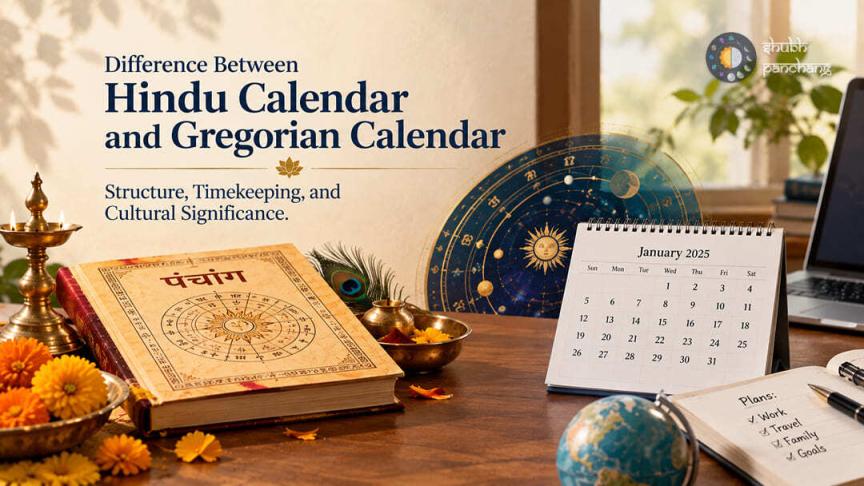
Timekeeping systems have been developed by civilizations for millennia to track seasons, agricultural cycles, and social observances. The Hindu calendar and the Gregorian calendar represent two of the most widely used systems today, serving distinct but complementary roles in modern life. While the Gregorian calendar acts as the international standard for civil, business, and administrative activities, the Hindu calendar remains the spiritual and cultural foundation for millions. The Hindu system relies on complex astronomical calculations to align human activity with the cycles of the Sun and Moon, whereas the Gregorian system focuses on a fixed solar year to maintain a consistent seasonal alignment for civil purposes.
Origins and Historical Evolution
The Hindu calendar is rooted in ancient Vedic traditions and formalized in classical astronomical treatises like the Surya Siddhanta and Aryabhatiya. It uses Drik Ganit (observational mathematics) to ensure the calendar matches the actual positions of celestial bodies. In contrast, the Gregorian calendar was introduced by Pope Gregory XIII in 1582 as a refinement of the older Julian calendar. Its primary goal was to correct the drift of the spring equinox, ensuring that Easter remained aligned with specific seasonal markers. While the Hindu system has evolved through various regional Samvats (eras), its fundamental astronomical principles have remained consistent for thousands of years.
Solar vs Lunisolar Timekeeping Mechanics
The fundamental difference between these two systems lies in what they measure: the Gregorian calendar is a purely solar calendar, while the Hindu calendar is lunisolar. A solar calendar tracks the Earth’s 365.25-day orbit around the Sun, maintaining fixed months. The Hindu lunisolar system, however, synchronizes the 29.5-day lunar month with the solar year. Because 12 lunar months total approximately 354 days—about 11 days shorter than a solar year—the Hindu calendar incorporates a sophisticated mechanism called Adhik Maas (intercalary month) roughly every 32.5 months to realign the lunar cycles with the solar seasons.
Structure of the Gregorian Calendar
The Gregorian system is designed for simplicity and global uniformity. It consists of 12 months with fixed lengths of 30 or 31 days (except February), totaling 365 days in a standard year. To account for the fractional day in the Earth's orbit, it adds a leap day every four years, with specific rules for century years. This structure ensures that a specific date, such as January 1st, always falls during the same point in the Earth's revolution, making it an efficient tool for international trade, scheduling, and legal documentation.
Anatomy of the Hindu Panchang
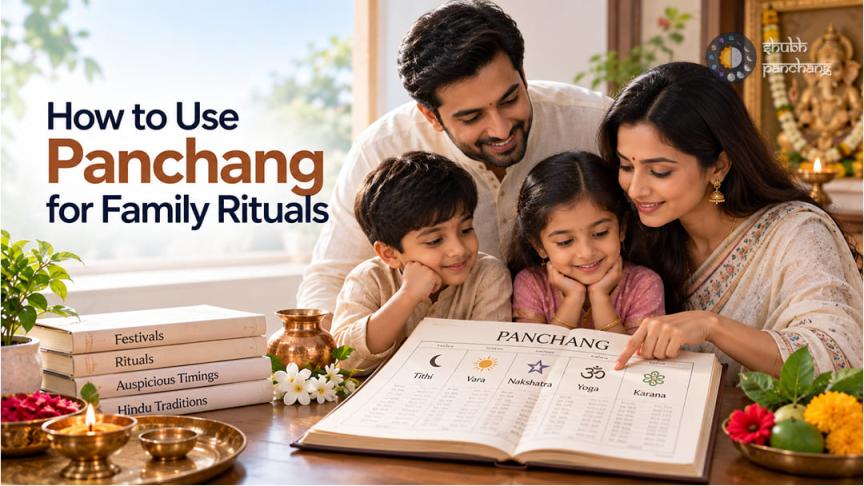
The Hindu calendar is structured around five essential elements, or 'Angas', which define the Shubh panchang used for daily rituals. These include Tithi (lunar day), Var (weekday), Nakshatra (lunar mansion), Yoga, and Karana. Unlike Gregorian dates which change at midnight, a Tithi begins and ends based on the longitudinal angle between the Moon and the Sun. Consequently, a Tithi can vary in duration from approximately 19 to 26 hours. The month is further divided into two fortnights: the Shukla Paksha (waxing phase) and the Krishna Paksha (waning phase).
Why Festival Dates Change Yearly
Hindu festivals such as Diwali, Holi, and Janmashtami appear to 'move' on the Gregorian calendar because they are tied to specific Tithis and lunar months. For example, Diwali is observed on the Amavasya (New Moon) of the month of Kartik. Since the lunar year is shorter than the solar year, the date of Amavasya shifts backward by about 11 days each year in the Gregorian system until an Adhik Maas resets the cycle. This ensures that while the Gregorian date changes, the festival remains spiritually synchronized with the correct lunar phase and seasonal atmosphere as prescribed in the Dharmasindhu.
Regional Variations and Eras
The Hindu calendar system is not a single monolithic entity but a collection of regional traditions that share core principles. The Vikram Samvat, starting in 57 BCE, is widely used in Northern and Western India, typically beginning the year with the month of Chaitra or Kartik. The Shaka Samvat, starting in 78 CE, is the basis for the Indian National Calendar. Other variations include the Bengali calendar (Poila Baisakh) and the Tamil calendar (Puthandu), which may follow solar-based month calculations while still utilizing lunar Tithis for religious observances. Each region applies specific rules for the start of the month (Amant vs. Purnimant systems) based on local custom.
Spiritual Significance and Modern Utility
In modern India, the two calendars exist in a functional duality. The Gregorian calendar manages the external world—banking, education, and international travel. The Hindu calendar manages the internal and communal world—determining Muhurats for weddings, the timing of Vrats (fasts), and the observation of ancestral rites. This system views time not just as a linear progression, but as a series of rhythmic cycles that influence human consciousness. Following the Panchang allows individuals to align their actions with natural phenomena, such as the gravitational pull of the moon or the transition of the sun into different zodiac signs (Sankranti).
Correcting Common Misconceptions
A frequent point of confusion for beginners is the difference between a 'Date' and a 'Tithi'. People often expect a Hindu festival to fall on the same Gregorian date every year, but because the two systems measure different astronomical phenomena, this is impossible. Another misconception is that the Hindu calendar is 'unscientific' due to its shifting dates. On the contrary, the Hindu system is highly precise, requiring advanced mathematics to calculate the precise moment a lunar day ends. While the Gregorian calendar is a convenient social convention, the Hindu calendar is a rigorous astronomical record that reflects the actual state of the cosmos at any given moment.