


What is a Moon Sign in Vedic Astrology?
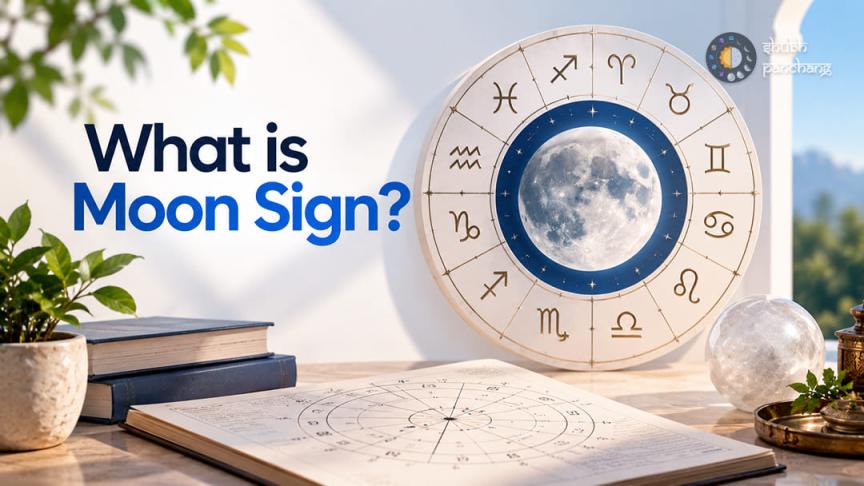
The Moon sign, known as the Chandra Rashi in Sanskrit, is the specific zodiac sign in which the Moon was positioned at the exact moment of an individual's birth. In the framework of Vedic Jyotisha, the Moon is considered the most significant celestial body for determining a person's temperament and life path. While many are familiar with their Sun sign, which changes once a month, the Moon moves through the entire zodiac in approximately 27.3 days, staying in each sign for only about 2.25 days. This rapid movement makes the Moon sign a much more personalized and precise indicator of an individual's unique psychological makeup and emotional responses than the broader Sun sign.
Moon Sign vs Sun Sign: Understanding the Difference
The difference between a Moon sign and a Sun sign lies in the specific celestial energy they represent and how they are calculated. Western astrology primarily utilizes the Sun sign, which is determined by the month and day of birth, representing the core ego and outward personality. Conversely, Vedic astrology prioritizes the Moon sign because it governs the 'Manas' or the mind. According to the Surya Siddhanta, the Sun represents the Atman (soul), which is constant, whereas the Moon represents the mind, which is fluid and responsible for how we perceive reality. Because our daily lives are driven by thoughts and emotions, the Moon sign is viewed as the primary lens through which we experience the world, making it the foundation for Indian horoscopes and predictive calculations.
The Significance of Moon as the Ruler of the Mind
In Vedic traditions, the Moon is the presiding deity of the mind, emotions, and mental peace. It is categorized as one of the most influential members of the Navagraha (nine planets), symbolizing the mother, nourishment, and the subconscious. A strong and well-placed Moon in a birth chart suggests a person who possesses high emotional intelligence, intuition, and a calm disposition. On the other hand, if the Moon is afflicted by malefic planets, it can manifest as mental restlessness, mood swings, or a lack of concentration. This is why practitioners of traditional astrology emphasize the Moon's condition to assess a person's overall mental health and their ability to handle the stresses of life.
How is the Moon Sign Calculated?
Calculating a Moon sign requires precise data including the date of birth, the exact birth time, and the specific birth location. Unlike the Sun sign, which remains the same for everyone born within a 30-day window, the Moon sign can change in a matter of hours. This calculation involves identifying the exact degree of the Moon in the 360-degree zodiac at the moment of birth. Furthermore, each Moon sign is linked to specific Nakshatras (lunar mansions). There are 27 Nakshatras in total, and each sign contains roughly 2.25 Nakshatras. The particular Nakshatra the Moon occupies provides even deeper details about an individual's character, appearance, and even their physical health, acting as a sub-filter for the Rashi's general traits.
The 12 Moon Signs and Their Elements
There are twelve distinct Moon signs in the zodiac, each classified by an element—Fire, Earth, Air, or Water—which dictates the primary nature of a person's emotional energy.
| Rashi (Moon Sign) | English Name | Elemental Quality |
|---|---|---|
| Mesh | Aries | Fire - Impulsive and Brave |
| Vrishabh | Taurus | Earth - Stable and Patient |
| Mithun | Gemini | Air - Communicative and Curious |
| Karka | Cancer | Water - Intuitive and Nurturing |
| Simha | Leo | Fire - Creative and Confident |
| Kanya | Virgo | Earth - Analytical and Practical |
| Tula | Libra | Air - Harmonious and Social |
| Vrishchik | Scorpio | Water - Intense and Private |
| Dhanu | Sagittarius | Fire - Optimistic and Philosophical |
| Makar | Capricorn | Earth - Disciplined and Ambitious |
| Kumbh | Aquarius | Air - Innovative and Detached |
| Meen | Pisces | Water - Dreamy and Compassionate |
The Role of Moon Sign in Daily Life and Relationships
The influence of the Chandra Rashi extends to how an individual interacts with others and makes decisions. In personal relationships, the Moon sign determines emotional compatibility; for example, two people with compatible Moon sign elements are more likely to understand each other's non-verbal cues and emotional needs. Beyond personality, the Moon sign is the starting point for tracking planet transit movements. When a planet moves through a specific house relative to your Moon sign, it triggers events in different areas of your life, such as career, health, or finance. This is why traditional daily horoscopes are always read from the Moon sign to ensure the predictions resonate with the reader's current mental state.
Importance in Kundli Matching and Dasha Systems
Vedic astrology uses the Moon sign as the anchor for the most critical predictive tools, such as the Vimshottari Dasha and Kundli matching. The Vimshottari Dasha is a 120-year planetary cycle that begins at the exact point of the Moon's placement at birth, determining the timing of major life milestones. In the context of marriage, the Ashtakoota Milan (Guna matching) system evaluates eight different factors, the majority of which are based on the Moon's sign and Nakshatra. This focus ensures that the couple shares a deep mental and emotional bond, which is considered more vital for long-term marital success than physical or external compatibility alone.
Moon Sign, Sun Sign, and Ascendant: The Three Pillars
To get a complete picture of an individual, astrologers look at the 'Big Three': the Ascendant (Lagna), the Sun sign, and the Moon sign. The Ascendant represents the physical self and the persona shown to the world; the Sun sign represents the core will and vitality; and the Moon sign represents the private, inner emotional world. While the Ascendant changes every two hours and the Sun every month, the Moon sign sits in the middle, providing a stable yet detailed framework for understanding psychological patterns. Most traditional Indian calendars and Panchangs prioritize the Moon because it reflects the 'Jiva' or the living experience of the individual, making it the most relatable point of reference for daily guidance.
Finding Your Moon Sign and Using It as a Guide
In the modern era, discovering your Moon sign is straightforward through the use of birth charts or digital Panchang tools. Once identified, this knowledge should be used for self-reflection and emotional awareness rather than as a source of fear or rigid destiny. Astrology is a system of guidance that helps individuals understand their inherent strengths and potential weaknesses. By knowing your Moon sign, you can better understand why you react to certain situations in specific ways and work toward achieving inner balance. Ultimately, the Moon sign combines ancient astronomy with a deep psychological understanding of human nature, offering a path toward greater self-mastery and spiritual clarity.