



The Hindu Perspective on Existence as a Cycle
Hinduism views life, time, and the universe as an eternal series of repeating cycles rather than a linear progression from a single beginning to a final end. This philosophical worldview, often termed as Pravaha-Nitya (eternally flowing), suggests that existence is characterized by continuous transformation, renewal, and rebirth. While linear thinking treats time as a limited resource moving toward an ultimate conclusion, the Hindu perspective emphasizes that every end is a seed for a new beginning. This cyclical nature is woven into the very fabric of Vedic thought, influencing how one understands the seasons, the movement of stars, the journey of the soul, and the evolution of the cosmos itself.
Nature as a Reflection of Cosmic Rhythm
Nature provides the most immediate evidence of cyclicality through the predictable patterns of day and night, lunar phases, and the changing seasons. The Rigveda speaks of Rta, the cosmic order that governs the universe, ensuring that the sun rises, the rains arrive, and the tides turn in a rhythmic sequence. Unlike the modern linear focus on constant expansion, the Hindu tradition observes that trees shed leaves only to grow them again, and the moon wanes only to wax back to fullness. This observation of nature teaches that change is not a loss but a necessary phase in a much larger, recurring journey of existence.
Samsara and the Journey of the Soul
Samsara is the Sanskrit term for the continuous cycle of birth, life, death, and rebirth that the soul (Atman) undergoes. According to the Bhagavad Gita, just as a person discards worn-out clothes to put on new ones, the soul casts off a physical body to enter a new form. This is not a purposeless loop; it is a spiritual school where the soul gains diverse experiences and wisdom across multiple lifetimes. This cyclical view removes the pressure of achieving perfection in a single lifetime, offering instead a profound sense of continuity and the understanding that death is merely a transition to another chapter in the soul’s long evolution.
The Role of Karma in the Cyclical Worldview
Karma serves as the governing law of the cycle, acting as the bridge between past actions and future experiences. In a cyclical system, every action creates an impression that eventually bears fruit, much like a seed planted in one season yields a harvest in another. This suggests that current circumstances are the results of previous cycles of action, and present choices are the architects of future cycles. Understanding this allows individuals to approach life with responsibility rather than victimhood; while one cannot change the past, one can refine their actions today to influence the next turn of the wheel. Keeping track of celestial influences through the daily panchang for today can help align these actions with favorable cosmic rhythms.
Cosmic Time and the Four Yugas
Hindu cosmology describes time on a massive scale through the concept of Yugas, which are immense cycles of creation and dissolution. These are divided into four ages: Satya Yuga (the age of truth), Treta Yuga, Dwapara Yuga, and Kali Yuga (the current age). The Surya Siddhanta, a foundational text of Hindu astronomy, details how these cycles repeat indefinitely. According to tradition, the universe itself undergoes Srishti (manifestation), Sthiti (maintenance), and Pralaya (dissolution). These roles are personified by the Trimurti: Brahma the creator, Vishnu the preserver, and Shiva the transformer, illustrating that destruction is not an end but a clearing of the path for a fresh cycle of creation.
Moksha: Liberation from the Wheel of Time
While the cycle of Samsara is natural, the ultimate goal in Hindu spirituality is Moksha, which is the liberation from this repeating loop. Moksha is achieved when the soul realizes its true nature and its oneness with Brahman, the ultimate reality. It represents an exit from the temporal constraints of birth and death into a state of eternal peace and consciousness. This provides a balance to the cyclical worldview: while we live within the cycles of time, our ultimate destination lies beyond them. To better understand the daily spiritual alignments that support this growth, many look toward daily horoscope predictions to navigate their worldly duties while keeping their spiritual goals in focus.
Cyclical Thinking in Festivals and Rituals
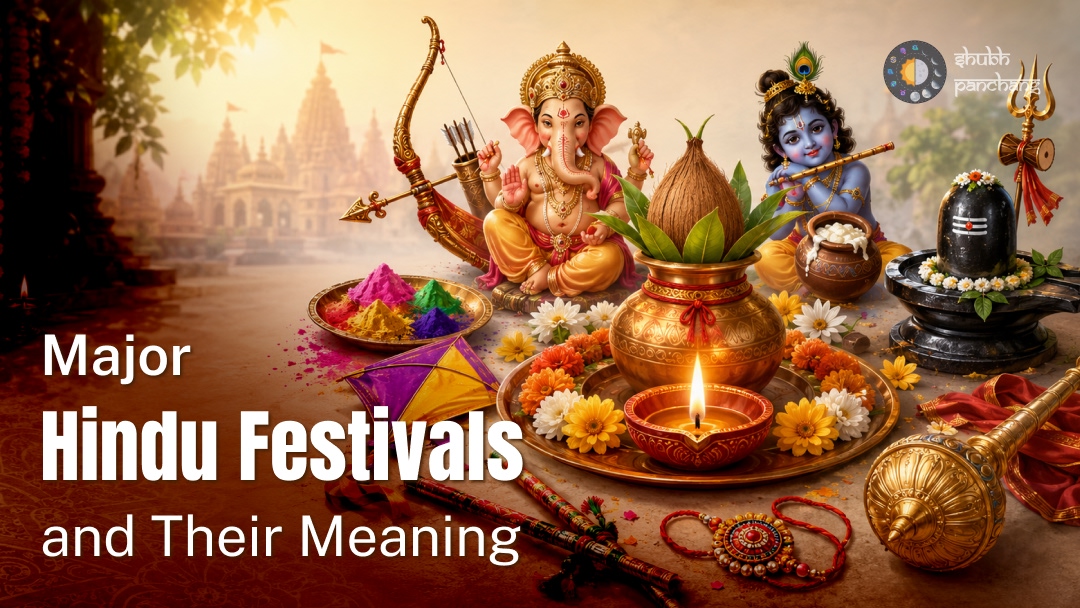
The Hindu calendar and its festivals are structurally designed to celebrate the return of divine energies and seasonal shifts. Unlike modern holidays that might celebrate a one-time historical event, Hindu festivals like Diwali, Navratri, and Maha Shivratri are recurring points of spiritual renewal. Each festival returns at a specific lunar or solar junction, inviting devotees to reset their intentions and purify their minds annually. This cyclical observance ensures that spiritual lessons are not learned once and forgotten, but are revisited and deepened every year, reinforcing the connection between the individual and the cosmic rhythm.
Psychological Benefits of a Cyclical Mindset
Adopting a cyclical view of life fosters a profound sense of patience, resilience, and hope. In a linear world, failure can feel final and aging can feel like a loss of value. In the Hindu worldview, a difficult phase is viewed as a 'winter' that will inevitably be followed by a 'spring.' This perspective encourages acceptance of change and reduces the anxiety associated with time’s passage. It teaches that growth is not always a straight upward climb but often a spiral, where we return to similar lessons but with greater awareness and maturity each time.
Scientific Parallels and Modern Relevance
Interestingly, modern science increasingly recognizes the cyclical nature of the physical world, from the orbits of planets and the lifecycle of stars to the circadian rhythms in biology and the recycling of elements in ecosystems. The Vedic idea of a universe that expands and contracts mirrors certain cosmological theories like the 'Big Bounce.' By viewing life as a cycle, Hinduism aligns ancient wisdom with observable natural laws. This worldview offers a much-needed antidote to the modern, fast-paced lifestyle, reminding us that true progress is found in harmony with the natural and cosmic cycles of existence, rather than in a constant, exhausting race toward a finish line.