






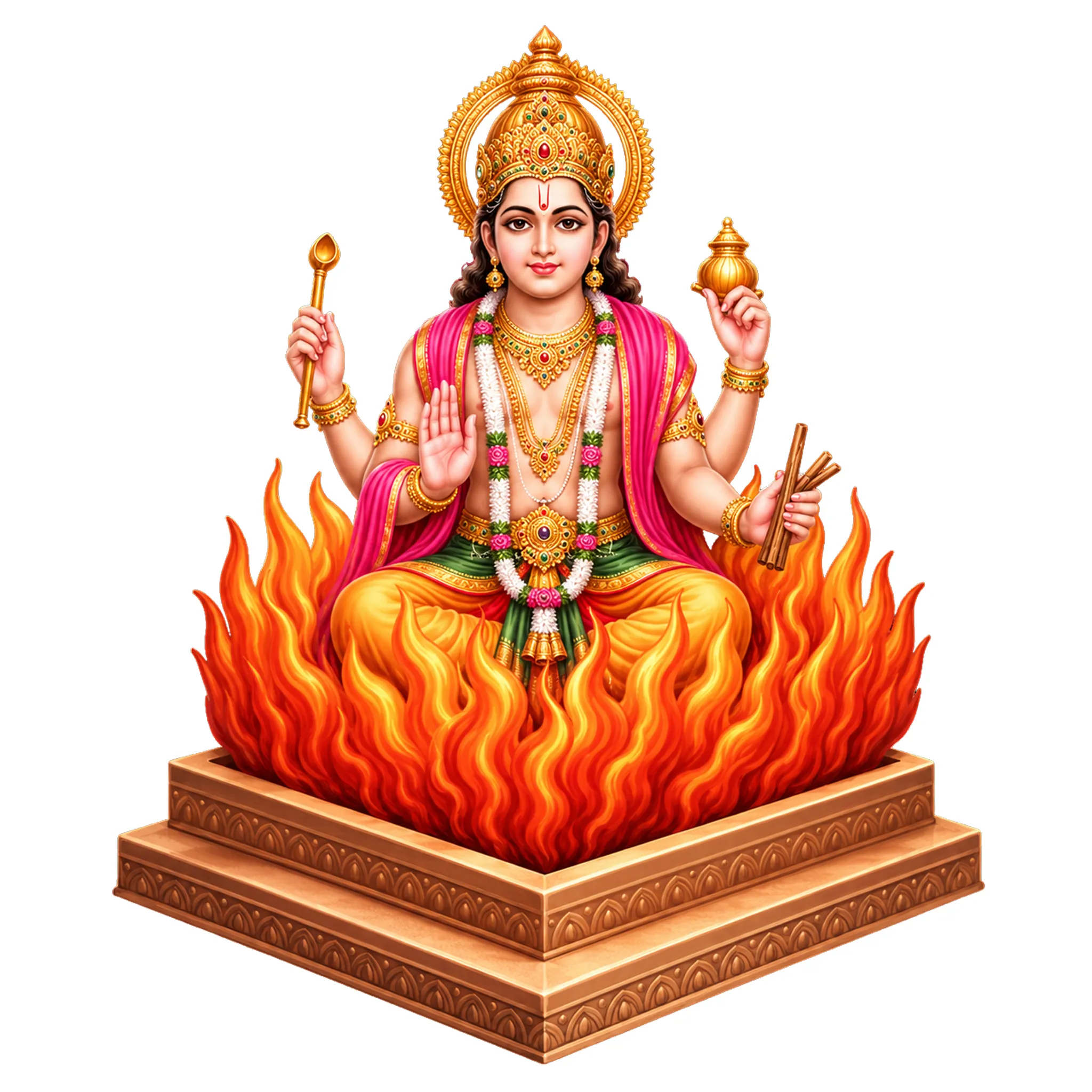
Introduction to Lord Yajna
In Hinduism, Lord Yajna is considered one of the important divine incarnations of Lord Vishnu. According to religious scriptures, Lord Yajna is known as the Kalpa Avatar of Lord Vishnu. He is considered the symbol of sacrifice, religion, penance and the balance of creation. In the Shrimad Bhagavat Mahapuran, Lord Yajna is described as the seventh avatar of Lord Vishnu.
Lord Yajna is also known by sacred names like Yajnapurush, Yagneshwar and Makh Devta. In the Vedic tradition, Yajna is considered extremely sacred and is considered a direct form of Lord Vishnu. It is believed that positive energy, religion and divine power develop in the creation through Yajna.
Origin of Lord Yajna
According to mythological stories, at the beginning of creation, Lord Brahma divided his body into two parts, from which Swayambhu Manu and Shatrupa were born. Swayambhu Manu is considered the first man of mankind and it is said that the entire human race originated from his offspring.
Swayambhu Manu's daughter Akuti was married to Prajapati Ruchi. From her womb, Lord Yajna was born, who was an incarnation of Lord Vishnu. After the appearance of Lord Yajna, Yajna and Vedic rituals began, due to which the power of the gods increased and divine energy started circulating throughout the universe.
Lord Yajna and Goddess Dakshina
According to the scriptures, Lord Yajna was married to Goddess Dakshina, who is considered to be an incarnation of Goddess Lakshmi. The union of Lord Yajna and Goddess Dakshina gave birth to Tosh, Santosh, Bhadra, Shanti, Vibhu and many other sons.
All these gods are known as Yama gods and were considered the main gods of the Swayambhu Manvantar. With the blessings of Lord Yajna, religion, prosperity and positivity spread throughout the universe.
Protection of Swayambhu Manu
Once, Swayambhu Manu and his wife Shatrupa were engaged in severe penance in a dense forest. They renounced their royal status and adopted the spiritual path. After a long penance, he became completely absorbed in the Lord's meditation.
At that time, a group of terrible demons arrived there and tried to attack Manu and Shatrupa. Then Lord Yajna appeared with his twelve sons and protected Manu and Shatrupa with divine power. He defeated the demons and established religion and truth.
Lord Yajna and Indrapad
After defeating the demons, the gods sang the glory of Lord Yajna and prayed to him to accept the Indrapad. Since there was no suitable Indra in that Manvantar, Lord Yajna accepted the Indrasana as the king of heaven.
In this way, Lord Yajna led the gods and protected religion and divine power. In the religious scriptures, Lord Yagya is given special respect as the Indra of the Swayambhu Manvantar.
Description of the form of Lord Yagya
Lord Yagya is usually depicted wearing a pitambar and adorned with divine ornaments. He is shown with a bright crown on his head and Vaishnava symbols on his body.
In many paintings, Lord Yagya is shown emerging from the Yagya Kund. He holds a conch, a wheel, a mace and a lotus in his four hands, which are symbols of religion, power and divine knowledge.
Family of Lord Yagya
Lord Yagya's father was Prajapati Ruchi and mother was Devi Akuti. Devi Dakshina was his wife, who is considered to be an aspect of Devi Lakshmi.
Lord Yagya had twelve sons, who are known as Yama gods. They are considered the propagators of religion and the tradition of sacrifice.
Mantras of Lord Yagya
It is believed that chanting the mantras of Lord Yagya brings success in sacrifice, spiritual power and positivity in life. In the Vedic tradition, the mantras of sacrifice are considered very sacred.
॥ ॐ यज्ञपुरुशाय नमह ॥
॥ ॐ यज्ञन यज्ञायमायजन्त देवाहाय. ॐ तानी धरमानी प्रतान्यासन्यायायन्ती ॥
॥ॐ उम यज्ञायंत देवायंत ॥
Festivals associated with Bhagwan Yagya
There is no specific festival directly associated with Bhagwan Yagya, but Bhagwan Yagya is specially remembered during Navratri, Makar Sankranti, Lohri and various Vedic Yagyas.
Prayers are offered to Yagyapurush during many religious ceremonies and havans, as Yagya is considered to be the divine form of Lord Vishnu himself.
Famous places of Bhagwan Yagya
There are many holy places associated with Yagya in India. The Yagyapurush Kund of Akshardham Temple in New Delhi is very famous and thousands of devotees come here for darshan.
In addition, Bhagwan Yagya is worshipped in many Vedic yagnashalas and havansthalas. Yagnasthalas are considered centers of sacred energy in Hindu tradition.
Spiritual significance of Bhagwan Yagya
Bhagwan Yagya is a symbol of religion, dedication and selfless work. He teaches devotees that Yagya is not just an act of offering in fire, but a way to make life holy and selfless.
Worship of Bhagwan Yagya develops peace, positivity and spiritual strength in life. He inspires to move forward on the path of truth, service and religion.