






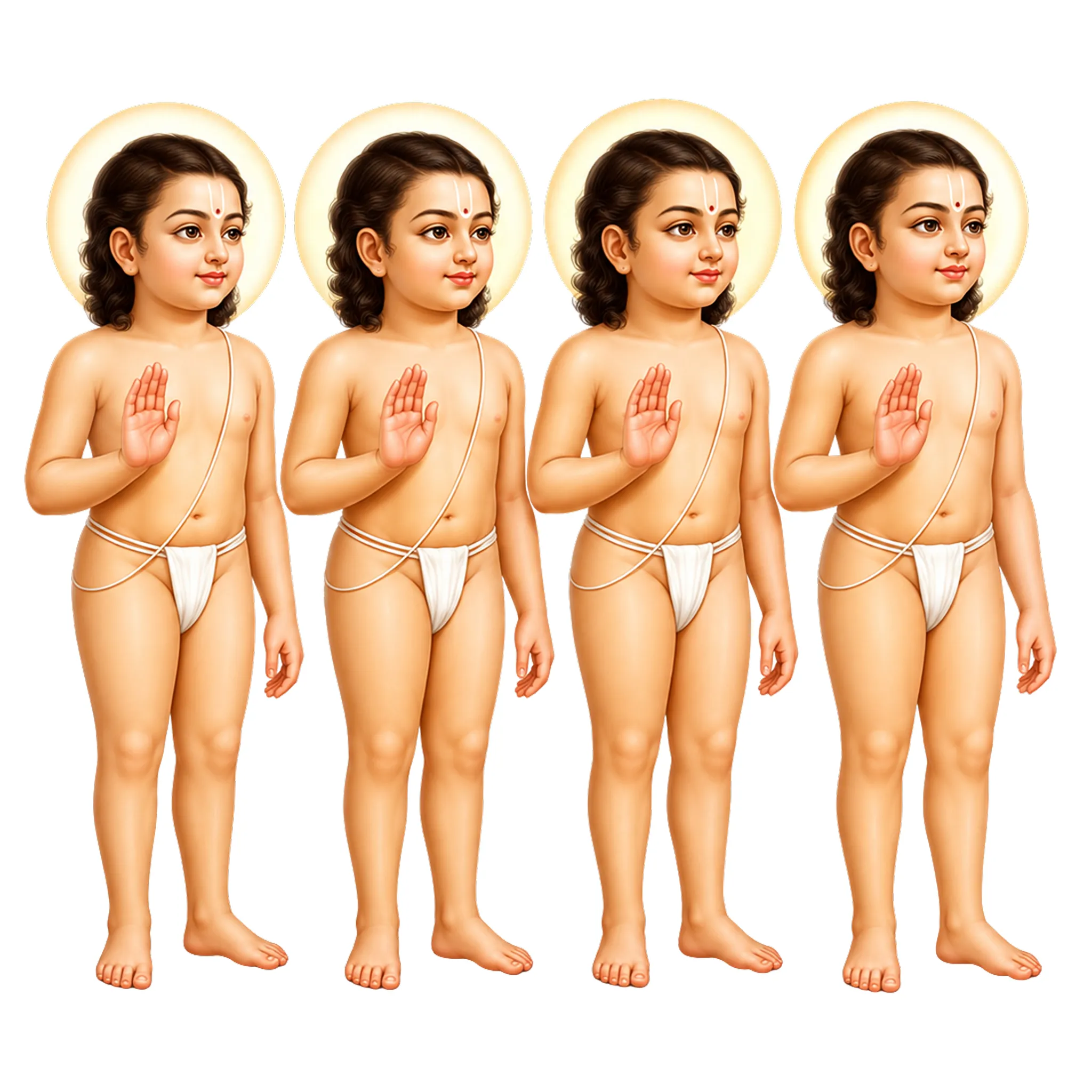
Introduction to Sanakadi Rishis
In Hindu scriptures, Sanaka, Sanandana, Sanatana and Sanatkumar are collectively known as “Sanakadi Rishis” or “Sanatakumar”. They are considered to be the first son of Lord Brahma and are also worshipped as an incarnation of Lord Vishnu. The Sanakadi Rishis propagated knowledge, devotion and detachment throughout the world.
According to religious scriptures, the Sanakadi Rishis adopted the path of celibacy and spiritual life from birth. They always remained absorbed in the meditation of Lord Shri Hari and chanted the name “Hari: Sharanam”. Their lifestyle is considered a unique symbol of detachment, devotion and supreme knowledge.
Origin of the Sanakadi Rishis
It is narrated in the Shrimad Bhagavata Mahapurana that at the beginning of creation, Lord Brahma started the creation of various worlds and living beings. Initially, he created a creation full of ignorance and delusion, but he was not pleased with it.
Then, by purifying his mind through meditation on the Lord, Brahma created four divine sages — Sanaka, Sanandana, Sanatana and Sanatkumar. Brahma entrusted them with the task of expanding the creation, but the Sanakadi Rishis decided to follow only the devotion of the Lord and the path of salvation.
Spiritual path of Sanakadi sages
The Sanakadi sages, staying away from material life and worldly delusion, made devotion to the Supreme Lord the main goal of life. They constantly roamed in the three worlds, preaching devotion, knowledge and detachment.
They considered the stories of God and Bhagavad Gita devotion very dear. It is said that among the four sages, one was a speaker and the other three were listeners, always listening and reciting the Bhagavad Gita.
Sanakadi sages and Lord Vishnu
The Sanakadi sages received Brahman knowledge from the swan incarnation of Lord Vishnu. Then he gave this divine knowledge to the sage Narada, due to which the path of devotion spread widely.
In religious texts, the Sankadi Rishis are also considered as the embodiment of all four Vedas. They restored the Vedas and scriptures that had disappeared after the flood and maintained the tradition of religion and knowledge.
Sankadi Rishis and the Origin of Rudra
When the Sankadi Rishis did not follow the command of Brahmaji to create the universe, Brahmaji became angry. A bright, blue-eyed boy appeared from his eyebrows, who was later known as “Rudra”.
This event is considered very important in Hinduism, because it is associated with the manifestation of Lord Rudra. This story describes the special glory of the unwavering devotion and detachment of the Sankadi Rishis.
Sanakadi Rishis' Description
Sanakadi Rishis are usually depicted in the form of five-year-old Brahmin boys. They are depicted wearing loincloths, a janae and a Vaishnava tilak.
According to religious texts, they always remain in the state of five years and are endowed with immense knowledge and spiritual power. Their childlike form is considered a symbol of purity and divine knowledge.
Family of Sanakadi Rishis
Sanakadi Rishis are the sons of Lord Brahma. For this reason, Brahmaji is considered their father. Devarshi Narada and Daksha Prajapati are known as their younger brothers.
He followed celibacy throughout his life and spent his entire life in meditation on the Lord and spreading spiritual knowledge.
Praise of the Sanakadi Rishis
By praising and remembering the Sanakadi Rishis, the devotees attain knowledge, detachment and spiritual peace. Their worship motivates the mind towards the path of devotion.
॥ Yadiya padabja yugaashrayena bhaktirvarishthatvati vishuddha ॥
॥ Jai jai Sanaka, Sanandana, Sanatana, Sanatkumar. Rup Chatushtaya pada kamal, vandau barambar ॥
Festivals associated with Sankadi Rishis
The day of Kartik Shukla Navami is celebrated as the advent day of Sankadi Rishis. On this day, devotees organize puja, chanting and Bhagavat Katha in their memory.
On this holy day, special prayers are offered to move forward on the path of knowledge and devotion. This day has special significance in many ashrams and Vaishnava traditions.
Famous places and temples of Sankadi Rishis
There are many holy places associated with Sankadi Rishis in India. They are specially worshipped in the Kashi Vishweshwar Temple and some Vaishnava temples of Vrindavan.
The Sankua waterfalls of Madhya Pradesh and the Tapovan region of Karnataka are also known as the austerities of the Sankadi sages. Thousands of devotees come here for darshan and meditation.
Spiritual significance of the Sankadi sages
The Sankadi sages are the ideal symbols of devotion, knowledge and detachment. They teach devotees that true happiness and peace are achieved only in devotion to God and spiritual life.
Their stories explain the importance of saiyam, truth and devotion in life. Worshipping the Sankadi sages leads to purification of the mind, spiritual progress and divine knowledge.