






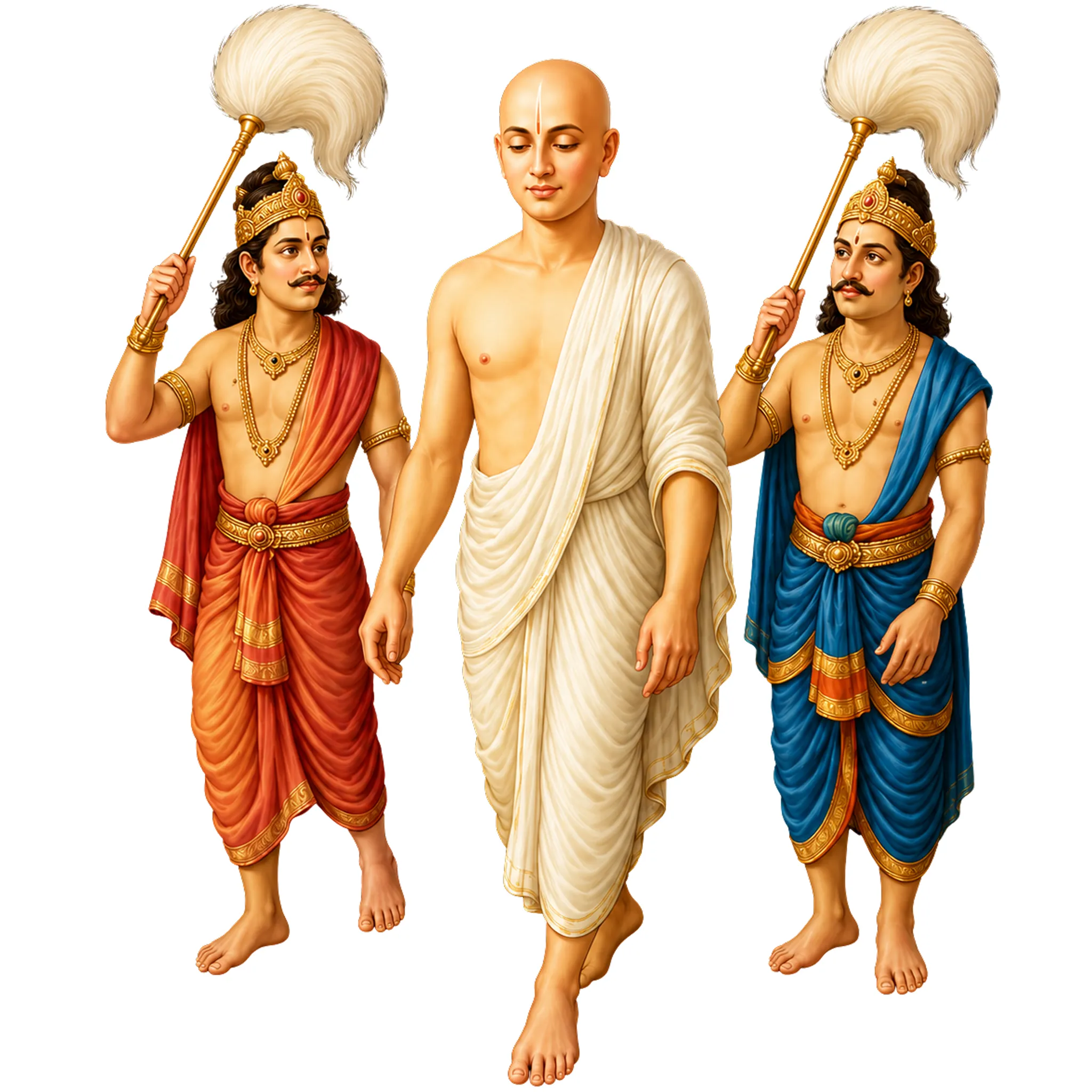
Introduction to Lord Rishabhdev
In Hindu scriptures, Lord Rishabhdev is given a special place as the eighth incarnation of Lord Vishnu. According to the Shrimad Bhagavata Mahapuran, Lord Rishabhdev showed the path of Paramahansa Dharma, Vairagya and Self-realization. He is considered to be a divine incarnation who inspired mankind to rise above material pleasures and live a spiritual life.
In the Linga Puran, Lord Rishabhdev is also given a place among the 28 incarnations of Lord Shiva. Some scholars also associate him with the first Tirthankara of Jainism, Rishabhnath, although there are different beliefs on this subject. However, in Hindu tradition, Lord Rishabhdev is worshipped as a symbol of renunciation, yoga, sannyasa and supreme knowledge.
Origin of Lord Rishabhdev
According to mythological stories, a king named Agnidhra was born in the dynasty of Priyavrata, the son of Swayambhu Manu. Agnidhra's son Nabhi received the kingdom of Bharatvarsh. King Nabhi and his wife Merudevi did not have the happiness of children for a long time. Therefore, they started special yagnas and penances to please Lord Vishnu.
Pleased with their devotion and faith, Lord Vishnu appeared in the yagna mandap and blessed them that he himself would be born as his son. After that, Lord Vishnu incarnated as Rishabhdev from the womb of Merudevi. From birth, divine signs were visible on his body and his radiance was amazing.
Lord Rishabhdev's Royal Dharma and Life
Lord Rishabhdev was an extremely just, pious and compassionate king. During his reign, the people were happy and prosperous. There were no negative emotions like greed, anger and injustice in the minds of the people. There was an atmosphere of religion, truth and devotion in the entire kingdom.
Lord Rishabhdev, despite being an incarnation of Lord Vishnu himself, followed the Vedic tradition and organized many yagnas. He taught the people the path of Karma Yoga, truth and charity. Through his lifestyle, he showed that spirituality can be achieved even amidst power and splendor.
Lord Rishabhdev's Teachings
Lord Rishabhdev explained the deep philosophy of life to his sons and people. He said that human birth is not just for pleasure, but for self-knowledge and devotion to God.
In his teachings, special importance is given to detachment, restraint, truth and devotion. He taught that a person who is trapped in sensual pleasures remains in bondage, while one who adopts the path of devotion and knowledge attains liberation.
Paramahamsa and Avadhuta Life
After completing his political career, Lord Rishabhdev handed over the kingdom to his eldest son Bharata and himself adopted the life of a hermit. He renounced all pomp, royal pleasures and material things and adopted the path of Paramahamsa religion.
Lord Rishabhdev started wandering in forests, mountains and villages in the form of a Digambara Avadhuta. He gave the knowledge of complete detachment to the yogis and ascetics through his behavior. He remained silent and remained in self-reflection and supreme peace.
Lord Rishabhdev's Renunciation
In the last days, Lord Rishabhdev entered the Kutkachal region of South India. There he completely immersed himself in detachment and yoga.
According to the mythological narrative, a terrible fire broke out in the forest and Lord Rishabhdev merged into Brahman through his yoga power. His renunciation is also considered a unique example of yoga and detachment.
Lord Rishabhdev's family
Lord Rishabhdev's father was Raja Nabhi and mother was Merudevi. He was married to Jayanti, the daughter of Devraj Indra.
Lord Rishabhdev had a total of one hundred sons, of whom Bharat was the eldest and most famous. The name Bharatvarsh is also believed to have been derived from Bharat's name.
Description of Lord Rishabhdev's form
Lord Rishabhdev is usually depicted in the form of a Digambar ascetic and an Avadhuta. His hair is disheveled and his face appears bright and serene.
His long arms, lotus-like eyes and divine personality make him unique from other sages. He is considered a living symbol of detachment and supreme knowledge.
Festivals associated with Lord Rishabhdev
Lord Rishabhdev Jayanti holds special significance for devotees. On this day, devotees remember Lord Rishabhdev through fasting, worship and meditation.
Rishabhdev Nirvana Day is also celebrated in some places, in which his penance and ascetic life are remembered.
Famous Temples of Lord Rishabhdev
The Rishabhdev Temple in Udaipur, Rajasthan is one of the most famous temples of Lord Rishabhdev. A large number of devotees come here every year for darshan.
Apart from that, there are temples and pilgrimage sites of Lord Rishabhdev in many holy places in Prayagraj and Madhya Pradesh, where devotees reach for devotion and meditation.
Mantras of Lord Rishabhdev
It is believed that chanting the mantras of Lord Rishabhdev achieves peace of mind, detachment and spiritual progress.
॥ ओम रिषभदेवाय नमह ॥
॥ ओम परमहसाय विद्यमे विराग्यमुरेगयमुरे धेमह. ॥ टनो रिषभहात्यात ॥
Spiritual significance of Lord Rishabhdev
Lord Rishabhdev is a great ideal of renunciation, devotion and self-knowledge for mankind. He taught that the true goal of life is not material happiness but self-realization.
It is believed that his worship develops peace, restraint and spiritual power in humans. The life of Lord Rishabhdev is still a source of inspiration for yogis, seekers and those on the spiritual path.