






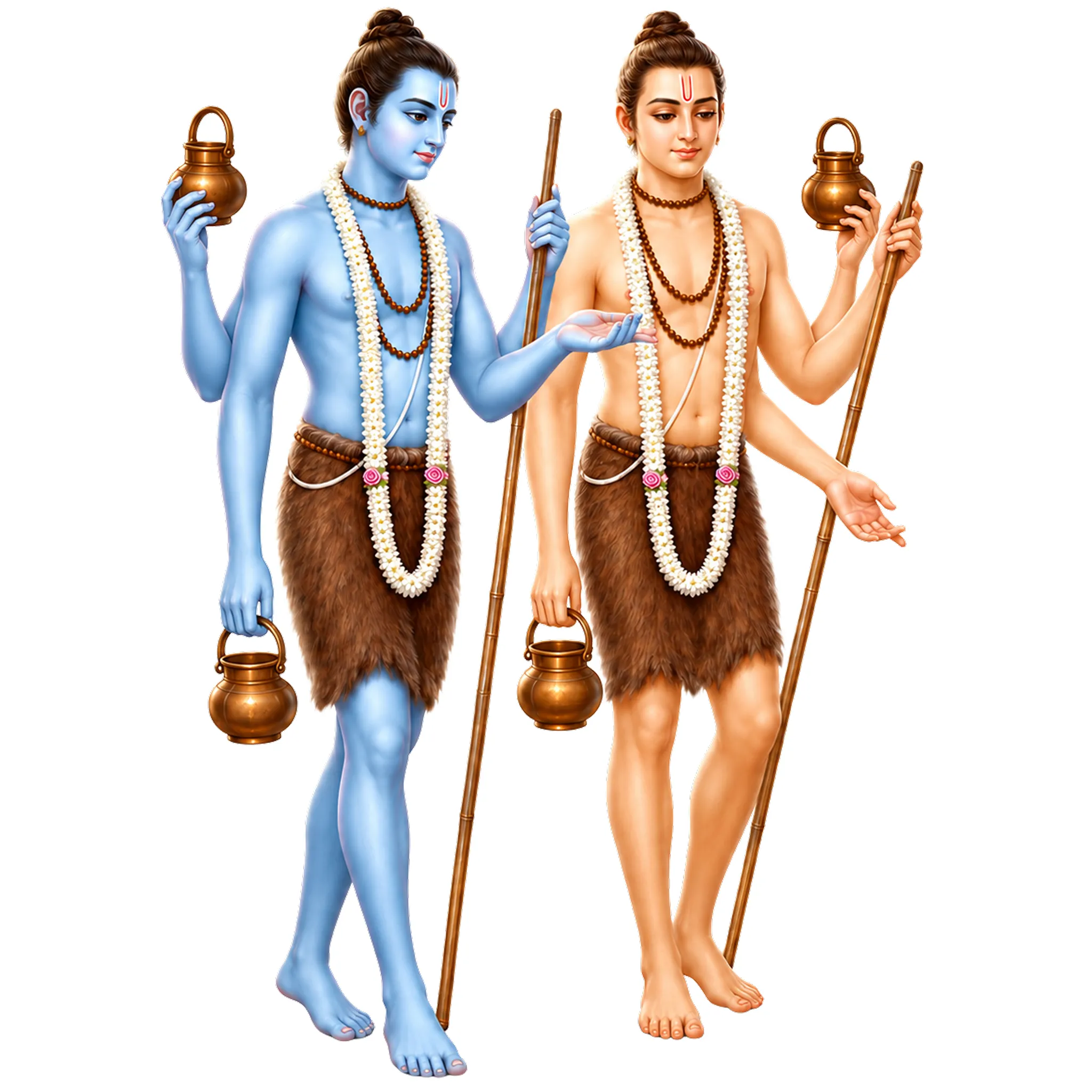
Introduction to Lord Nara-Narayan
In Hinduism, Lord Nara-Narayan is considered to be the most holy and ascetic incarnation of Lord Vishnu. Among the 24 main incarnations of Lord Vishnu described in the Shrimad Bhagavat Mahapuran, the Nara-Narayan incarnation has been given a special place. Lord Nara and Narayan appeared as two divine brothers, who descended on earth for the establishment of religion, penance and world welfare.
In religious texts, Lord Nara-Narayan has been described as an extremely powerful yogi and a great sage. He remained immersed in severe penance for thousands of years in the holy Badrinath and Kedarvan of Uttarakhand. Even today, Badrinath Dham and Nara-Narayan Mountain are known as his divine penance places.
Origin of Lord Nara-Narayana
According to mythological stories, in ancient times there was a terrible demon named Dambodbhava. He received the wonderful boon of thousands of divine shields by performing severe penance from Lord Surya. According to that boon, thousands of years of penance were required to break each of his shields and as soon as one shield broke, the attacker was certain to die.
After getting this power, Dambodbhava started spreading tyranny and arrogance in the three worlds. The gods, sages and common animals became distressed by his torment. Then Dharma's wife Ruchi prayed to Lord Vishnu to incarnate as her son and destroy this demon. Lord Vishnu accepted her prayer and incarnated as divine twin sons named Nara and Narayana.
Austerity in Badrivan
Lord Nara-Narayan was very religious and ascetic from his childhood. He went to Badrivan and Kedarvan in Uttarakhand on the orders of his mother and started austerity. These places are considered to be among the holiest pilgrimage sites of Hinduism today.
Badrinath Dham is located on the banks of the Alaknanda river and even today the Nara-Narayan mountain can be seen there. It is believed that Lord Nara-Narayan had performed penance on this holy land since time immemorial and had gathered spiritual power for the welfare of the entire world.
War with Dambhodbhava
One day, in his arrogance, Dambhodbhava reached the place where Lord Nara-Narayana was absorbed in penance. He tried to break their penance and challenged them to a fight. Lord Nara advised him to follow the path of religion, but the demon remained steadfast in the fight.
Then Lord Nara transformed a twig into a weapon with the power of mantra and started a war with Dambhodbhava. With the power of thousands of years of penance, Lord Nara broke one of his shields, but due to the influence of the boon, he died. Then Lord Narayana revived Nara through the science of reviving the dead and himself went ahead for the war.
In this way, the war continued for thousands of years and one after another, 999 shields of Dambhodbhava were broken. Finally, the demon hid in the sun in fear. Then Lord Narayan found him and resolved to end him.
Relationship with Karna, Krishna and Arjuna
It is narrated in the religious texts that Lord Narayan cursed Suryadev for protecting Dambhodbhava. Then in Kali Yuga, Karna was born from the part of Dambhodbhava and the sun.
Lord Nara and Narayan incarnated in the form of Arjuna and Lord Shri Krishna in the next era. In the Mahabharata, Shri Krishna and Arjuna played an important role in ending Karna. In this way, the divine relationship between the Nara-Narayan avatar and the story of Mahabharata is shown.
Lord Shiva and Kedareshwar Jyotirlinga
According to the Shiv Purana, Lord Nara-Narayan had pleased Lord Shiva through thousands of years of rigorous penance. When Lord Shiva appeared, Nara-Narayan requested for the welfare of the entire world to reside there in the Partheva Shivlinga.
Lord Shiva was pleased with his devotion and accepted his request and settled there forever in the form of Kedareshwar Jyotirlinga. Today's Kedarnath Dham is believed to be connected with this holy event.
Description of the form of Lord Nara-Narayan
Lord Nara-Narayan is depicted in the form of ascetic sages. They are depicted with a jatta on their head, a shrivatsa symbol on their chest and divine radiance in their hands.
They are depicted in simple ascetic clothes and their idols reflect a divine reflection of peace, knowledge and spiritual power. In many paintings, Lord Nara and Narayana are depicted together in a meditative state.
Family of Lord Nara-Narayana
According to religious texts, Lord Nara-Narayana's father was Dharma and mother was Ruchi. Lord Brahma is considered their paternal grandfather.
Lord Nara and Narayana spent their entire lives in celibacy and penance. They did not accept any married life and dedicated their entire lives to the propagation of religion and devotion.
Mantras of Lord Nara-Narayana
Chanting the mantras of Lord Nara-Narayana develops peace, spiritual power and devotion in the mind. Devotees get inspiration of religion and positivity in life through their worship.
॥ ॐ ओम नरनारायनाय नमह ॥
ॐ ओम श्री नरनारायन देवाय नमह ॥
ॐ ओम श्री नारोतममह ॥
ॐ नरायनामं नामस्कृत्या चैव नरोतममम.
देविन सरस्वतीं व्यसं तो जयमुदिरेयन ज्यमुदिर� On this day, devotees perform special worship, chanting and penance of Lord Nar-Narayan.
Nara-Narayan fairs and religious programs are organized in Uttarakhand and other holy places, where thousands of devotees arrive for darshan.
Famous temples of Lord Nar-Narayan
There are many holy places associated with Lord Nar-Narayan in India. Badrinath Dham and Nar-Narayan Parvat in Uttarakhand are considered to be the most famous religious places.
Nara-Narayan Ghat in Varanasi and Nar-Narayan Temple in Mumbai are also very popular among devotees. Devotees come here to seek spiritual peace and the grace of God.
Spiritual Significance of Lord Nara-Narayan
Lord Nara-Narayan is a living symbol of devotion, penance and religion. His story teaches the devotees that by following the path of truth, restraint and devotion, one attains divine power in life.
His worship leads to peace of mind, spiritual progress and increased faith in religion. Lord Nara-Narayan teaches the devotees the importance of penance, devotion and self-control.