


Tulasi Vivah 2026: Date, Tithi, Puja Vidhi, Story, Significance and Rituals
Tulasi Vivah 2026 falls on Saturday, November 21, 2026 and is observed during the auspicious Shukla Paksha of the Kartik month. According to the Hindu Panchang, the sacred Tithi begins at Saturday, November 21, 2026 at 6:31 AM and ends at Sunday, November 22, 2026 at 4:56 AM. The festival marks the ceremonial marriage of Goddess Tulasi, worshipped in the form of the holy Tulsi plant, with Lord Vishnu, represented by Shaligram or sometimes by an idol of Lord Krishna. This symbolic wedding is one of the most important observances in Vaishnav tradition and signifies the end of Chaturmas, the four-month period during which many auspicious ceremonies are traditionally avoided. From Tulasi Vivah onward, the Hindu wedding season begins, and families once again perform marriages, housewarming ceremonies, and other religious celebrations.
Across India, Tulasi Vivah is observed with deep devotion in homes and temples. The Tulsi plant is beautifully decorated like a bride, while Shaligram or Lord Vishnu is worshipped as the groom. Devotees perform the complete wedding ceremony by chanting prayers, offering flowers, lighting lamps, and presenting fruits and sweets as prasad. Although the ritual is symbolic, it is performed with the same reverence and joy as a traditional Hindu marriage. The festival reminds devotees of the eternal relationship between faith, devotion, and divine grace, while reinforcing the importance of preserving age-old traditions that continue to unite families and communities.
Below you will find the Tulasi Vivah 2026 date, Tithi timings, religious significance, the story behind the festival, the importance of Tulsi in Hinduism, and the traditions associated with this sacred celebration.
Tulasi Vivah 2026 At a Glance
| Detail | Information |
|---|---|
| Festival | Tulasi Vivah / Tulsi Vivah |
| Date | Saturday, November 21, 2026 |
| Hindu Month | Kartik |
| Paksha | Shukla Paksha |
| Tithi Begins | Saturday, November 21, 2026 at 6:31 AM |
| Tithi Ends | Sunday, November 22, 2026 at 4:56 AM |
| Main Deities | Goddess Tulasi and Lord Vishnu (Shaligram) |
| Significance | Symbolic marriage of Tulasi and Lord Vishnu, marking the beginning of the Hindu wedding season |
Tulasi Vivah Date and Tithi 2026
In 2026, Tulasi Vivah will be celebrated on Saturday, November 21, 2026. According to the Hindu Panchang, the auspicious Tithi begins at Saturday, November 21, 2026 at 6:31 AM and concludes at Sunday, November 22, 2026 at 4:56 AM. Since the festival is observed according to the lunar calendar, its date changes every year in the Gregorian calendar while always falling during the bright fortnight of the Kartik month.
The day is regarded as highly auspicious for worshipping Lord Vishnu and Goddess Tulasi together. Temples dedicated to Lord Vishnu hold special ceremonies, while countless families perform Tulasi Vivah in their homes by decorating the Tulsi plant and conducting a symbolic wedding according to traditional customs. Many devotees also begin planning family celebrations and other auspicious events after this day, as Tulasi Vivah traditionally marks the conclusion of Chaturmas.
While the symbolic marriage ceremony can be performed throughout the day according to local traditions, devotees generally follow the Tithi mentioned in the Panchang and consult regional customs for the most suitable time to perform the puja.
What is Tulasi Vivah?
Tulasi Vivah is a sacred Hindu festival that celebrates the ceremonial marriage of Goddess Tulasi and Lord Vishnu. The Tulsi plant, found in countless Hindu households, is revered as the earthly manifestation of Goddess Tulasi, while Lord Vishnu is represented by the sacred Shaligram stone or an idol of Lord Krishna. The ceremony symbolises the eternal union of devotion and divine protection, making it one of the most spiritually meaningful festivals observed during the Kartik month.
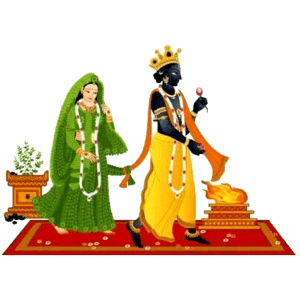
Although the marriage is symbolic, every aspect of a traditional Hindu wedding is carefully recreated. The Tulsi plant is decorated with colourful cloth, ornaments, flowers, and garlands to resemble a bride. Shaligram or Lord Vishnu is respectfully placed beside the plant as the groom. Family members gather together to chant prayers, perform aarti, exchange symbolic wedding offerings, and distribute prasad after the ceremony. This unique celebration transforms ordinary household worship into a joyful festival filled with devotion and gratitude.
Unlike festivals that commemorate a single historical event, Tulasi Vivah combines mythology, spiritual symbolism, and family tradition. It serves as a reminder that devotion, purity, and unwavering faith are among the highest virtues praised in Hindu scriptures. For generations, the festival has strengthened family bonds while encouraging younger members to learn about their cultural and religious heritage.
Why Tulasi Vivah is Celebrated
Tulasi Vivah is celebrated to honour the sacred relationship between Goddess Tulasi and Lord Vishnu. According to Hindu belief, Lord Vishnu granted Goddess Tulasi an eternal place in His worship after recognising her extraordinary devotion and purity. Since then, Tulsi leaves have become an essential offering in Vishnu worship, and devotees consider their prayers incomplete without them. The annual celebration of Tulasi Vivah commemorates this divine blessing and expresses gratitude for the spiritual protection that devotees believe the Goddess provides.
The festival also carries great seasonal significance within the Hindu calendar. During Chaturmas, which lasts for four sacred months, many auspicious ceremonies such as marriages are traditionally postponed. Tulasi Vivah marks the conclusion of this period, signalling that favourable occasions may once again be celebrated. As a result, the festival is often regarded as the ceremonial beginning of the Hindu wedding season, and many families begin preparing for weddings soon after its observance.
Beyond its religious meaning, Tulasi Vivah reflects values that remain relevant today. It encourages devotion, humility, gratitude, and respect for nature through the worship of the sacred Tulsi plant. The festival also strengthens family traditions by bringing together multiple generations to participate in prayers, rituals, and celebrations. These customs have helped preserve the importance of Tulasi Vivah for centuries and continue to inspire millions of devotees every year.
The Story Behind Tulasi Vivah
The story of Tulasi Vivah is rooted in ancient Hindu scriptures and is closely associated with Goddess Tulasi, also known as Vrinda, and Lord Vishnu. For centuries, devotees have narrated this sacred legend during the Kartik month to explain why the Tulsi plant occupies such a special place in Hindu worship. More than the story of a symbolic marriage, Tulasi Vivah represents unwavering devotion, righteousness, sacrifice, and the promise of eternal divine grace.
According to the Puranas, Vrinda was the devoted wife of the mighty demon king Jalandhara. Although Jalandhara possessed immense strength and courage, the true source of his invincibility was not his own power but the unwavering chastity and devotion of his wife. Vrinda's deep faith and strict spiritual discipline created a divine shield that protected her husband from defeat, making it impossible even for the gods to overcome him in battle.
As Jalandhara's victories continued, the balance between good and evil began to change. The gods approached Lord Vishnu for guidance, explaining that Jalandhara's growing power threatened the order of the universe. Since the demon king could not be defeated while Vrinda's spiritual purity remained unbroken, Lord Vishnu chose to intervene for the welfare of creation.
To end the conflict, Lord Vishnu assumed the appearance of Jalandhara and appeared before Vrinda while her husband was away on the battlefield. Believing that her husband had safely returned, Vrinda's unwavering concentration was disturbed, and the divine protection surrounding Jalandhara came to an end. At that very moment, Lord Shiva defeated Jalandhara in battle, restoring peace to the universe.
When Vrinda realised what had happened, she was heartbroken. Although she recognised that Lord Vishnu had acted for the greater good, she was overcome with grief and cursed Him to become a stone. Respecting her sincerity and the power of her devotion, Lord Vishnu accepted the curse without anger. It is believed that this curse led to His manifestation as the sacred Shaligram, which is worshipped by devotees to this day.
Filled with compassion, Lord Vishnu also blessed Vrinda with immortality through devotion. He declared that she would be worshipped forever in the form of the sacred Tulsi plant and that no worship offered to Him would be considered complete without Tulsi leaves. To honour her unwavering faith and purity, He further promised that their symbolic marriage would be celebrated every year during the Kartik month. This divine promise became the origin of Tulasi Vivah, a tradition that has continued across generations.
For devotees, this story is not simply a legend but a reminder that true devotion never goes unnoticed. Even during moments of hardship and sacrifice, sincere faith ultimately receives divine recognition. Every year, the celebration of Tulasi Vivah preserves this timeless message and inspires devotees to follow a path of righteousness, humility, and unwavering dedication to God.
Religious Significance of Tulasi Vivah
Tulasi Vivah occupies a special place in the Hindu religious calendar because it combines devotion, tradition, and spiritual symbolism into a single celebration. The festival marks the ceremonial union of Goddess Tulasi and Lord Vishnu while also signifying the completion of Chaturmas, a four-month period dedicated to prayer, self-discipline, and spiritual reflection. With the conclusion of Chaturmas, Hindu families once again begin performing auspicious ceremonies such as marriages, housewarming rituals, naming ceremonies, and other sacred events.
For followers of Lord Vishnu, Tulasi Vivah is one of the most important observances of the Kartik month. Devotees believe that worshipping Lord Vishnu together with Goddess Tulasi on this day brings blessings for peace, prosperity, family harmony, and spiritual progress. The festival also reminds devotees that faith is strengthened through sincerity, discipline, and regular worship rather than through material wealth or elaborate rituals.
Many Hindu households maintain a Tulsi plant throughout the year and perform daily worship by offering water, lighting a lamp, and circumambulating the plant. Tulasi Vivah becomes the grand annual celebration of this daily devotion. The beautifully decorated Tulsi plant represents the bride, while Lord Vishnu in the form of Shaligram symbolises the groom. This sacred union expresses the eternal relationship between the devotee and the Divine, reminding worshippers that devotion ultimately leads to spiritual fulfilment.
The festival is also associated with gratitude. Families gather together to thank Lord Vishnu and Goddess Tulasi for their blessings while praying for continued health, happiness, prosperity, and protection. Parents introduce younger generations to the traditions surrounding the Tulsi plant, ensuring that the customs and values associated with Tulasi Vivah continue to be preserved within the family.
Although Tulasi Vivah is especially popular among Vaishnav devotees, its message extends beyond any single tradition. The festival teaches compassion, faith, humility, and respect for nature. By honouring the sacred Tulsi plant, devotees also acknowledge the close relationship between spiritual life and the natural world, a principle that has been part of Hindu philosophy for thousands of years.
Why Tulsi is Sacred in Hinduism
The Tulsi plant holds an honoured place in Hindu tradition and is regarded as one of the most sacred plants mentioned in the scriptures. Found in the courtyards of countless Hindu homes, Tulsi is much more than a medicinal herb. It is worshipped as the earthly manifestation of Goddess Tulasi and is considered a symbol of purity, devotion, and divine protection. Daily worship of the Tulsi plant remains an important spiritual practice for millions of devotees across India.
According to Hindu belief, every part of the Tulsi plant is considered sacred. Offering Tulsi leaves to Lord Vishnu is regarded as one of the simplest yet most meaningful acts of devotion. Scriptures describe that even the grandest offerings made without Tulsi leaves are considered incomplete in the worship of Lord Vishnu. Because of this belief, Tulsi occupies a central place in festivals dedicated to Vishnu, including Ekadashi, Kartik observances, and Tulasi Vivah.
Beyond its religious significance, Tulsi has long been valued for its traditional medicinal properties. In Ayurveda, the plant is respected for supporting overall health and well-being. This combination of spiritual importance and traditional healing has helped Tulsi become an inseparable part of everyday Hindu life. Many families begin their morning prayers by offering water to the Tulsi plant before starting their daily activities, expressing gratitude for both physical and spiritual well-being.
The presence of a Tulsi plant in the home is often regarded as a symbol of positivity and purity. Caring for the plant teaches patience, responsibility, and respect for nature while reminding devotees that simple daily acts of devotion can strengthen one's spiritual life. Tulasi Vivah celebrates these values on a larger scale by transforming the ordinary practice of Tulsi worship into a joyful religious festival shared by the entire family.
Symbolism of Tulsi and Shaligram
The symbolic marriage celebrated during Tulasi Vivah brings together two sacred forms that hold profound importance in Hindu tradition. Goddess Tulasi represents unwavering devotion, purity, and selfless love, while Shaligram symbolises Lord Vishnu, the preserver of the universe and protector of righteousness. Their ceremonial union reflects the inseparable relationship between the Divine and sincere devotion.
During the festival, devotees decorate the Tulsi plant as a bride and place Shaligram beside it as the groom. The rituals performed during the symbolic wedding remind families that spiritual life is built upon faith, discipline, and gratitude. Rather than focusing only on external ceremonies, Tulasi Vivah encourages devotees to cultivate devotion within their own hearts, following the example set by Goddess Tulasi herself.
The symbolism of Tulsi and Shaligram also reflects harmony between nature and spirituality. While the Tulsi plant grows in the courtyard of the home, the Shaligram is a naturally occurring sacred stone found in the Gandaki River of Nepal. Together, they remind devotees that divinity is present throughout creation and that sincere worship can be performed with simplicity, humility, and faith.
Tulasi Vivah in Hindu Scriptures
The tradition of Tulasi Vivah is mentioned in several Hindu scriptures, particularly the Padma Purana, Skanda Purana, and Brahma Vaivarta Purana, where the story of Goddess Tulasi and Lord Vishnu is narrated in different forms. These texts emphasise the spiritual importance of Tulsi worship and explain why Tulsi leaves are considered indispensable in the worship of Lord Vishnu.
The scriptures describe Tulasi not only as a sacred plant but as a divine being whose devotion earned eternal recognition from Lord Vishnu. They encourage devotees to worship Tulsi with sincerity throughout the Kartik month, a period already regarded as one of the holiest times of the Hindu calendar. Observing Tulasi Vivah during this sacred month is believed to bring spiritual merit while deepening one's connection with Lord Vishnu.
Over the centuries, these scriptural teachings have inspired countless families to continue the tradition of Tulasi Vivah with devotion and reverence. Although regional customs may vary, the central message remains unchanged: sincere devotion, humility, and faith are always rewarded by the Divine, and the story of Goddess Tulasi continues to inspire generations of devotees across India and beyond.
Tulasi Vivah Puja Vidhi
The rituals of Tulasi Vivah are performed with the same devotion and joy as a traditional Hindu wedding. Although the ceremony is symbolic, every step reflects deep spiritual meaning and honours the divine union of Goddess Tulasi and Lord Vishnu. Families usually perform the puja in the evening after cleaning and decorating the worship area. The Tulsi plant is beautifully adorned as a bride, while Shaligram or an idol of Lord Vishnu is placed nearby as the groom. Relatives and neighbours often gather to participate in the ceremony, making the occasion both a religious observance and a family celebration.
Preparations begin by thoroughly cleaning the courtyard or the place where the Tulsi plant is situated. Rangoli designs are drawn around the Tulsi Vrindavan, and oil lamps are lit to create a sacred atmosphere. Fresh flowers, mango leaves, sugarcane, banana stems, and colourful decorations are commonly used to decorate the area. These preparations symbolise welcoming divine blessings into the home.
The Tulsi plant is then decorated with a small sari or decorative cloth, ornaments, bangles, and flower garlands to represent the bride. Shaligram, which represents Lord Vishnu, is placed on a decorated platform beside the Tulsi plant. In some households, an idol of Lord Krishna or Lord Vishnu is used instead of Shaligram, depending on family traditions.
After invoking Lord Ganesha for an obstacle-free ceremony, devotees offer sandalwood paste, kumkum, turmeric, flowers, incense, lamps, fruits, sweets, and sacred water. The symbolic wedding ceremony is then performed by tying a sacred thread between Tulsi and Shaligram while chanting prayers dedicated to Lord Vishnu. Many families also recite Vishnu Sahasranama, Tulsi Stotram, or devotional bhajans during the ceremony to enhance the spiritual atmosphere.
Once the marriage rituals are completed, devotees perform aarti and offer naivedya before distributing prasad among family members and guests. The ceremony concludes with prayers seeking peace, prosperity, good health, and spiritual progress for the entire family. Although customs vary slightly across different regions of India, the central purpose of the puja remains the same: expressing devotion to Lord Vishnu and honouring Goddess Tulasi.
Tulasi Vivah Puja Samagri
The items required for Tulasi Vivah are simple yet deeply symbolic. Most of them are commonly available in Hindu households, while a few are arranged specifically for the festival. Every offering represents devotion, purity, and gratitude rather than material wealth. Families carefully prepare these items before beginning the wedding ceremony so that the puja can be performed without interruption.
- Tulsi plant
- Shaligram or an idol of Lord Vishnu
- Red or yellow decorative cloth
- Fresh flowers and garlands
- Kumkum and turmeric
- Sandalwood paste
- Akshata (turmeric rice)
- Incense sticks and camphor
- Ghee lamp with cotton wicks
- Coconut
- Sugarcane
- Bananas and seasonal fruits
- Sweets and homemade prasad
- Panchamrit
- Betel leaves and betel nuts
- Sacred thread (Mouli)
Many families also prepare homemade sweets and festive dishes as offerings after the wedding ceremony. The emphasis is always on cleanliness, devotion, and sincerity rather than elaborate arrangements. Even a simple Tulasi Vivah performed with faith is considered spiritually rewarding according to Hindu tradition.
Fasting Rules and Traditions
Many devotees observe a fast on Tulasi Vivah as an expression of devotion to Lord Vishnu and Goddess Tulasi. Although fasting practices differ from one region to another, the underlying purpose remains the same—to cultivate self-discipline, purify the mind, and focus completely on prayer. Some devotees observe a complete fast until the evening puja, while others consume only fruits, milk, or sattvic food during the day.
The day usually begins with an early morning bath followed by the cleaning of the home and worship area. Devotees wear clean or traditional clothes and spend time chanting the names of Lord Vishnu, reading sacred scriptures, or listening to devotional songs. Many families avoid consuming onion, garlic, alcohol, and non-vegetarian food throughout the day as part of the observance.
The fast is generally concluded after the Tulasi Vivah ceremony has been completed and the prasad has been offered to the deities. Sharing prasad with family members and neighbours is considered an important part of the celebration because it reflects the spirit of gratitude and togetherness that defines the festival.
Although fasting is widely observed, it is not compulsory. Elderly people, children, pregnant women, and those with health concerns may participate in the puja without observing a strict fast. Hindu tradition places greater importance on sincerity of devotion than on physical austerity, allowing devotees to observe the festival according to their circumstances.
Offerings Made During Tulasi Vivah
Offering naivedya is an important part of Tulasi Vivah because it expresses gratitude to Lord Vishnu and Goddess Tulasi. Families prepare a variety of traditional foods using fresh and pure ingredients before presenting them to the deities. The offerings are made with devotion rather than extravagance, reflecting the belief that sincere faith is more valuable than material richness.
Fresh fruits such as bananas, coconuts, pomegranates, apples, and seasonal produce are commonly offered during the ceremony. Sugarcane occupies a special place in many regions because the festival coincides with the harvest season. Homemade sweets prepared from jaggery, wheat flour, rice, milk, and ghee are also presented as prasad before being distributed among family members.
Many households prepare Panchamrit using milk, curd, honey, sugar, and ghee as part of the offering. Tulsi leaves are respectfully placed before Lord Vishnu, symbolising the inseparable connection between the Goddess and the Lord. Every offering made during Tulasi Vivah reflects humility, devotion, and gratitude rather than ritual complexity.
Spiritual Benefits of Observing Tulasi Vivah
Tulasi Vivah is observed not only as a traditional festival but also as an opportunity for spiritual reflection and personal growth. The celebration encourages devotees to strengthen their relationship with Lord Vishnu through prayer, self-discipline, and acts of devotion. Participating in the symbolic marriage reminds worshippers that true happiness arises from faith, compassion, and righteous living rather than from worldly achievements alone.
According to Hindu belief, worshipping Goddess Tulasi and Lord Vishnu on this sacred day brings peace, prosperity, and harmony to the home. Married couples seek blessings for a happy and stable family life, while unmarried devotees pray for suitable life partners and a blessed future. Parents also pray for the health, success, and well-being of their children, making Tulasi Vivah a festival centred on family welfare.
The festival inspires devotees to cultivate virtues such as patience, gratitude, humility, and generosity. Spending time in prayer, participating in religious ceremonies, and sharing prasad with others encourages a sense of unity within families and communities. These timeless values have allowed Tulasi Vivah to remain a meaningful celebration across generations.
Beyond its religious significance, Tulasi Vivah also reminds devotees to respect and care for nature. The Tulsi plant represents purity and life, and its daily worship reflects the close relationship between spirituality and the natural world. By honouring Tulsi, devotees acknowledge that caring for nature is itself a sacred responsibility, one that has been celebrated in Hindu tradition for centuries.
Tulasi Vivah Celebrations Across India
Although Tulasi Vivah follows the same spiritual principles throughout the country, its celebrations reflect the rich cultural diversity of different regions of India. Whether performed in a small family courtyard or a large temple complex, the festival brings together devotion, tradition, and community participation. The symbolic marriage of Goddess Tulasi and Lord Vishnu is celebrated with prayers, devotional music, beautifully decorated Tulsi plants, and the sharing of prasad among family members and visitors.
In Maharashtra, Tulasi Vivah is one of the most eagerly awaited festivals of the Kartik month. Families decorate the Tulsi Vrindavan with colourful rangoli, sugarcane, marigold flowers, and earthen lamps. The Tulsi plant is dressed as a bride, while Shaligram or Lord Krishna is worshipped as the groom. The symbolic wedding ceremony is performed with traditional wedding songs, making the occasion feel like a real family marriage.
Across Gujarat and Rajasthan, devotees observe Tulasi Vivah with equal enthusiasm. Many Vaishnav families organise special pujas in their homes and temples, inviting relatives and neighbours to participate in the celebrations. Devotional singing, Vishnu bhajans, and the distribution of sweets and prasad are common features of the festival. In several temples, priests perform elaborate ceremonies attended by hundreds of devotees seeking the blessings of Lord Vishnu and Goddess Tulasi.
In Karnataka, Andhra Pradesh, Telangana, and Tamil Nadu, Tulasi Vivah is celebrated with local customs that have been preserved for generations. The Tulsi plant is decorated with silk cloth, flower garlands, and traditional ornaments, while homes are illuminated with lamps during the evening puja. Families gather to recite Vishnu Sahasranama, sing devotional hymns, and perform aarti before sharing festive meals together.
In North India, particularly in Uttar Pradesh, Madhya Pradesh, Bihar, and parts of Delhi, Tulasi Vivah is observed in both homes and temples dedicated to Lord Vishnu and Lord Krishna. Many devotees combine the festival with Kartik month observances, making it an important occasion for charity, devotional singing, and community worship. Regardless of regional customs, the central purpose of the festival remains unchanged: honouring the eternal bond between Goddess Tulasi and Lord Vishnu through sincere devotion.
Regional Traditions Associated with Tulasi Vivah
One of the most beautiful aspects of Tulasi Vivah is the way it reflects local traditions while preserving the same spiritual message. Every region has developed unique customs that add colour and cultural richness to the celebration without changing its religious significance.
In many Maharashtrian households, a small sugarcane pavilion is built around the Tulsi plant to resemble a traditional wedding mandap. Decorative clay lamps, handmade rangoli, and fresh flower garlands create a festive atmosphere that welcomes guests and symbolises prosperity. Women sing traditional wedding songs while the symbolic marriage ceremony is performed, passing these customs from one generation to the next.
In several parts of South India, families perform Tulasi Vivah after completing the evening worship of Lord Vishnu. The ceremony is often accompanied by the recitation of sacred verses from the Vishnu Purana, Bhagavad Gita, or Vishnu Sahasranama. Children actively participate by decorating the Tulsi plant, helping prepare prasad, and learning about the religious importance of the festival from elders.
Some communities also organise collective Tulasi Vivah celebrations in temples or community halls, allowing many families to participate together. These gatherings strengthen social bonds while preserving religious traditions that have remained unchanged for centuries. The combination of family worship and community participation gives Tulasi Vivah a unique place among Hindu festivals.
Tulasi Vivah in Temples
Temples dedicated to Lord Vishnu, Lord Krishna, and other Vaishnav traditions celebrate Tulasi Vivah with great grandeur. The symbolic marriage ceremony is often performed according to Vedic traditions, accompanied by chanting of sacred mantras, devotional music, and elaborate decorations. Large numbers of devotees gather to witness the ceremony and seek the blessings of the deities.
Many temples decorate the sanctum with flowers, lights, banana stems, mango leaves, and colourful fabrics to recreate the atmosphere of a traditional Hindu wedding. The idol of Lord Vishnu or Lord Krishna is beautifully adorned, while the Tulsi plant is decorated as the divine bride. Priests perform the wedding rituals before offering special bhog and conducting aarti for the assembled devotees.
Temple celebrations also provide an opportunity for devotees who may not be able to perform Tulasi Vivah at home. By participating in the temple ceremony, offering prayers, and receiving prasad, they become part of the larger spiritual celebration shared by the community. Many temples also organise devotional singing, scriptural discourses, and charitable activities during the Kartik month, making Tulasi Vivah an occasion of both worship and service.
Tulasi Vivah Today
Although Tulasi Vivah has been celebrated for centuries, its relevance continues to grow in modern times. Families living in cities as well as villages continue to observe the festival with devotion, adapting the celebrations to their surroundings while preserving the essence of the tradition. Even those living outside India often perform Tulasi Vivah at home or participate in ceremonies organised by Hindu temples and cultural organisations.
The festival has also become an important opportunity for younger generations to reconnect with their cultural heritage. Parents and grandparents explain the story of Goddess Tulasi, teach children the significance of the rituals, and encourage them to participate in decorating the Tulsi plant and preparing offerings. These shared experiences help preserve traditions that might otherwise be forgotten in an increasingly fast-paced world.
Digital technology has also made it easier for devotees to learn about Tulasi Vivah, access Panchang information, and participate in online devotional programmes organised by temples. Despite these modern conveniences, the heart of the festival remains unchanged. The symbolic marriage of Goddess Tulasi and Lord Vishnu continues to inspire faith, gratitude, and devotion, just as it has for countless generations.
Importance of Preserving the Tradition
Tulasi Vivah is much more than an annual religious festival. It represents a living tradition that connects families with centuries of Hindu culture, scripture, and spiritual practice. Every prayer offered before the Tulsi plant, every lamp lit during the ceremony, and every devotional song sung during the celebration helps preserve an important part of India's religious heritage.
The festival also highlights the Hindu tradition of respecting nature as sacred. By worshipping the Tulsi plant, devotees acknowledge the close relationship between the natural world and spiritual life. This message remains meaningful today, reminding people that caring for plants, protecting the environment, and living in harmony with nature are responsibilities that extend beyond religious rituals.
As families continue celebrating Tulasi Vivah each year, they pass on values such as devotion, gratitude, compassion, humility, and respect for tradition to future generations. These values form the foundation of the festival and explain why Tulasi Vivah continues to hold a special place in Hindu homes across India and around the world. Through sincere worship of Goddess Tulasi and Lord Vishnu, devotees reaffirm their faith while celebrating one of the most cherished festivals of the Kartik month.