


Dev Diwali 2026: Date, Pradosh Muhurat, Puja Vidhi and Significance
Dev Diwali 2026 falls on Tuesday, November 24, 2026, observed on the Purnima Tithi of Kartik month, the full moon day fifteen days after Diwali. Also known as Dev Deepawali, Tripuri Purnima, and Kartik Purnima, this is the night when Varanasi's eighty-four ghats along the Ganges are lit with millions of earthen lamps in a spectacle that draws lakhs of visitors from across India and around the world. The belief central to Dev Diwali is that the gods themselves descend from heaven to bathe in the Ganges on this full moon night, and the lamps on the ghats are lit to welcome them. Below you will find the exact date, Tithi timing, Pradosh Muhurat, the stories behind the festival, puja vidhi, and how Dev Diwali is observed across India.
Dev Diwali 2026 At a Glance
| Detail | Timing / Info |
|---|---|
| Festival | Dev Diwali / Dev Deepawali / Tripuri Purnima / Kartik Purnima |
| Date 2026 | Tuesday, November 24, 2026 |
| Hindu Month | Kartik |
| Tithi | Purnima (Full Moon) |
| Purnima Tithi Begins | Monday, November 23, 2026 at 11:42 PM |
| Purnima Tithi Ends | Tuesday, November 24, 2026 at 8:23 PM |
| Pradosh Muhurat | 05:09 PM to 07:54 PM |
Dev Diwali Date and Pradosh Muhurat 2026
Dev Diwali is observed on Purnima Tithi of Kartik month every year. It falls fifteen days after Diwali and marks the conclusion of the Kartik festival season that begins with Dhanteras. This year, the Purnima Tithi begins at Monday, November 23, 2026 at 11:42 PM and ends at Tuesday, November 24, 2026 at 8:23 PM, with Dev Diwali falling on Tuesday, November 24, 2026.
The Pradosh Muhurat this year is 05:09 PM to 07:54 PM. The Pradosh Kaal the twilight period around sunset, is considered the most auspicious time for Dev Diwali puja and lamp lighting. In Varanasi, the main Ganga Aarti on Dev Diwali begins during the Pradosh Kaal, and the ghats are lit in full by the time the full moon rises over the river. Performing puja, lighting diyas, and visiting the ghats during the Pradosh Muhurat is the traditional way to observe Dev Diwali.
What Is Dev Diwali
Dev Diwali, literally the Diwali of the gods, is the full moon festival of Kartik observed fifteen days after the main Diwali night. The name carries its meaning directly: Dev means god or divine being, and Diwali means the festival of lights. Where Diwali on Kartik Amavasya is celebrated by humans, Dev Diwali on Kartik Purnima is believed to be celebrated by the gods themselves.
The festival is also called Tripuri Purnima, named after the three cities of the demon Tripurasura, Tripura, that Lord Shiva destroyed on this full moon day. It is also called Kartik Purnima, the name that most Hindu almanacs use, which refers simply to the full moon of Kartik month. All three names Dev Diwali, Dev Deepawali, and Tripuri Purnima refer to the same Kartik Purnima night but emphasise different aspects of the day's significance.
The festival has its deepest roots in Varanasi, where it has been observed for centuries as the occasion when the gods visit the Ganges. Outside Varanasi, Kartik Purnima is observed as an important bathing tithi, a day of lamps and puja, and in some communities as the occasion when the month-long Kartik vrat is formally concluded.
The Story of Tripurasura — Why Dev Diwali Is Also Tripuri Purnima
The story behind Tripuri Purnima comes from the Shiva Purana. Three demon brothers, Tarakaksha, Kamalaksha, and Vidyunmali, the sons of Tarakasura, performed severe austerities and received a boon from Lord Brahma. The boon stated that they could only be killed when their three flying cities, built of gold, silver, and iron, came into alignment and were struck by a single arrow.
Confident in their near-invincibility, the three brothers known together as Tripurasura built their cities in the sky and began terrorising the three worlds. No single deity could stop them, as destroying all three flying cities simultaneously with one arrow was an impossible feat. The gods turned to Lord Shiva, who alone among the gods was powerful enough to take on such a task.
Shiva agreed and waited for the moment when all three cities would align. When they finally came into alignment on Kartik Purnima, Shiva released a single blazing arrow that destroyed all three cities simultaneously and killed Tripurasura. The gods, relieved and grateful, celebrated by lighting lamps across the heavens. The lighting of lamps on Kartik Purnima re-enacts this celestial celebration the gods lit lamps in heaven, and humans light lamps on earth in commemoration.
In Varanasi, this story gives Dev Diwali its character as a festival of Lord Shiva. The city of Varanasi is itself the city of Shiva, and the Tripurasura victory is celebrated here with a scale and intensity unmatched anywhere else. The lamps on the ghats represent the lights the gods lit in celebration, and the descent of the gods to bathe in the Ganges represents their arrival to mark the occasion.
The Belief That Gods Descend on Kartik Purnima
The central spiritual belief of Dev Diwali is that on the full moon night of Kartik, the gods leave their celestial abodes and descend to earth to bathe in sacred rivers, particularly the Ganges. The thirty-three crore gods of the Hindu tradition are said to gather at the Ganges on this night, making a bath in the Ganges on Kartik Purnima equivalent in merit to bathing in all sacred rivers at once.
This belief makes Kartik Purnima one of the most important bathing tithis in the Hindu calendar. Ghats at Varanasi, Haridwar, Prayagraj, Nashik, and other sacred river towns fill with pilgrims before sunrise on Dev Diwali. A holy dip in the Ganges on this morning is considered one of the most meritorious acts a devotee can perform, believed to wash away sins accumulated over many lifetimes.
The evening lamp lighting is the counterpart to the morning bath, where the bath is an act of purification for the human devotee; the lamps are an act of welcome for the divine guests. The lamps on the ghats are lit so that the gods, arriving to bathe, are received with honour and light. The Ganga Aarti performed at dusk in Varanasi is the formal welcome ceremony for the gods on this night.
Dev Diwali in Varanasi — The Eighty-Four Ghats
No description of Dev Diwali is complete without Varanasi. The city's eighty-four ghats stretch for nearly seven kilometres along the western bank of the Ganges, and on Dev Diwali night every one of them is illuminated with rows of earthen diyas, flower garlands, and the light of the thousands of lamps floating on the river. The sight of Varanasi on Dev Diwali night. The golden curve of the lit ghats reflected in the dark Ganges, the sound of bells and conch shells from the Ganga Aarti, the floating diyas moving downstream is one of the most iconic and genuinely moving sights in all of India.
The main Ganga Aarti on Dev Diwali takes place at Dashashwamedh Ghat, Varanasi's most prominent ghat and the site of the daily Ganga Aarti that draws thousands of visitors even on ordinary evenings. On Dev Diwali, the aarti is performed at a much larger scale, with multiple priests, rows of large multi-tiered lamps, and enormous crowds on the ghat steps and in boats on the river. The aarti begins during the Pradosh Kaal and continues as the full moon rises over the eastern bank.
Thousands of boats carry visitors out onto the river to watch the aarti from the water. The combination of the full moon's reflection on the Ganges and the rows of diyas on the ghats creates a visual experience that is difficult to replicate anywhere else. Varanasi fills with visitors from across India and abroad for Dev Diwali, and accommodation in the city is typically booked months in advance for this night.
Beyond Dashashwamedh, every major ghat Assi Ghat, Manikarnika Ghat, Tulsi Ghat, Panchganga Ghat, Raj Ghat has its own aarti and lamp lighting. The organisation of eighty-four sets of lamps across seven kilometres of riverfront is a logistics effort that the city's temples, organisations, and volunteer groups coordinate well in advance of the festival.
Pradosh Muhurat and Dev Diwali Puja
The Pradosh Muhurat on Dev Diwali, falling at 05:09 PM to 07:54 PM this year, is the most auspicious period for conducting the evening puja and lighting the lamps. Pradosh Kaal the twilight window is associated with Lord Shiva, and since Dev Diwali is rooted in Shiva's victory over Tripurasura, the Pradosh Kaal holds double significance on this night. Puja performed during the Pradosh Muhurat on Kartik Purnima is believed to carry the combined merit of Shiva worship and Kartik Purnima observance.
Families observing Dev Diwali at home light diyas at the entrance, along the walls, on the rooftop, and outside the home, and perform a brief Lakshmi-Shiva puja during the Pradosh window. Those near rivers, ponds, or any water body also float a lamp on the water as part of the observance.
Dev Diwali Puja Vidhi
Begin the day with a bath before sunrise. If near a sacred river or water body, a holy dip in the early morning of Kartik Purnima is considered highly auspicious. Clean the home and the puja area, and set up idols or images of Lord Shiva and Goddess Lakshmi together, Shiva for the Tripurasura victory and Lakshmi for the full moon festival's wealth dimension.
The puja thali should include: Kumkum, Haldi, Akshat, white flowers; white is associated with the full moon and with Kartik Purnima — a diya, incense, Panchamrit (milk, curd, honey, ghee, sugar) for Shiva abhishek, Bel leaves, and sweets. Sesame til is also offered on Kartik Purnima, as it is considered purifying and auspicious on full moon days in Kartik.
During the Pradosh Muhurat, perform the Shiva puja by offering Panchamrit and Bel leaves to the Shiva linga or image, chanting:
Om Namah Shivaya — the primary Shiva mantra, the five-syllable mantra that is Shiva's most fundamental invocation.
Also chant:
Om Tryambakam Yajamahe Sugandhim Pushtivardhanam, Urvarukamiva Bandhanan Mrityor Mukshiya Mamritat — the Mahamrityunjaya mantra, deeply associated with Shiva and particularly appropriate on a night when Shiva's victory over the forces of death and destruction is commemorated.
After the puja, light the diyas. Begin with a diya at the entrance, then light lamps along the perimeter of the home, on the rooftop, and at the tulsi plant if there is one. If near water, float a small earthen lamp on the river, pond, or even a bucket of water as a symbolic gesture of the Varanasi tradition. The floating lamp is an offering to the gods who are believed to be present in the water on this night.
Kartik Purnima Bathing — The Sacred Significance of the Morning Dip
The morning bath on Kartik Purnima is one of the most spiritually significant acts in the Hindu calendar. Pilgrims travel to sacred rivers the Ganges at Varanasi, Haridwar, Prayagraj, and Rishikesh; the Godavari at Nashik; the Krishna at Vijayawada; the Kaveri at Srirangam specifically for the Kartik Purnima holy dip.
The merit of bathing in the Ganges at Varanasi on Kartik Purnima is described in several Puranas as equivalent to performing every pilgrimage simultaneously. Bathing in any sacred river on this day, the texts say, washes away the sins of multiple births. Even bathing at home with a prayer to the Ganges touching the water while reciting the name of the Ganga is considered a valid form of the Kartik Purnima bath for those who cannot travel to a sacred river.
Kartik Purnima and Guru Nanak Jayanti
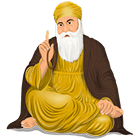
Kartik Purnima also coincides with Guru Nanak Jayanti the birth anniversary of Guru Nanak Dev Ji, the founder of Sikhism in most years. Guru Nanak was born on the full moon of Kartik, and his birth anniversary, called Gurpurab or Prakash Utsav, is observed with tremendous devotion by Sikh communities worldwide.
The coincidence of Dev Diwali and Guru Nanak Jayanti on the same Kartik Purnima makes this full moon one of the most observed religious days of the year across two major traditions. In cities with both significant Hindu and Sikh populations, the night of Kartik Purnima sees celebrations from both communities simultaneously — the ghats lit with diyas for Dev Diwali and the Gurudwaras illuminated for Gurpurab. The Golden Temple in Amritsar on Kartik Purnima night, lit in celebration of Guru Nanak Jayanti, is one of the most spectacular sights of the Indian religious calendar.
Dev Diwali and Tulsi Vivah
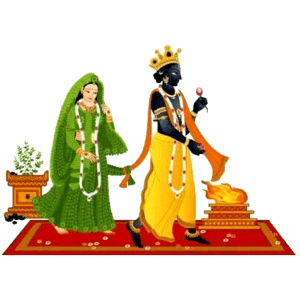
The Kartik month is also the period when Tulsi Vivah — the ceremonial marriage of the Tulsi plant to Lord Vishnu is performed. In many households and communities, Tulsi Vivah takes place on Kartik Purnima itself, making Dev Diwali the day when the Tulsi Vivah ceremony concludes the Kartik observance season. Families that have been performing Kartik puja through the month formally conclude their vrat on Dev Diwali after the Tulsi Vivah, and the day marks the beginning of the auspicious wedding season in the Hindu calendar.
Dev Diwali Across India
In Varanasi, Dev Diwali is the biggest festival of the year by scale of public participation, surpassing even Diwali in terms of ghat spectacle. The city's identity as the city of Shiva on the Ganges makes Kartik Purnima its defining night. Pilgrims, tourists, and devotees from across India and abroad fill the city for days before and after the festival.
In Haridwar, the Har Ki Pauri ghat — the most sacred spot on the Ganges at Haridwar conducts its Dev Diwali Ganga Aarti on a scale that rivals Varanasi. Thousands of floating lamps are released on the river at Har Ki Pauri on this night, and the aarti is broadcast live from the ghat. In Rishikesh, the ashrams along the Ganges hold evening prayers and lamp lighting at the Triveni Ghat and Ram Jhula area.
In Prayagraj, where the Ganges, Yamuna, and the mythical Saraswati meet at the Triveni Sangam, the bathing ghat on Kartik Purnima morning draws pilgrims from across Uttar Pradesh and beyond. Nashik's Ramkund ghat on the Godavari observes Kartik Purnima with a large bathing mela. Pushkar in Rajasthan, where the Pushkar lake is associated with Brahma, observes Kartik Purnima with one of its largest annual fairs, the Pushkar Fair, culminating in the full moon night bathing in the lake.
In South India, Kartik Purnima is observed as Karthigai Deepam in Tamil tradition, where rows of lamps are lit on the evening of the full moon. The Karthigai Deepam at Tiruvannamalai where a beacon fire is lit on top of Annamalai hill — is one of the most ancient and distinctive fire-lamp traditions in India, drawing hundreds of thousands of pilgrims on this night. While the name and emphasis differ from Dev Diwali in North India, the shared element of the full moon of Kartik as a night of lamps and fire connects these traditions across regions.
The Floating Lamps of Dev Diwali
One of the most visually compelling elements of Dev Diwali is the practice of floating earthen lamps on rivers. Small clay diyas with a cotton wick and oil are lit and gently placed on the surface of the river to float downstream. This practice, called Diya Visarjan or Deep Daan, is associated with offering light to the gods who are believed to be present in the water on Kartik Purnima night.
The floating lamps also carry a symbolic meaning related to release and letting go. Each lamp placed on the water is an offering of one's prayers, troubles, or intentions to the river, trusting that the current will carry them forward. At Varanasi's ghats on Dev Diwali night, thousands of floating lamps move downstream on the Ganges simultaneously, creating a river of light on the water that mirrors the row of lamps on the ghats above.
Dev Diwali Today
Dev Diwali has grown significantly in national recognition over the past two decades. Varanasi's Dev Diwali is now broadcast live on national television and streamed online, bringing the image of the lit ghats to audiences across the country and abroad who cannot travel to the city. The festival draws tourists not just from within India but from Europe, the Americas, and Southeast Asia, many of whom plan their visit to India specifically around this night. The Uttar Pradesh government has invested considerably in the ghat infrastructure, lighting arrangements, and visitor management for Dev Diwali, recognising it as one of the state's most significant cultural tourism events. The festival's core the full moon, the lamps on the Ganges, the descent of the gods, and the Ganga Aarti remains exactly as it has been for centuries, and that combination of scale and antiquity is what continues to draw people to Varanasi on Kartik Purnima every year.