







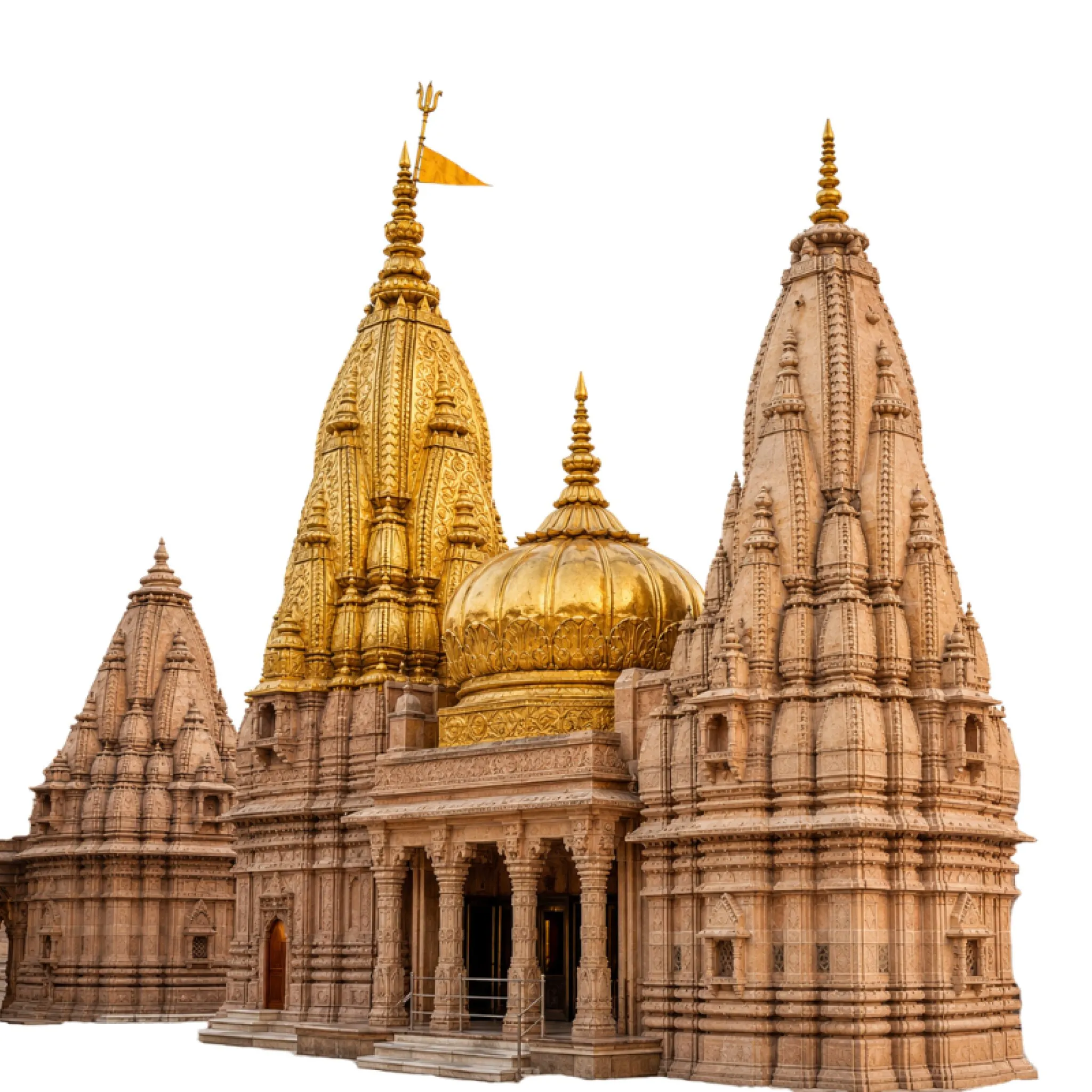
Kashi Vishwanath Jyotirlinga
The seventh Jyotirlinga of the twelve Jyotirlingas of Lord Shiva is world famous as Shri Kashi Vishwanath. Located on the banks of the Ganges river in the holy city of Varanasi in Uttar Pradesh, this divine abode is the center of faith of crores of devotees. Kashi was known in ancient times as the “Avimukta Kshetra”, “Anandavan” and “Moksha ni Nagari”. It is believed that Lord Shiva and Goddess Parvati themselves reside here and shower their special grace on this city.
Kashi Vishwanath Temple is not just a religious place, but is considered a center of spiritual energy. In Hinduism, it is believed that by taking the last breath in Kashi, the soul attains salvation. The darshan of Lord Vishwanath destroys the sins of life and the devotee gets spiritual peace.
Religious and Spiritual Importance of Kashi
Varanasi is considered one of the oldest living cities in the world. This holy city on the banks of the Ganges has been the auspicious place of sages, saints and yogis for thousands of years. Holy places like Dashashwamedh Ghat, Manikarnika Ghat and Annapurna Temple around the Kashi Vishwanath Temple are of special importance to pilgrims.
According to the Shiv Purana, Lord Shiva has considered Kashi as his favorite abode. According to the belief, even during the time of the flood, Lord Shiva keeps Kashi safe by holding it on his trident.
The story of the emergence of Kashi Vishwanath Jyotirlinga
According to the story narrated in the Puranas, the formless Parabrahman manifested himself in the form of Shiva and Shakti to create the universe. Then Lord Shiva created a divine and supernatural city, which was known as Panchkroshi Kashi. Lord Vishnu performed penance in this city for a long time.
A divine gem fell from Lord Vishnu's ear on the earth, and that place became famous as "Manikarnika Tirtha". Lord Shiva established Kashi on earth for the welfare of the entire world and himself resided here in the form of Vishweshwar Jyotirlinga.
In the Shiv Purana, Kashi is called a city where Lord Shiva himself recites the Tarak Mantra in the ears of his devotees and frees them from the bondage of birth and death.
Architecture of Kashi Vishwanath Temple
The current construction of Kashi Vishwanath Temple was done by Ahilyabai Holkar in the 18th century. The golden dome of the temple is the center of special attraction. Apart from Lord Vishwanath, there are temples of many gods and goddesses in the temple premises.
In recent years, the temple has become more magnificent and well-organized with the construction of the Kashi Vishwanath Corridor, due to which the devotees have a direct route from the Ganga Ghat to the temple.
Main Aarti performed in Kashi Vishwanath
The Mangal Aarti, Bhog Aarti, Sandhya Aarti and Shringar Aarti are performed daily in Kashi Vishwanath Temple. The divine sight of Ganga Aarti attracts pilgrims from all over the world.
Major pilgrimage sites associated with Kashi Vishwanath
There are many holy places around Kashi Vishwanath Dham, of which the Kalabhairav Temple, Annapurna Temple, Durgakund Temple, Tulsi Manas Temple, Bharat Mata Temple and Manikarnika Ghat are of special importance.
Kashi Vishwanath Mantra
To obtain the grace of Lord Vishwanath, devotees chant the following mantra:
“Om Namah Shivaya”
“Om Viswanathay Namah”
Importance of Kashi Vishwanath Yatra
The Kashi Vishwanath Yatra is considered one of the holiest pilgrimages in Hinduism. Devotees experience spiritual purification through Ganga bathing, Jyotirlinga darshan and worship. It is especially crowded during the month of Shravan, Mahashivratri and Dev Diwali.