






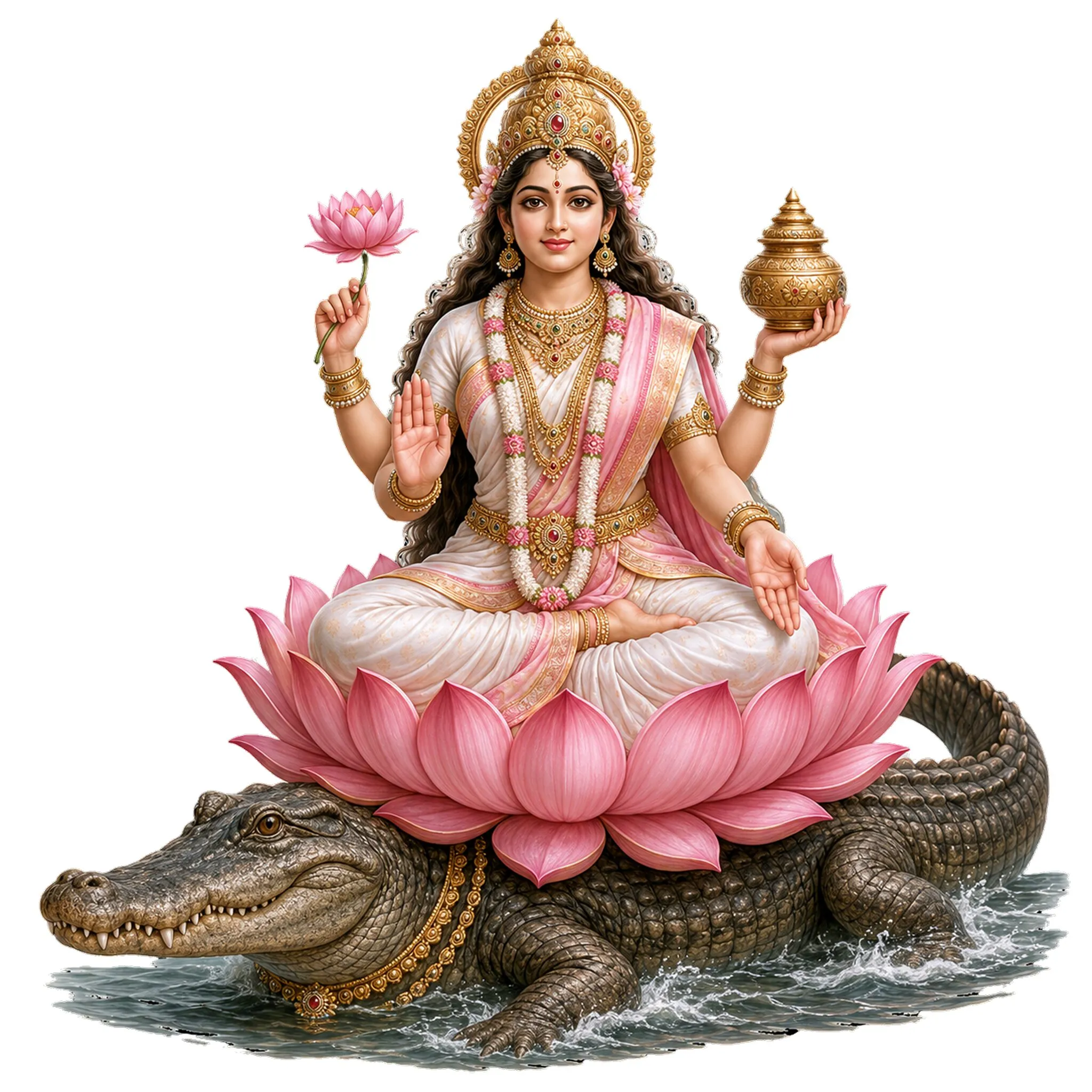
Introduction to Mother Ganga
In Hinduism, the Ganges River is not only worshipped as a holy river but also as the divine mother and goddess of salvation. Devotees affectionately address her as “Mother Ganga”. In the scriptures, Ganga is known as Mandakini in heaven, Ganga on earth and Bhagirathi in the underworld. From the Rigveda to the Ramayana, Mahabharata and many Puranas, the glory of Ganga has been specially described. According to Hindu belief, bathing in the Ganges water destroys the sins of a person and the soul attains spiritual purification.
The Ganges River holds a very important place in Indian culture and spiritual life. Since holy pilgrimage sites like Haridwar, Varanasi and Prayagraj are located on the banks of the Ganges, millions of devotees come here for darshan and bathing. In Hindu tradition, the tradition of immersing the ashes in the Ganges after death is also considered very sacred, because it is believed that the soul attains salvation by touching Ganga.
The origin story of Mother Ganga
According to the Ramayana, Ganga was born as a mountain princess in the house of Himavan and Mena Devi. She is considered the sister of Goddess Parvati. According to some other mythological stories, Ganga appeared from the feet of Lord Vishnu, due to which she is considered very divine and sacred.
The story of Bhagirath associated with the incarnation of Ganga on earth is very famous. In ancient times, sixty thousand sons of King Sagar were burnt to ashes by the wrath of Kapil Muni. To free their souls, King Bhagirath performed severe penance to please Lord Brahma and requested to bring Ganga to earth. Ganga said that the earth could not bear her mighty flow, so Bhagirath worshipped Lord Shiva.
Lord Shiva controlled the flow of Ganga by holding Ganga in his hair and then slowly let Ganga flow on the earth. Bhagirath took Ganga ahead and finally reached Gangasagar, where the sons of King Sagar got freedom. Due to this incident, Ganga is also known as “Bhagirathi”.
Family description of Mother Ganga
According to religious beliefs, Ganga’s father was Parvatraj Himavan and mother was Mainavati. She was raised under the protection of Brahma. Goddess Parvati is known as her sister and Mount Mainak as her brother. According to the Mahabharata, Gangaji was married to King Shantanu and they had a son named Devavrat, who later became famous as Bhishma Pitamah.
Divine form of Mother Ganga
Mother Ganga is considered a symbol of white color and purity. She is usually depicted adorned in white clothes. Her face shows peace and compassion. Gangaji is depicted riding on a beautiful Makara vehicle, which symbolizes her divine power and dominion over the water element.
Mantras of Mother Ganga
Devi Sureshwari Bhagwati Gange Tribhuvan Tarini Taral Tarange.
Shankaramouli Viharini Vimale Mama Matirastan Tava Padakamale.
In this mantra, Gangaji is saluted as the divine mother who gives liberation to the three worlds and sits on the head of Lord Shiva.
Om Namo Gangayai Vishwarupini Narayani Namo Namah.
Gangagangeti yo Bruyaad Yojana Shatairapi.
Muchyate Sarva Paapebhyo Vishnulokam sa Gachchati.
Ganga Gayatri Mantra:
Om Bhagirathi Cha Vidmahe Vishnupatnyai Cha Dhimahi.
Tannoo Ganga Prachodayat.
Festivals related to Mother Ganga
Ganga Dussehra and Ganga Jayanti are the main festivals related to Gangaji. On these days, lakhs of devotees take a dip in the Ganges and attain merit. Apart from this, the “Loi Krathong” festival celebrated in Thailand outside India is also considered to be related to the belief in the water element of Mother Ganga.
Famous pilgrimage sites and temples of Mother Ganga
There are many holy pilgrimage sites related to Gangaji in India. Gangotri Dham in Uttarakhand is considered to be the main source of Ganga. Haridwar, Prayagraj and Varanasi are considered among the most sacred religious cities on the banks of the Ganges. Kali Ghat in Kolkata is also an important spiritual place associated with the Ganges.
Spiritual significance of Ganga
In Hinduism, Ganga is considered not just a river but a living goddess. Ganga water is used in every auspicious work, yajna, puja and sanskar. It is believed that chanting, penance, charity and Shraddha on the banks of the Ganges achieves manifold merit. Ganga is a unique symbol of Indian culture, spirituality and faith.