






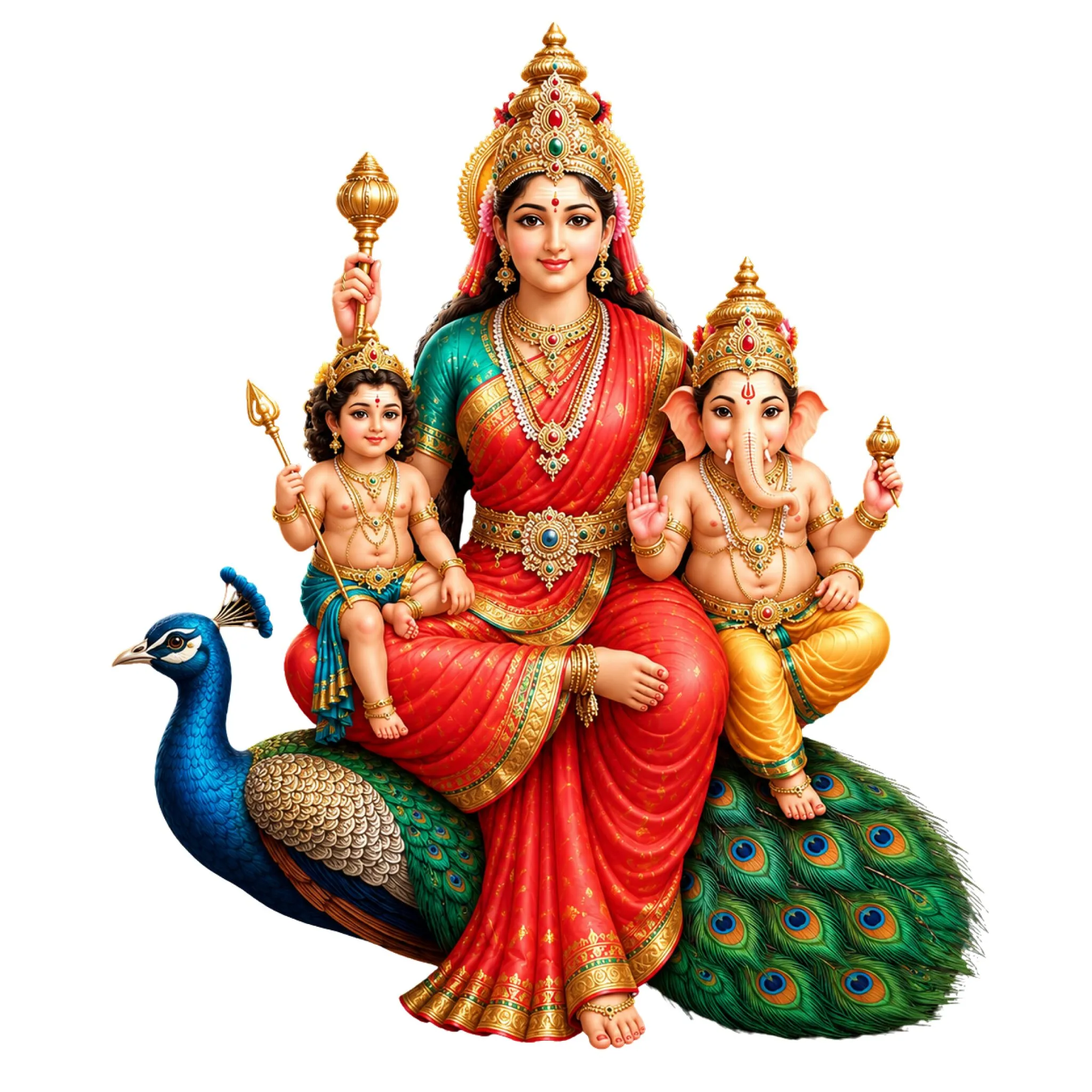
Introduction to Goddess Parvati
In Hinduism, Goddess Parvati is considered the ultimate form of Adishakti, motherhood, compassion and power. She is worshipped as the half-consort of Lord Shiva and the divine power of the entire universe. Goddess Parvati is known by many sacred names like Gauri, Uma, Ambika, Bhavani, Jagadamba and Shakti. In Hindu scriptures, she is described as the symbol of life, love, marital happiness and spiritual energy.
Maa Parvati is worshipped in different forms in different regions of India. During Navratri, nine forms of the mother are worshipped, while during festivals like Gangaur, Haritalika Teej and Gauri Puja, women especially worship the mother and pray for the happiness and peace of the family and the long life of their husbands. The life of Goddess Parvati inspires devotees to follow the path of penance, dedication, religion and truth.
Origin of Goddess Parvati
According to mythological stories, Goddess Parvati was born as Goddess Sati, the daughter of Prajapati Daksha. Goddess Sati married Lord Shiva, but Prajapati Daksha did not respect Lord Shiva. Once Daksha organized a huge yagna, in which Lord Shiva was not invited. When Goddess Sati reached the yagna, she became extremely upset after seeing the insult to Lord Shiva and sacrificed herself in the yagna fire.
After the sacrifice of Goddess Sati, Lord Shiva became angry and started performing Tandava. When the entire universe was in danger, Lord Vishnu divided Sati's body into many parts with the Sudarshan Chakra. Shakti Peethas were established wherever his limbs fell. Later, Goddess Sati incarnated in the form of Parvati in the house of Himalayaraj Himwan and Mata Mena Devi. She performed severe penance and received Lord Shiva as her husband again.
Family of Goddess Parvati
Devi Parvati's father is Himalayaraj Himwan and Mata Mena Devi. Lord Shiva is her husband, while Lord Ganesha and Lord Kartikeya are her divine sons. According to some mythological beliefs, Ashokasundari, Manasa Devi and Jyoti Devi are considered to be her daughters. The Shiva family is considered to be the symbol of an ideal family in Hinduism, where a wonderful combination of knowledge, power, devotion and compassion is seen.
Description of Goddess Parvati
Goddess Parvati is depicted in an extremely beautiful, radiant and compassionate form. She is adorned with red or yellow clothes and divine ornaments. She always has a peaceful smile on her face, which inspires devotion and peace in the minds of the devotees. Goddess Parvati's hands are shown in the Abhaya Mudra and Vara Mudra, which are symbols of protection and blessings.
In many paintings, Goddess Parvati is shown riding a lion or a tiger. Many powerful forms of the Mother such as Durga, Kali, Annapurna and Mahagauri are also very famous. She provides happiness, prosperity and spiritual strength by removing the sorrows of the devotees.
Mantras of Goddess Parvati
Original Mantra:
ॐ सर्वमंगलमंगल्यामंगल्यये शिवे सर्वार्वाधिके.
शरणे त्र्यमबके गौरि नारायनी नमोऽसतु ते॥
Common Mantra:
ॐ पार्वत्यै नमः.
ॐ गौर्यै नमः॥
Festivals associated with Goddess Parvati
Many sacred festivals are celebrated to worship Goddess Parvati. During Navratri, the nine forms of the mother are specially worshipped. Gangaur and Haritalika Teej are considered extremely important especially for married women. On Mahashivratri, Lord Shiva and Goddess Parvati are worshipped jointly.
Apart from this, festivals like Durga Puja, Gauri Puja, Kali Puja and Sheetala Ashtami are also associated with the devotion of Goddess Parvati. These festivals instill spirituality, power and devotion in the devotees.