






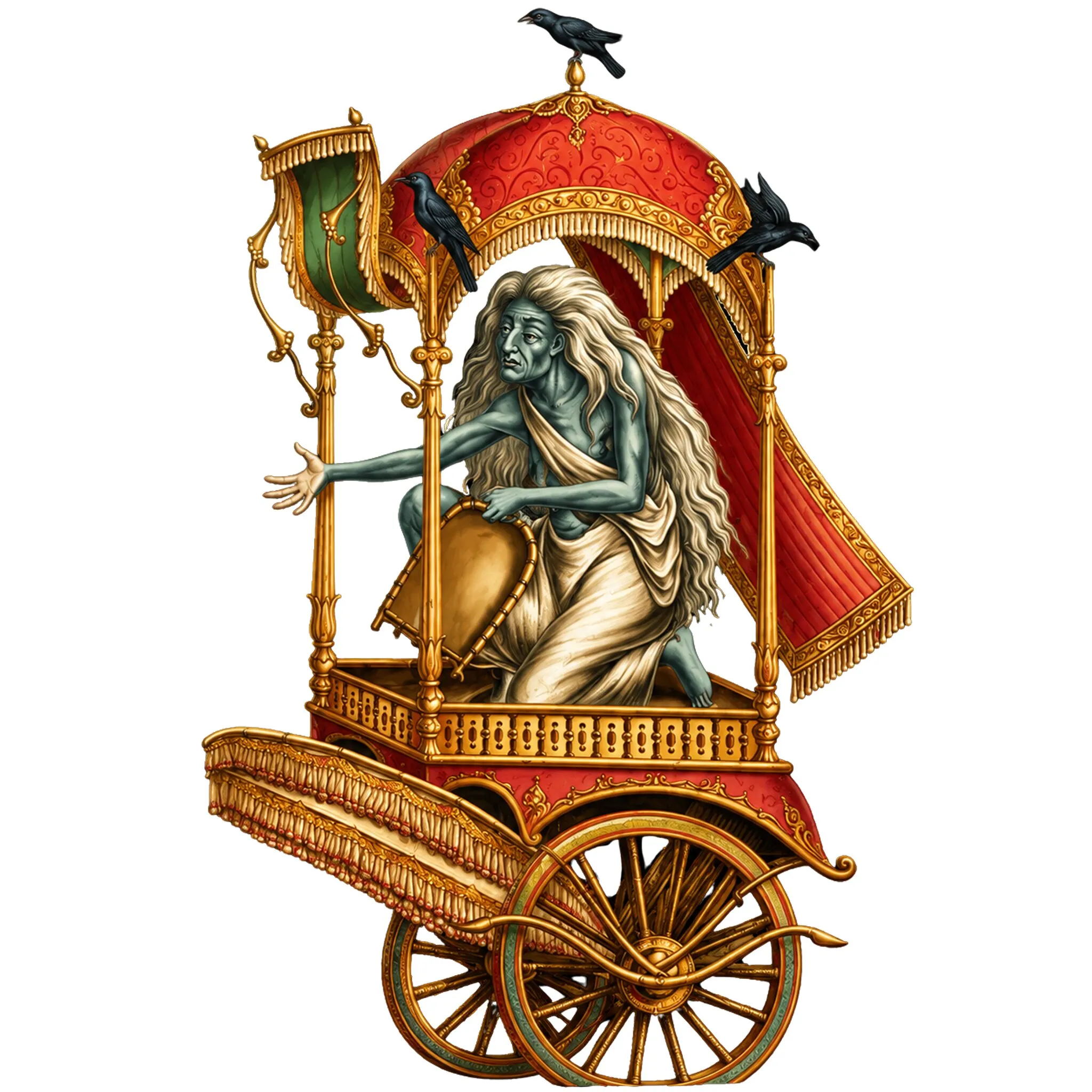
About Maa Dhumavati
Maa Dhumavati is considered the seventh Mahavidya among the ten Mahavidyas. In Hindu Tantra and Shakti tradition, she is considered to be a symbol of emptiness, detachment, the harsh truth of life, and spiritual awakening. The word “Dhumavati” means the goddess who manifests in the form of smoke or smoke. She is considered to be one of the most mysterious and mystical forms among the ten Mahavidyas.
According to Hindu tradition, Maa Dhumavati is considered to be a symbol of the end of suffering, transience, and worldly attachment in life. It is believed that her form leads devotees to detachment, self-knowledge, and the ultimate truth.
Meaning and Significance of Maa Dhumavati
The word “Dhumavati” is believed to be related to smoke and dissolution. In the Hindu Tantric tradition, Maa Dhumavati is considered to symbolize the end of worldly attachment and self-awareness.
She is believed to lead devotees away from material attachments and towards spiritual knowledge and inner strength.
Form of Maa Dhumavati
Maa Dhumavati is usually depicted in the form of an old woman. She is depicted wearing torn clothes, with loose hair and carrying a crow.
Her form is considered to symbolize the impermanence of life, detachment and the destruction of illusion. Compared to other goddess forms, she is depicted in an unadorned and serious form.
Religious significance of Maa Dhumavati
In Hinduism, Maa Dhumavati is worshipped for dispassion, freedom from fear and spiritual power. She is considered a symbol of knowledge gained through difficult experiences in life.
In Tantric texts, Maa Dhumavati is considered to be the embodiment of supreme knowledge that transcends sorrow, despair and attachment. It is believed that by her grace, the seeker attains inner peace and self-awareness.
Maa Dhumavati and Tantra Sadhana
Maa Dhumavati is particularly closely associated with Vamachara Tantra Sadhana. In her worship, Guru Diksha, Mantra Chanting and strict spiritual discipline are considered to be of special importance.
According to the Hindu Tantric tradition, through the meditation of Maa Dhumavati, the seeker tries to overcome his fear, attachment and ignorance.
Maa Dhumavati and Spirituality
Maa Dhumavati is considered a symbol of detachment, emptiness and self-knowledge. Many seekers try to get rid of the delusion of the mind, ego and worldly bonds through her worship.
According to the Hindu tradition, it is believed that devotion to Maa Dhumavati leads to patience, inner strength and spiritual progress.
The story of Maa Dhumavati
According to a popular story, once Maa Parvati felt extremely hungry and demanded food from Lord Shiva. When she did not get food for a long time, Goddess Parvati swallowed Lord Shiva in anger and intense hunger.
Smoke started coming out of Lord Shiva's body and then Lord Shiva reappeared in the form of the Goddess. Due to this incident, the form of the Goddess came to be known as "Dhumavati". This story is considered to symbolize the emptiness of life, detachment and the end of Maya.
In the Tantric sense, the form of Maa Dhumavati shows that in the end every material thing dissolves and only the Supreme Truth remains eternal.
Maa Dhumavati's main festivals
Maa Dhumavati is worshipped especially during Gupta Navratri, Dasha Mahavidya Sadhana and special Tantric occasions.
On these occasions, seekers try to attain the grace of the Goddess and spiritual knowledge through chanting, meditation and Tantric practices.