






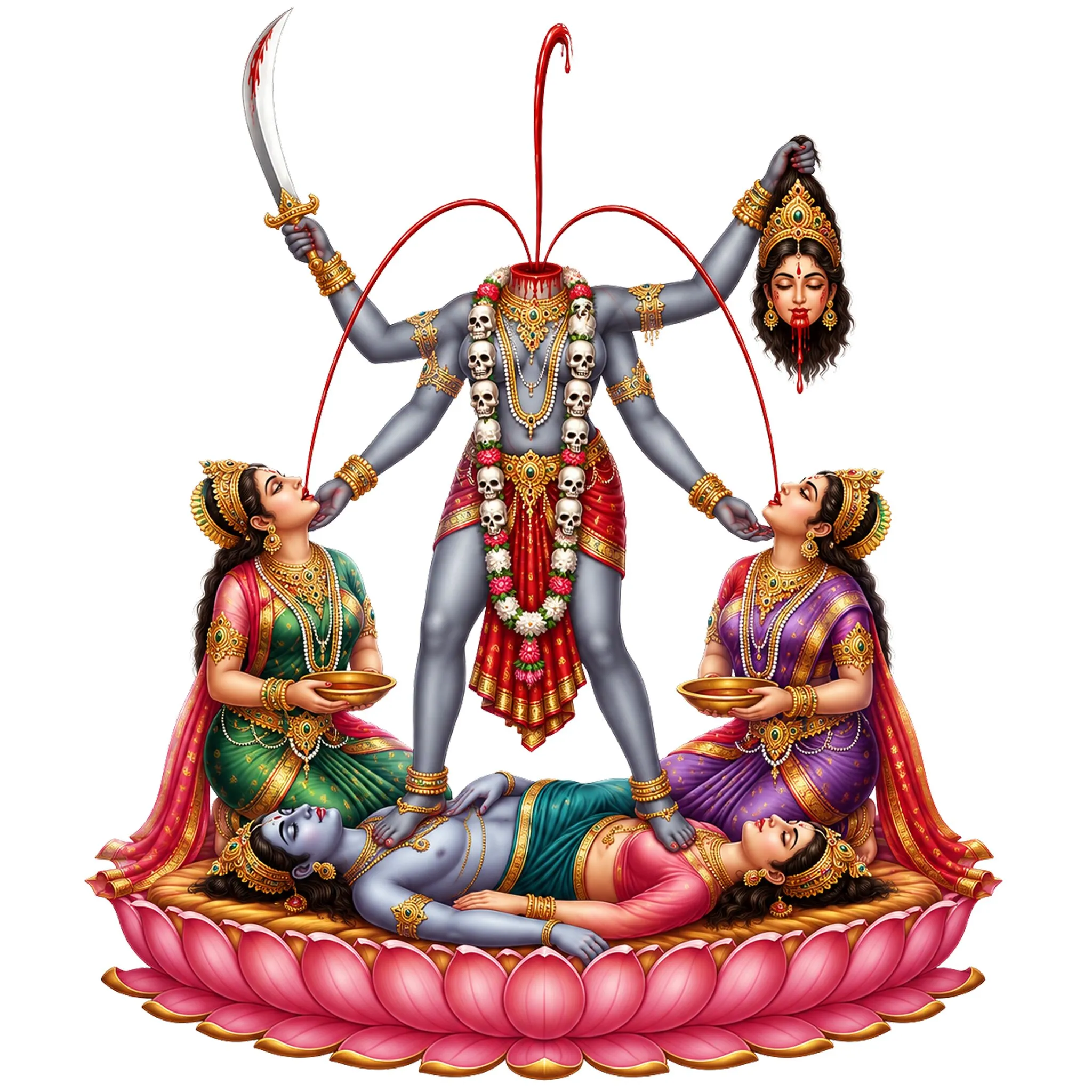
About Maa Chhinnamasta
Maa Chhinnamasta is considered the fifth Mahavidya among the ten Mahavidyas. In Hindu Tantra and Shakti tradition, she is considered a symbol of self-sacrifice, power, life cycle and spiritual awakening. The word “Chhinnamasta” means the goddess who cuts off her own head. Her form is considered to be very mystical, tantric and full of spiritual secrets.
According to Hindu tradition, Maa Chhinnamasta is considered to be a symbol of the balance between life and death, creation and destruction, and enjoyment and yoga. It is believed that she frees devotees from ego, attachment and fear and leads them towards self-knowledge.
Meaning and Significance of Maa Chhinnamasta
“Chhinna” means severed and “masta” means head. Therefore, Maa Chhinnamasta is known as the goddess who renounces her head.
Her form is considered a symbol of the destruction of ego, self-sacrifice and spiritual awakening. According to the Hindu Tantric tradition, Maa Chhinnamasta gives the message of the impermanence of life and the ultimate truth.
The form of Maa Chhinnamasta
Maa Chhinnamasta is usually depicted holding a severed head in her hand. Three streams of blood are depicted flowing from her torso, one of which she herself is shown drinking and the other two are those of her allied powers.
Her form is considered a symbol of the continuous flow of vitality, renunciation and energy. She is shown standing on a lotus and resting on Kamadeva-Rati, which represents the balance of Bhoga and Yoga.
The Story of Maa Chhinnamasta
In Hindu Tantra and Shakti tradition, the story of Maa Chhinnamasta is considered to be very mysterious and spiritually meaningful. According to a famous story, once Maa Parvati went to bathe in the Mandakini river with her two companions Dakini and Varini. After bathing, both the companions felt extremely hungry and demanded food from the goddess.
Maa Parvati asked to wait for some time, but her hunger was increasing. Finally, to satisfy her devotees and companions, Goddess Parvati cut off her head with her nails. Three streams of blood started flowing from her torso — two streams were drunk by Dakini and Varini and the third stream was drunk by the goddess herself.
This divine form later became famous as “Maa Chhinnamasta”. According to the Hindu Tantric tradition, this story is considered a symbol of self-sacrifice, power, vitality and renunciation. This form of the goddess shows that the primordial power of the universe sustains the entire creation even by sacrificing its existence.
Religious significance of Maa Chhinnamasta
In Hinduism, Maa Chhinnamasta is worshipped for the destruction of ego, freedom from fear and inner strength. She is considered a very powerful and secret goddess in Tantric sadhana.
In Tantric texts, Maa Chhinnamasta is considered to be a form associated with the power of Kundalini, self-awareness and the secrets of the life cycle.
Ma Chhinnamasta and Tantric Sadhana
Ma Chhinnamasta is closely related to Vamachara Tantric Sadhana. In her worship, special importance is given to guru initiation, mantra siddhi, yantra and strict spiritual discipline.
According to the Hindu Tantric tradition, through the practice of Maa Chhinnamasta, the seeker tries to overcome his fear, lust and ego. The purpose of this practice is considered to be spiritual liberation and attainment of inner strength.
Maa Chhinnamasta and Spirituality
Maa Chhinnamasta is considered a symbol of self-sacrifice, fearlessness and spiritual transformation. Many seekers try to get rid of negativity and attachments of the mind through her worship.
According to the Hindu tradition, it is believed that devotion to Maa Chhinnamasta increases self-confidence, spiritual awareness and inner strength.
Maa Chhinnamasta's main festivals
Maa Chhinnamasta is worshipped especially during Gupta Navratri, Das Mahavidya Sadhana and special Tantric occasions.
On these occasions, devotees try to attain the grace and Tantric power of the Goddess through mantra chanting, Yantra Puja and meditation.