






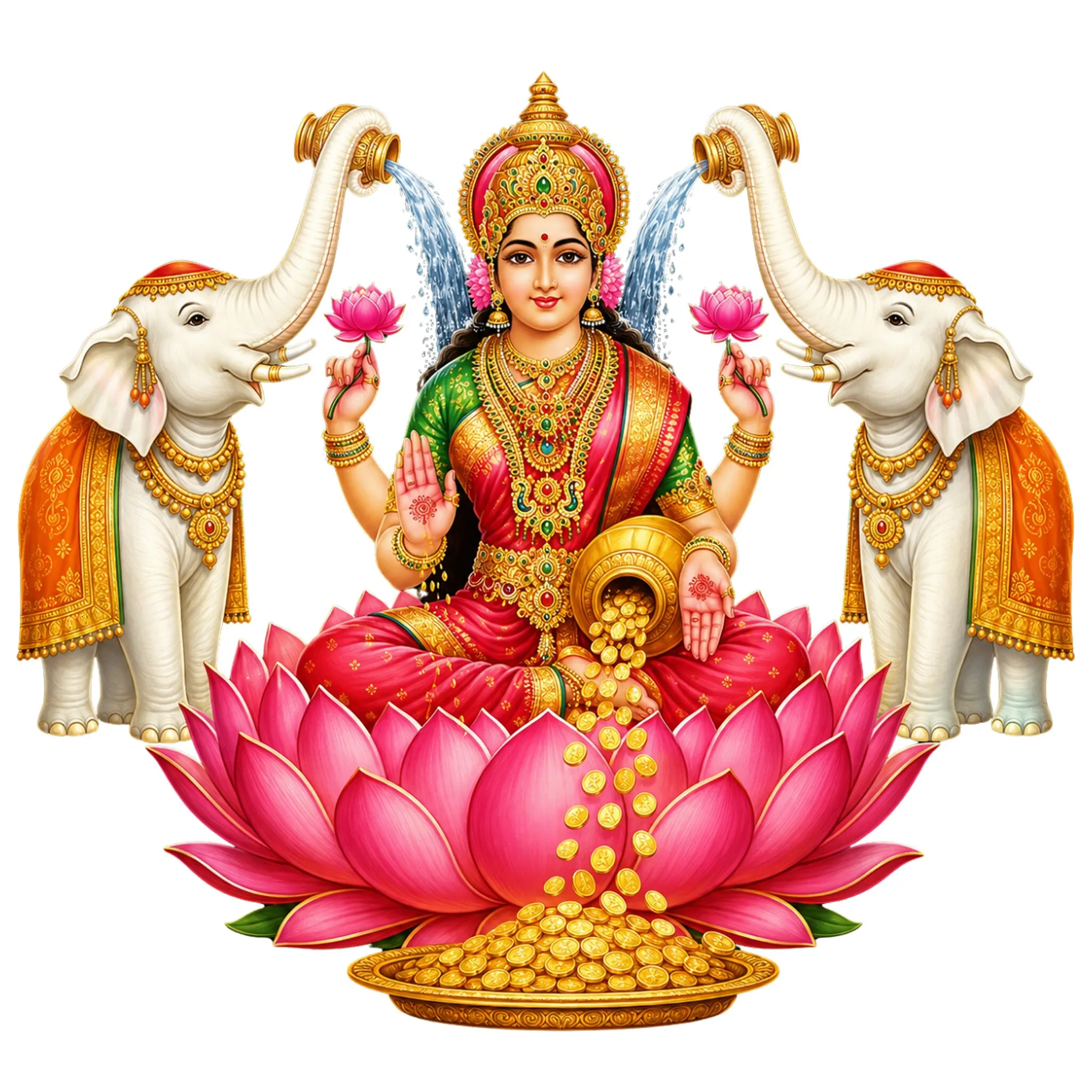
Introduction to Goddess Gaja Lakshmi
Gaja Lakshmi is considered to be one of the most magnificent and powerful forms of Goddess Lakshmi. The word “Gaja” means elephant and elephant is considered a symbol of royal splendor, prosperity and power in ancient Indian culture. Therefore, Gaja Lakshmi is worshipped as a goddess who provides the devotees with splendor, happiness, wealth, Rajyoga and material comforts.
According to religious beliefs, worshipping Gaja Lakshmi increases splendor, prestige and prosperity in life. Gaja Lakshmi is considered to be a goddess especially associated with livestock, agricultural prosperity and political success. Many people worship Gaja Lakshmi for economic development, domestic happiness and a luxurious life in life.
Origin of Gaja Lakshmi
According to mythological stories, during the Mahabharata period, when the Pandavas were in hiding, Mother Kunti wanted to worship Ashtalakshmi. During that time, the Pandavas were wandering in the forests and it became difficult to worship them properly. Pleased with the devotion of Mother Kunti and the prayers of the Pandavas, Devraj Indra sent his divine elephant Airavata to earth.
The divine form of Goddess Lakshmi appeared on the Airavata elephant and Mother Kunti worshipped Gaja Lakshmi with devotion. It is believed that by the grace of Goddess Gaja Lakshmi, the Pandavas regained their kingdom, honor and happiness. Today, the Gaja Lakshmi temple located in Ujjain is considered an important religious place associated with this event.
Form of Gaja Lakshmi
Goddess Gaja Lakshmi is depicted in a quadrangular form. She is adorned with luxurious red clothes and beautiful golden ornaments. The goddess is seen seated on a lotus seat, which is a symbol of prosperity and purity.
Two of her hands hold lotus flowers, while the other two hands are in the Abhaya and Varada mudras. On either side of the goddess, two divine elephants are depicted performing Jalabhishek from a Kalash. This scene is considered a symbol of royal prosperity, splendor and auspiciousness.
Religious significance of Gaja Lakshmi
In Hinduism, Gaja Lakshmi is worshipped for splendor, prosperity and social prestige. It is believed that with the grace of the goddess, one gets happiness, wealth, vehicle happiness and Rajyoga in life. Traders, people working in the political field and devotees who desire a luxurious life worship Gaja Lakshmi specially.
Gaja Lakshmi is specially worshipped on Diwali, Kojagari Purnima and Fridays. Gaja Lakshmi Puja is celebrated with great devotion in many temples of South India and Gujarat.
Gaja Lakshmi Mantra
To obtain the grace of Gaja Lakshmi, chanting her mantras is considered extremely auspicious. Regular chanting brings prosperity and splendor in life.
“ॐ गजलक्ष्म्याई नमह”
Gaj Lakshmi Stotra
“Jai Jai Durgatinashini Kamini, Sarvaphalaprad Shastramaye. Rathgaja Turgapadati Samavrut, Parijanamandit Lokanute. Harihara Brahma Supijit Seviit, Tapanivarini Padayute. Jai Jai Hey Madhusudan Kamini, Gaja Lakshmi Rupen Palaya Maam. ”
108 Names of Gaja Lakshmi
The 108 holy names of Goddess Gaja Lakshmi are known as “Gaj Lakshmi Ashtottara Shatanamavali”. During special worship and fasting, devotees receive the grace of the Goddess by reciting these names.
Festivals associated with Gaja Lakshmi
Diwali, Ashtalakshmi Puja, Kojagari Purnima and Fridays hold special significance for the worship of Gaja Lakshmi. On these days, devotees worship the goddess for wealth, glory and Rajyoga.
Famous temples of Gaja Lakshmi
The Gaja Lakshmi temple in Ujjain, Madhya Pradesh is a famous religious place of the goddess. Here, Goddess Lakshmi appears in the form of a chariot on Gaja. This temple is considered ancient and very sacred.