






Introduction to Goddess Dhanya Lakshmi
Dhanya Lakshmi is considered one of the eight forms of Goddess Lakshmi, the most sacred and auspicious. The word “Dhanya” means food, grain and prosperity obtained from agriculture. Therefore, Dhanya Lakshmi is worshipped as the goddess of food abundance, agricultural prosperity and sustenance in life. It is believed in Hinduism that by the grace of Goddess Dhanya Lakshmi, there is never a shortage of food in the house and the family remains full of happiness and prosperity.
In Indian culture, food is considered equal to Brahman, so the place of Dhanya Lakshmi is very important. Farmers, traders and householders worship the goddess specially so that the field gets a good harvest, the food store in the house remains full and happiness and peace develop in life. Dhanya Lakshmi is not only a symbol of food but also of all the necessary tools for health, prosperity and livelihood.
Origin of Dhanya Lakshmi
According to mythological stories, the importance of Dhanya Lakshmi is believed to be linked to the Mahabharata period. When the Pandavas were in exile, they had to face many difficulties for food and livelihood. At that time, with the grace of Goddess Dhanya Lakshmi, they got food and were able to escape from a drought-like situation.
According to a famous belief, Goddess Dhanya Lakshmi gave the Pandavas a divine vessel, from which food and food were continuously available. This incident shows the goddess's Annapurna and Palhanhar form. That is why devotees worship Dhanya Lakshmi till date so that there is never any shortage of food in the house.
Forms of Dhanya Lakshmi
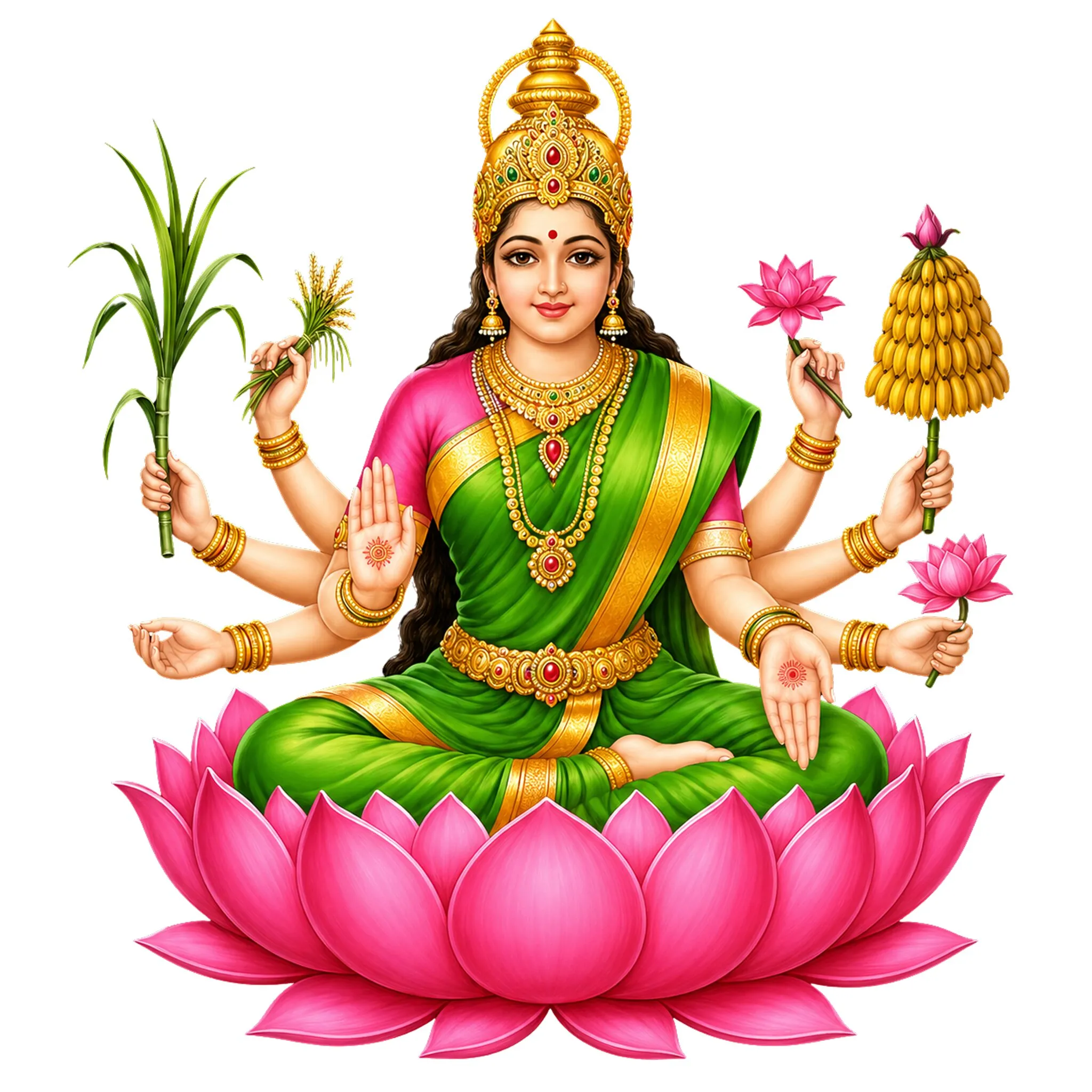
Goddess Dhanya Lakshmi is depicted as an eight-armed divine goddess. She sits on a lotus seat and wears green clothes, which are considered to symbolize greenery, prosperity and agriculture. The goddess's calm and compassionate form is believed to bring happiness and prosperity in the lives of devotees.
Her hands are shown holding symbols of agricultural prosperity such as lotus, mace, sheaves of rice, sugarcane and banana. Her two arms are in the Abhaya and Varada mudras, which provide blessings, protection and prosperity to the devotees. This form of Dhanya Lakshmi symbolizes food abundance and natural prosperity in life.
Religious Significance of Dhanya Lakshmi
In Hinduism, Dhanya Lakshmi is worshipped for food, health and prosperity in life. Worshipping the goddess is considered extremely auspicious, especially for farmers and people associated with agriculture. It is believed that with her grace, a good harvest is produced in the fields and the food stores in the house are always full.
Devi Dhanya Lakshmi is worshipped not only for material prosperity but also for satisfaction and mental peace in life. During Diwali, Navratri and special Lakshmi Puja, devotees worship the goddess and pray for the happiness and prosperity of the family.
Dhanya Lakshmi Mantra
To obtain the grace of Goddess Dhanya Lakshmi, chanting her mantras is considered extremely auspicious and beneficial.
“ॐ धान्याल्क्ष्म्याई नमह”
धान्या लक्ष्मी स्टोत्र
“अहिकल्काल्शन्नाशिनी कमीनी, वेदिकरुकरुक्षमी स्टोत्रमी वेद्मी. कीसमुद्भव मांगल्ली, मांगल्लीयानी अंबुजवासीनी पाद्यायत्रमी पाद्या
Festivals associated with Dhanya Lakshmi
Devi Dhanya Lakshmi is worshipped specially during Diwali, Navratri, Kojagari Purnima and Ashtalakshmi Puja. In rural areas, there is also a tradition of offering food to the goddess after the harvest of the new crop.
Famous temples of Dhanya Lakshmi
Chennai's Ashtalakshmi Temple, Ahmedabad's Ashtalakshmi Temple, Hyderabad's Ashtalakshmi Temple and Pondicherry's Ashtalakshmi Temple are among the famous religious places of Goddess Dhanya Lakshmi. Devotees come here to pray for food abundance and prosperity.