






Introduction to Navagraha Ketu
In Vedic Astrology and Hinduism, Ketu is considered as the mysterious shadow planet of Navagrahas. Ketu is considered a symbol of spirituality, detachment, salvation, mystery and enlightenment. According to astrology, Ketu leads a person away from materialistic attachment to the spiritual path. Although Ketu is called a shadow planet, its influence on human life and actions is considered to be profound.
Ketu is considered the torso of Rahu and the relationship between the two planets is associated with the mythological story of Samudra Manthan. Among Navagrahas, Ketu is considered to be a planet that represents sudden changes in one's life, mystical experiences, spiritual advancement and mysterious results of actions. In astrology, Ketu is considered as a planet giving both auspicious and inauspicious results.
Origin of Ketu
According to mythology, when nectar was being distributed between gods and demons during the churning of the sea, a demon named Svarbhanu tried to drink the nectar by assuming the form of a god. Lord Vishnu was drinking nectar to the gods in the form of Mohini. Surya and Moon recognized Swarbhanu and hinted about him to Lord Vishnu.
Lord Vishnu immediately severed his head from his torso with Sudarshan Chakra. But due to the effect of nectar, both his head and torso became immortal. His head is called "Rahu" and his body is called "Ketu". Since then, both Rahu and Ketu were considered shadow planets. Ketu is especially considered a symbol of renunciation, penance and spiritual awakening.
Religious Significance of Ketu
Ketu is considered the planet of spiritual power and salvation in Hinduism. It works to lead a person away from worldly attachment, ego and material desires towards self-realization. The influence of Ketu can attract a person towards mysticism, meditation, yoga, tantra and spiritual practice.
Astrology says that if Ketu is in an auspicious position, a person gets spiritual advancement, knowledge, fame and deep insight. On the other hand, malefic Ketu can cause confusion, mental instability, sudden loss and health related problems. Chanting of mantras, snake worship and charity are said to be of special importance for the peace of Ketu.
Ketu's family
According to scriptures Ketu's mother was Simhika and father Viprachitti. Both Rahu and Ketu are considered to be two parts of Swarbhanu. Rahu is said to be Jyeshtha and Ketu is said to be his torso form. The name of Ketu's wife has been mentioned as Chitralekha in Puranic beliefs.
Many types of Ketu are described in Matsya Purana, in which Comet Ketu is of special importance. Ketu is associated with mystery, unseen powers and esoteric knowledge.
Ketu's form
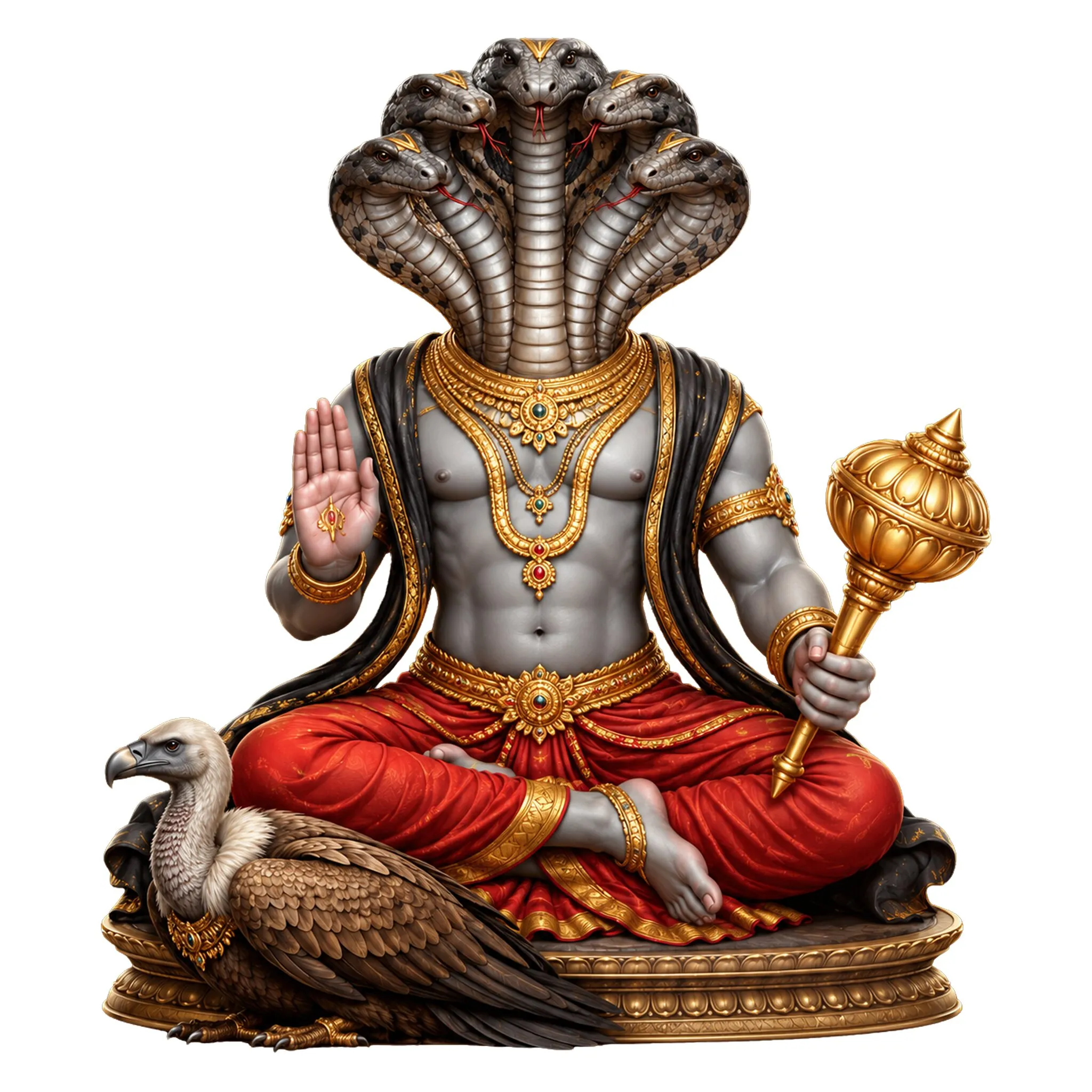
In the scriptures, Ketu is depicted as having the head of a serpent and the body of a demon. Their varna is considered to be smoky or dark and they wear black clothes. Many paintings show Ketu riding a vulture, which is considered a symbol of mystery and mystical power.
Two arms of Ketu are shown, one hand in Varamudra and the other hand in mace. Some paintings also depict a divine light or gem in place of his head, indicating his mystical and spiritual power.
Importance of Ketu in Astrology
In Vedic astrology, Ketu is considered to be the factor of salvation, spirituality, dispassion, intuition and mystical sciences. Ketu leads a person away from worldly pleasures towards knowledge and self-reflection. Ketu's Mahadasha is for 7 years and during this period one can see major mental and spiritual changes in life.
Ketu is considered the lord of Ashwini, Magha and Moola Nakshatra. If Ketu is in an auspicious position in the horoscope then the person gets knowledge, fame, spiritual advancement and deep understanding. On the other hand, problems like fear, confusion, accidents, mental stress and instability may arise due to inauspicious Ketu.
Mantras of Ketu
General Mantra :
Om Ketve Namah.
Seed Mantra :
ॐ स्रान स्रीन सरून सह केतवे नामह॥
Ketu Gayatri Mantra :
ॐ गदाहस्टाय विदमहे अम्रीतेशाय Dhimahi.
Tanno Ketu: Prochodayat.
Parties associated with Ketu
The festival of Nag Panchami is considered to be specially associated with Ketu. On this day, worshiping the serpent deity and chanting Ketu mantras is believed to reduce Ketu dosha. In astrological remedies, worship, charity and special rituals are also performed for the peace of Ketu.
Major temples of Ketu
Srikalahasti Temple in Tamil Nadu is considered to be very famous for Ketu Puja. Apart from this, Nagnath Swamy Temple, Kizaperumpallam Ketu Temple and Trinageswaram Temple are also major religious places associated with Ketu, where devotees visit Ketu Dosha wishing for peace and spiritual upliftment.