







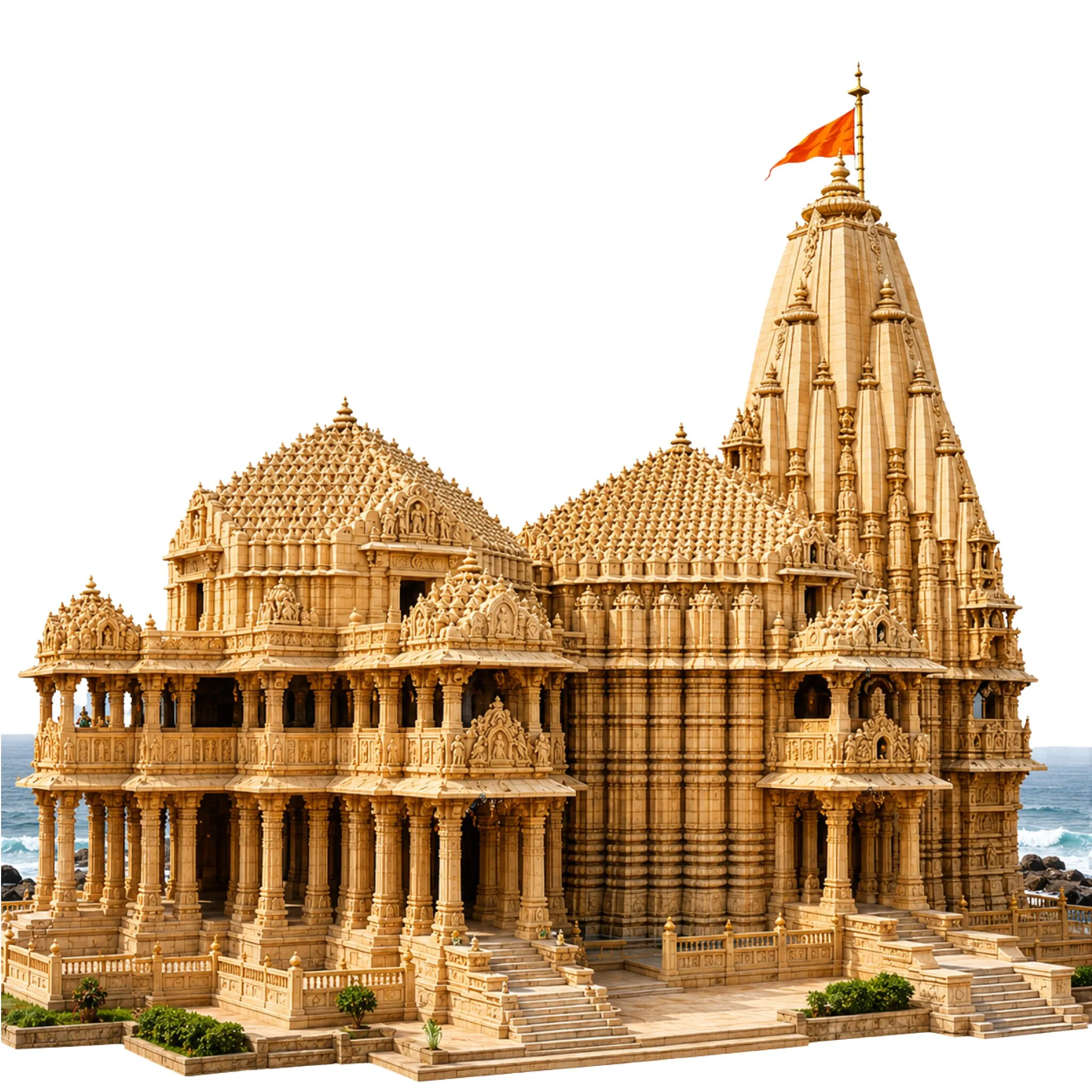
Somnath Jyotirlinga Introduction
Somnath Jyotirlinga is considered to be the first and most sacred Jyotirlinga among the twelve Jyotirlingas of Lord Shiva. This divine temple is located in Gir Somnath district on the coast of the Arabian Sea in the Saurashtra region of Gujarat state. Somnath Mahadev Temple is a great center of Hindu faith and has been a symbol of the faith of devotees for thousands of years.
Somnath Temple is not only of religious importance but also of historical importance. Despite many invasions, this temple has been restored repeatedly and still offers darshan to devotees in its grand form. The current Somnath Temple was reconstructed with the efforts of Sardar Vallabhbhai Patel, the Iron Man of India.
Importance of the name Somnath
The word “Somnath” means “Lord of the Moon”. According to mythology, Chandradev worshipped Lord Shiva here and received his blessings. Since then, Lord Shiva became famous in the world as “Somnath”.
It is believed that Lord Shiva himself appeared here in the form of light and always resides for the welfare of the devotees. Due to this, Somnath is considered a holy place of salvation and spiritual power.
Origin story of Somnath Jyotirlinga
The Shiv Purana describes that Prajapati Daksha got his 27 daughters married to Chandradev. But Chandradev loved only Rohini more out of all his wives. Due to this, the other wives were sad and went to their father Daksha.
Daksha Prajapati persuaded Chandradev to behave similarly, but it had no effect on Chandradev. Finally, Daksha got angry and cursed Chandradev with tuberculosis. Due to the effect of the curse, Chandradev's radiance started to fade and unrest spread throughout the universe.
As per Brahmaji's suggestion, Chandradev came to Prabhas Kshetra and performed severe penance before Lord Shiva and chanted the Mrityunjaya Mantra. Pleased with his devotion, Lord Shiva appeared and blessed Chandradev with freedom from the curse. After that, Lord Shiva was established here as the "Somnath Jyotirlinga".
Historical Importance of Somnath Temple
The history of Somnath Temple is many centuries old. Many foreign invaders tried to damage the temple in history, but each time the faith and devotion of the devotees made the temple magnificent again.
This temple is considered a symbol of Indian culture, religion and steadfast faith. The current temple is built in the Chalukya style and its grandeur makes the devotees feel spiritual peace.
Religious importance of Somnath Temple
Somnath Tirtha is also known as the holy Triveni Sangam, where the rivers Hirani, Kapila and Saraswati meet. Bathing here is considered very auspicious.
Somnath is also considered an important pilgrimage site for Pitru Shraddha, Narayana Bali and other religious rituals. It is believed that seeing and worshiping Lord Shiva here with devotion removes the sorrows and diseases of life.
The nature of Somnath Jyotirlinga
The Jyotirlinga of Somnath Mahadev is considered to be extremely divine and powerful. The Shivalinga installed in the sanctum sanctorum of the temple makes the devotees feel spiritual energy.
The temple's peak, seashore and magnificent architecture make Somnath one of the most beautiful and sacred Shiva temples in India.
Somnath Mahadev Mantra
To obtain the grace of Lord Somnath, devotees chant the following mantra:
“ओम नमह शिवाय”
“ओम सोमनाथाय नमह”
Festivals associated with Somnath
Special puja and devotional programs are organized in the Somnath temple on the days of Mahashivratri, Shravan month, Kartik Purnima and Somvati Amavasya. During this time, lakhs of devotees come to have darshan of Lord Shiva.
Location of Somnath temple
Shri Somnath Jyotirlinga is located on the coast of the Arabian Sea near Veraval in Gir Somnath district of Gujarat state. This temple is one of the most popular Shaivite pilgrimage sites in India.