







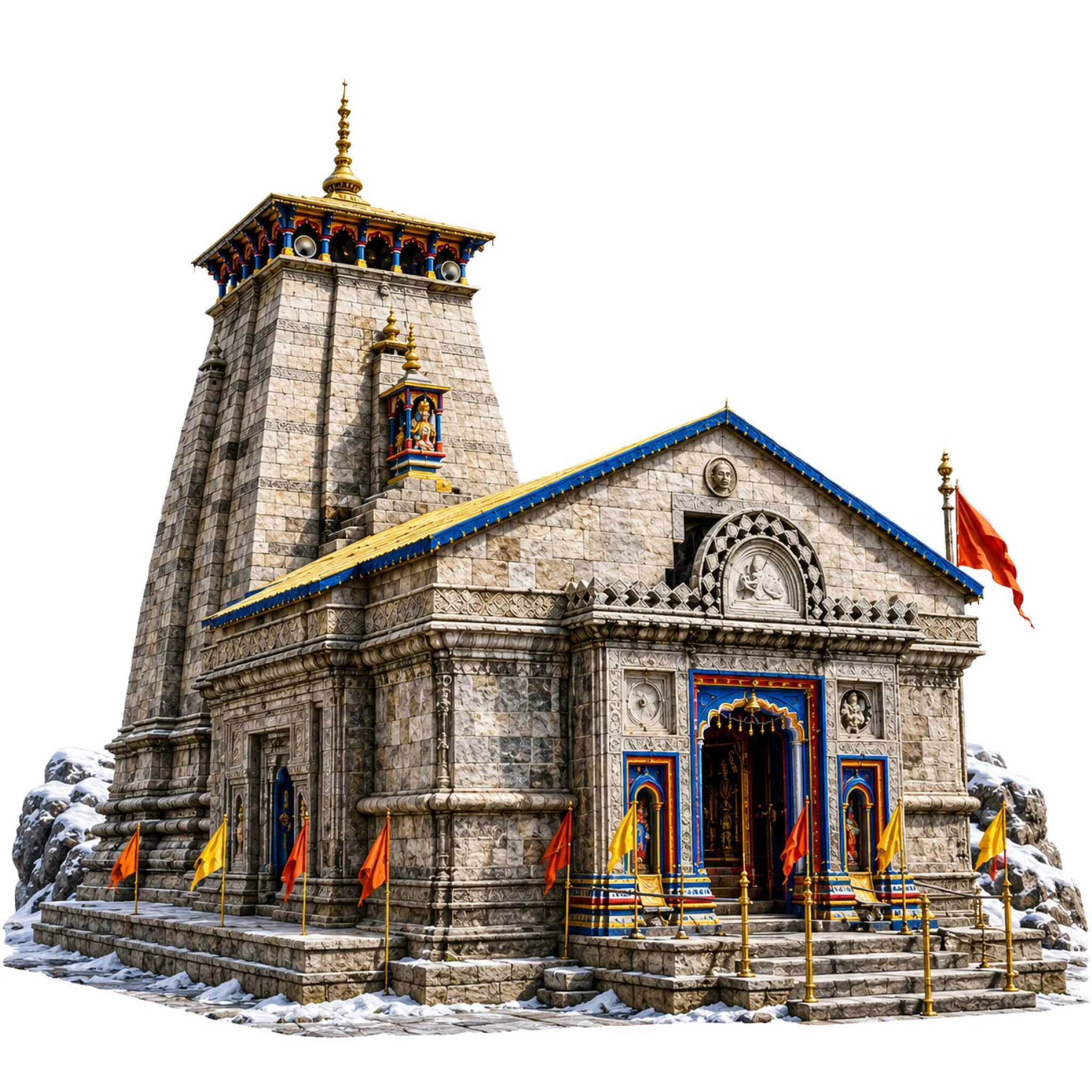
Shri Kedarnath Jyotirlinga Introduction
Shri Kedarnath Jyotirlinga has special significance as the fifth Jyotirlinga among the twelve Jyotirlingas of Lord Shiva. This holy place located in the state of Uttarakhand in the lap of the Himalayas is situated on the Kedar mountain on the banks of the Mandakini river. Kedarnath Dham is considered an important part of the Char Dham Yatra and every year lakhs of devotees come here to have darshan of Lord Shiva.
Located at an altitude of about 3580 meters above sea level, the Kedarnath Temple makes the devotees experience divine peace and spiritual energy. Situated amidst the snow-capped mountains, this ancient Shivdham is considered a symbol of Lord Shiva's infinite penance, compassion and power.
History of Kedarnath Temple
According to religious beliefs and ancient texts, the Kedarnath Temple is associated with the Mahabharata era. It is said that King Janmeja, a descendant of the Pandavas, had this holy temple built. Over time, many kings and devotees have renovated the temple.
Kedarnath Temple is a wonderful example of ancient stone architecture in the Katyuri style. This temple, which has stood firm for centuries in the harsh snowy region, is considered a symbol of the divine power of Lord Shiva.
The story of the emergence of Shri Kedarnath Jyotirlinga
According to mythology, Lord Vishnu took many incarnations for the welfare of the creation, including the male and Narayan incarnations. Lord Nara-Narayan started worshipping Lord Shiva by performing severe penance in Badrikashram.
They used to worship Lord Shiva with devotion by making a Shivling on earth every day. Pleased with their unwavering devotion and penance, Lord Shiva appeared before them and asked them to ask for a boon.
Nara and Narayan did not want anything for themselves and prayed to Lord Shiva to reside there forever for the welfare of the entire world. Pleased with their devotion, Lord Shiva appeared in the form of a Jyotirlinga in the Kedar region.
Thus Lord Shiva became famous all over the world as “Kedareshwar” or “Kedarnath”. It is believed that the sight of Kedarnath destroys all the sorrows, fears and sins of the devotees.
Spiritual Importance of Kedarnath Jyotirlinga
Kedarnath Dham is considered a place of salvation. It is believed that visiting and worshiping here with devotion gives freedom from the bonds of birth and death.
Many Shiva devotees travel to Kedarnath even in the midst of difficult journeys and adverse conditions, because there is a firm belief that all the difficulties of life are removed by the grace of Lord Shiva.
The Shiva Purana states that even if a devotee sets out for the Kedarnath pilgrimage and dies on the way, he still attains salvation.
Description of Kedarnath Temple
The Kedarnath Temple is built with huge stones and the snow-capped peaks of the Himalayas create a magnificent view around it. The Shivalinga installed in the sanctum sanctorum of the temple is considered very ancient and powerful.
The Mandakini river flowing near the temple makes the entire pilgrimage more sacred. The divine experience of the aarti performed in the early morning and evening fills the minds of the devotees with peace and devotion.
Main pilgrimage sites associated with Kedarnath
There are many holy places around Shri Kedarnath Dham, in which Gaurikund, Triyuginarayan Temple, Tungnath Temple, Sonprayag and Vasuki Lake are of special importance.
Kedarnath Jyotirlinga Mantra
To obtain the blessings of Lord Kedarnath, devotees chant the following mantra:
“Om Kedareshwaray Namah”
“Om Namah Shivaya”
Main festivals associated with Kedarnath
Grand religious celebrations are held here on the special occasions of Mahashivratri, Shravan month and the opening and closing of the Kedarnath gates. Due to heavy snowfall in winter, the gates of the temple remain closed and the Lord is worshipped at Ukhimath.