







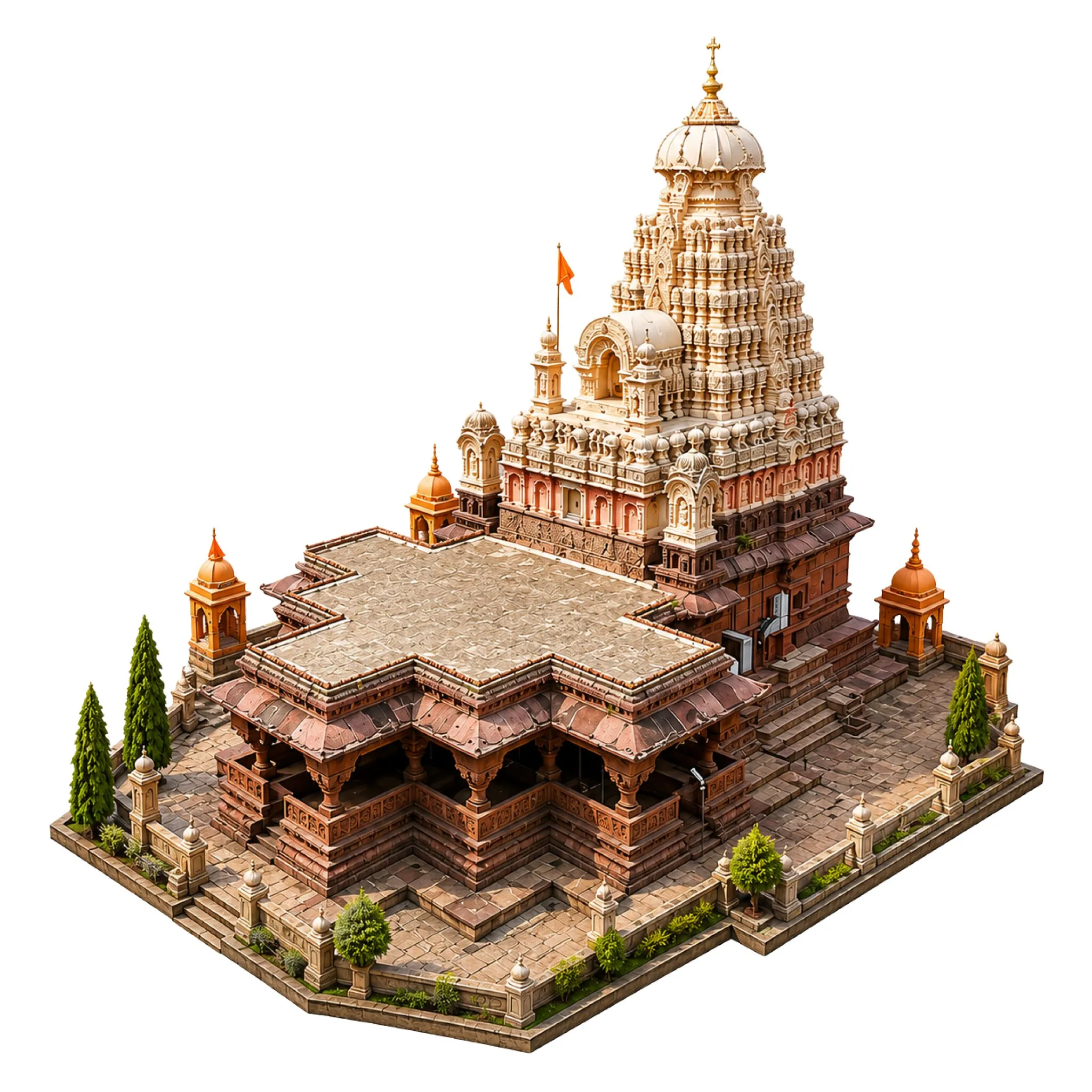
Ghrishneshwar Jyotirlinga
As the last and most sacred Jyotirlinga of the twelve Jyotirlingas of Lord Shiva, Shri Ghrishneshwar Jyotirlinga has a special place. This divine place is located about 11 kilometers from Daulatabad near Aurangabad in the state of Maharashtra. Known by various names like Ghusmeshwar, Ghrishneshwar and Ghusneshwar, this pilgrimage site is considered a symbol of steadfast faith and unwavering devotion among devotees. According to Hindu beliefs, worshipping Lord Shiva here brings happiness in children, prosperity in the family and peace in life.
The Ghrishneshwar Temple is famous for its ancient style, beautiful sculpture and spiritual energy. Devotees of Lord Shiva come here in large numbers to have darshan, especially during Mahashivratri and Shravan month. This holy place located around Devagiri mountain is considered very auspicious for spiritual practice and devotion.
The Mythology of Ghrishneshwar Jyotirlinga
In ancient times, a scholar and Shiva devotee Brahmin named Sudharma lived near Devagiri mountain. He regularly studied Vedas, performed Agnihotra and worshipped Lord Shiva. His wife Sudeha was also a religious and chaste woman, but both of them had no children. Sudeha was very sad due to the lack of children.
In time, Sudeha got her younger sister Ghusma married to Sudharma. Ghusma was a devoted devotee of Lord Shiva. She used to make 101 earthen Shivalingas every day and worship them ritually and then immerse them in a nearby lake. By the grace of Lord Shiva, Ghusma was born a beautiful and bright son.
After the birth of Ghusma's son, his respect in the society increased, which caused jealousy in Sudeha's mind. One day, blinded by anger and hatred, she killed Ghusma's son and threw his body parts into the same lake where Ghusma was immersing the Shivalingas.
The next day, there was an atmosphere of mourning in the house, but Ghusma did not interrupt her rule of Shiva devotion. She worshipped the Shivalingas as usual and went towards the lake. When she looked up after the immersion, her son was standing in front of her alive. Pleased with Ghusma's steadfast devotion and faith, Lord Shiva himself appeared there.
Lord Shiva asked Ghusma to ask for a boon and expressed his desire to punish Sudeha, but Ghusma prayed to forgive her sister. Pleased with Ghusma's forgiveness, compassion and sincere devotion, Lord Shiva took up residence there in the form of a Jyotirlinga and said that this place would become world famous as "Ghrishneshwar" in the future.
Religious significance of Ghrishneshwar Jyotirlinga
Ghrishneshwar Jyotirlinga is considered a symbol of unwavering devotion, forgiveness and compassion. It is believed that worshipping Lord Shiva here increases happiness and peace in the family and fulfills the desire for children. Devotees especially pray here for the welfare of the family, happiness of children and spiritual progress.
This holy Jyotirlinga teaches the devotees that there is no place for anger, hatred and ego in true devotion. Lord Shiva is pleased with the pure heart and faith of the devotee.
Architecture of Ghrishneshwar Temple
The Ghrishneshwar Temple is built with red stones and in the Hemadpanthi style. The walls of the temple are carved with beautiful sculptures of gods and goddesses, mythological stories and Shivalilas. The peaceful and spiritual atmosphere of the temple gives the devotees a special sense of peace.
The Devagiri Fort and historical places near the temple are a center of attraction for pilgrims. Special puja, abhishek and bhajan programs are organized here during Mahashivratri.
Ghrishneshwar Jyotirlinga Mantra
To get the grace of Lord Ghrishneshwar, devotees chant the following mantra:
“ॐम गृष्णेश्वराय नमह॥”