






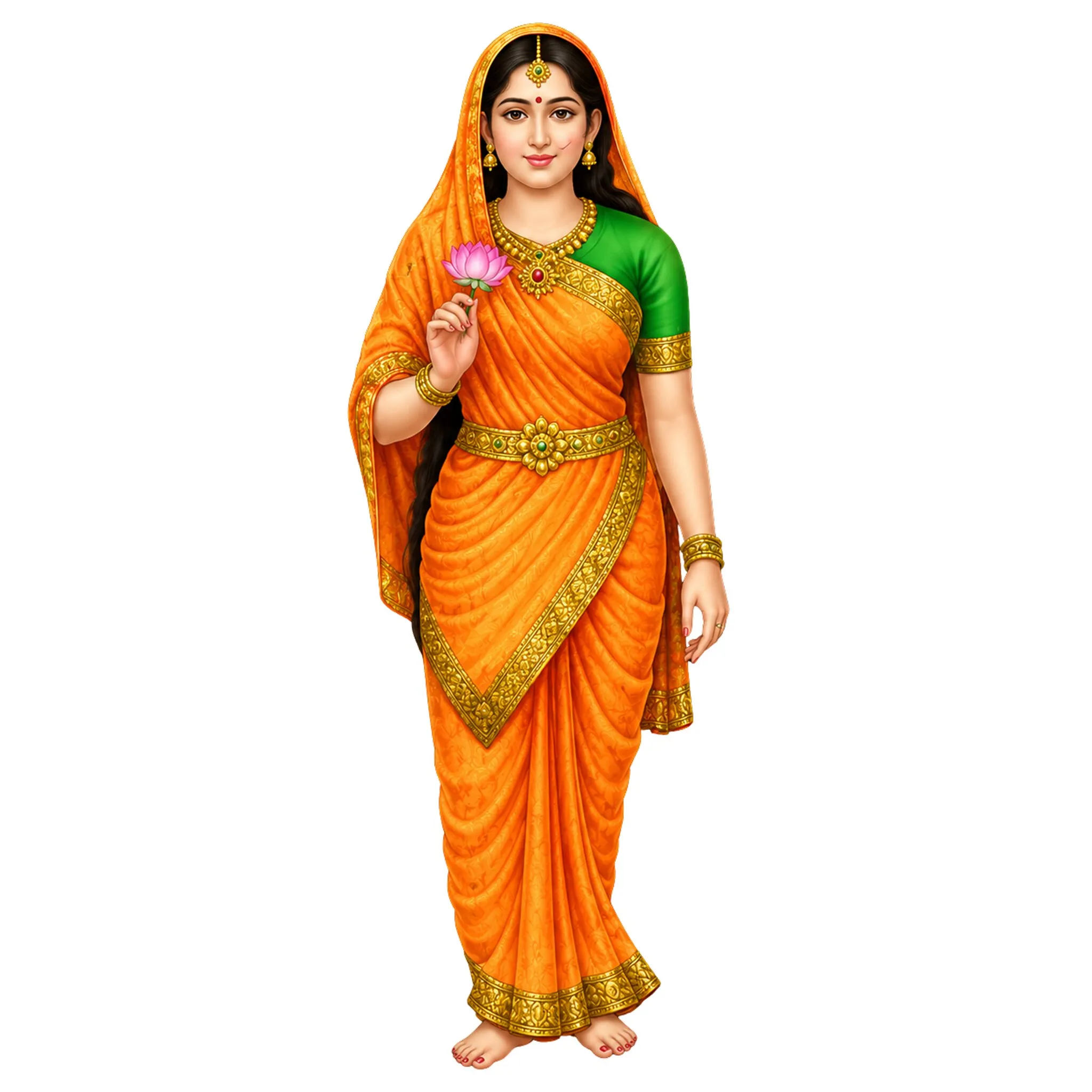
Introduction to Goddess Sita
Devi Sita, commonly known as Mata Sita, is the main heroine of the great Hindu epic Ramayana and Shri Ramcharitmanas. According to religious beliefs, when Lord Shri Hari Vishnu incarnated as Lord Shri Ram in the Treta Yuga, Goddess Lakshmi incarnated on earth in the form of Mata Sita. She is considered the consort of Lord Shri Ram and the epitome of ideal femininity. Being the daughter of King Janak, she is also known by names like Janaki, Janakatmaja and Janaksuta. Mata Sita is considered a living symbol of love, purity, sacrifice and piety.
Origin story of Goddess Sita
According to the Ramayana, once a terrible calamity befell the kingdom of Mithila. To save the people from suffering, King Janak organized a yagna and Vedic rituals as per the advice of the sages and started ploughing the field himself. While inspecting the field, the plough got stuck in a golden box buried in the ground. When King Janak opened the box, he saw a beautiful girl in it. Under the guidance of sage Yajnavalkya, Queen Sunayana took care of the girl. Due to her emergence from the ground, Mother Sita is also known as Bhoomiputri and Bhusuta.
According to the Hindu calendar, Mother Sita was born on the ninth day of the bright month of Vaishakh in Mithila, which is connected to the Sitamarhi region of Bihar in modern times. Her birth is considered divine and miraculous.
The birth story of Sita in the amazing Ramayana
The birth story of Mother Sita is narrated differently in the amazing Ramayana. According to the story, a great sage named Gritsamad was doing hard penance to get Goddess Lakshmi as his daughter. One day, in the sage's absence, Ravana attacked his ashram and came to Lanka with a kalash filled with the blood of the sages. Later, Ravana's wife Mandodari opened the kalash out of curiosity and drank the blood in it, due to which she became pregnant. Due to fear, Mandodari hid the born child in the land of Mithila. According to the story, the same child was later received by King Janak in the form of Mother Sita.
Family Description of Goddess Sita
King Shildhwaj Janak was the father of Mother Sita and Goddess Sunayna was her mother. Sita had three sisters named Urmila, Mandavi and Shrutikirti. Mother Sita was married to Lord Shri Ram and had two sons named Luv and Kush. King Janak had taken a vow that Sita would be married to the brave man who would bow the great bow of Lord Shiva. Many kings failed in this task, but Lord Shri Ram easily broke that bow and won the swayamvar of Mother Sita.
After the marriage of Sita and Shri Ram, his sisters were also married to Shri Ram's brothers. Urmila was married to Lakshmana, Mandvi to Bharata and Shrutikirti to Shatrughan. All four couples are considered to be the epitome of an ideal family and culture.
Divine form of Goddess Sita
The form of Mother Sita is depicted as extremely calm, gentle and compassionate. She is adorned with golden ornaments and dressed in divine clothes. She is depicted holding the Varada mudra in one hand and the Abhaya mudra in the other. Her form is considered similar to Goddess Lakshmi. In many idols and paintings, she is seen seated on a divine throne with Lord Shri Ram.
Mantras of Goddess Sita
Devotees chant various mantras to obtain the grace of Mother Sita. The most popular common mantras are as follows:
Shri Janaki Ramabhayan Namah.
The original mantra of Mata Sita:
Shri Sitayai Namah.
Devi Sita Gayatri Mantra:
Om Janakaya Vidmahe Ram Priyaya Dhimahi.
Tannho Sita Prachodayat.
It is believed that regular chanting of these mantras brings peace of mind, family happiness and spiritual strength.
Festivals associated with Goddess Sita
Among the major festivals associated with Mata Sita, Sita Navami holds special significance. On this day, devotees worship Mata Sita in a special way and draw inspiration from her ideal life. Sita Navami is considered especially auspicious for the happiness of married life, prosperity of the family and happiness of children.
Famous Temples of Goddess Sita
There are many famous temples of Goddess Sita in India and Nepal. Sita Rasoya and Kanak Bhavan in Ayodhya, Sita Temple in Varanasi, Janaki Kund in Chitrakoot, Sita Samahit Sthal in Sitamarhi, Sita Haran Sthal in Nashik, Sita Mai Temple in Karnal and Janaki Temple in Nepal are very famous religious places. Ashoka Vatika in Sri Lanka is also considered a holy place associated with the stories of Mother Sita.