






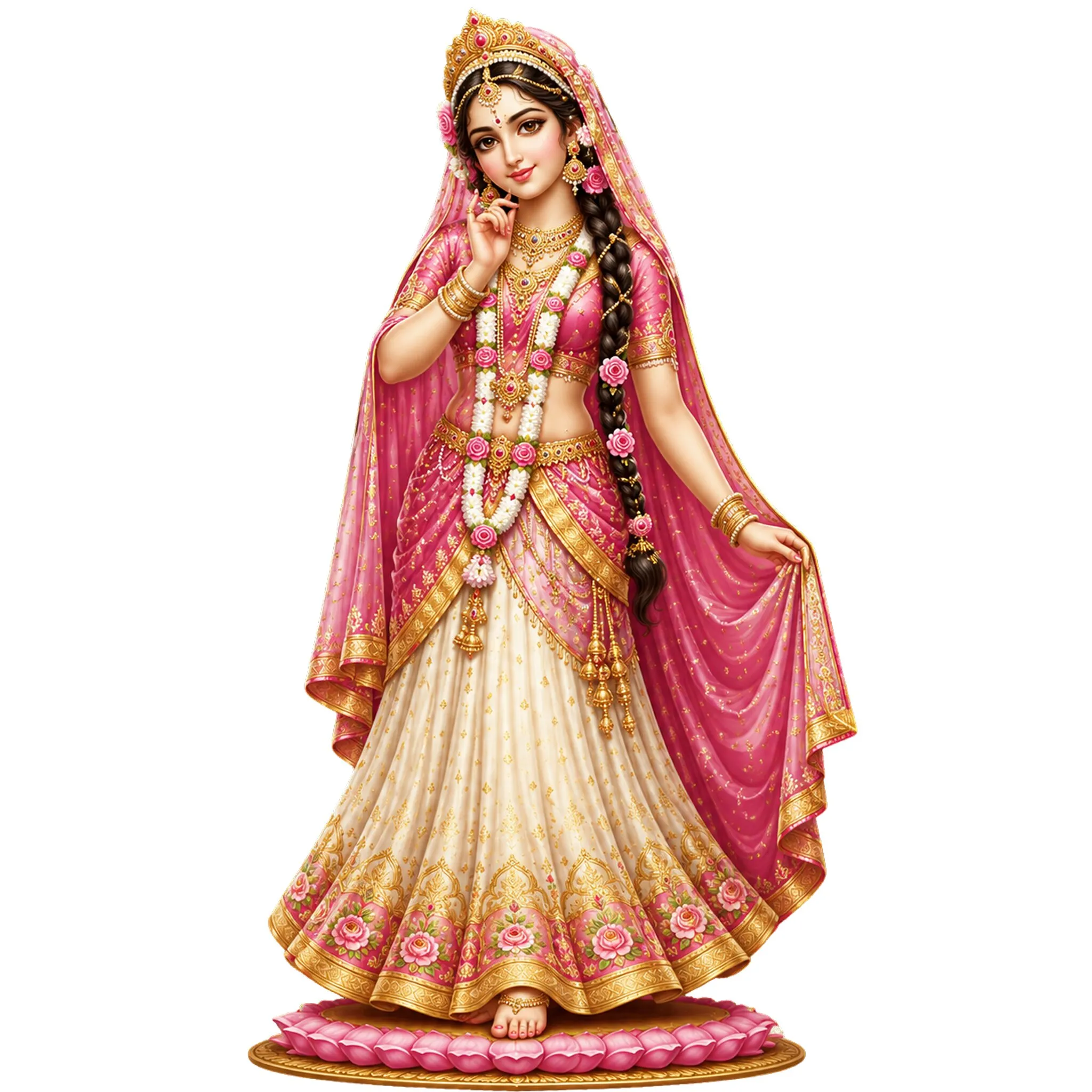
Introduction to Goddess Radha Rani
Goddess Radha Rani is considered the supreme symbol of love, devotion and divine power in Hinduism. In religious texts, she is described as the power of the delight of Lord Krishna. Devotees address her with affectionate names like Shreeji, Radhika, Ladli Ju and Radha Rani. The couple worship of Shri Radha and Shri Krishna has special significance in the Vaishnava tradition. According to beliefs, Radha and Krishna are two divine forms of the same supreme power. Where Krishna is, Radha exists and where Radha is, Krishna's divine pastimes are manifested.
In India, devotion to Radha Krishna is given the highest place in the Nimbark sect, Gaudiya Vaishnava tradition, Radha Vallabh sect, Pushtimarga and many other Vaishnava traditions. Devotees believe that the easiest way to reach Lord Krishna is through the grace of Radha Rani.
The origin story of Goddess Radha
According to the Brahma Vaivarta Purana, at the time of creation, a very beautiful and divine girl emerged from the left side of Lord Krishna, who later became known as Radha. Her body radiated a radiance like countless suns and her divine aura illuminated the entire universe. According to religious accounts, Radha Rani's beauty is considered more beautiful than the crores of moons on Sharad Purnima.
The scriptures state that as soon as Radha Rani appeared, she offered flowers at the feet of Lord Krishna. She resides with Lord Krishna in Golok Dham forever. Radha Krishna's pastimes are considered extremely secret and divine, representing devotion and supreme love.
Family Description of Radha Rani
According to religious beliefs, Radha Rani's father was Gopraj Vrishabhanuji and mother was Kirti Devi. Generally, people know Radha ji only as the lover of Shri Krishna, but the Brahma Vaivarta Purana and other Vaishnava texts also describe the divine marriage of Radha and Krishna. Therefore, Vaishnava devotees also accept Shri Krishna as Radha ji's husband.
Divine Form of Goddess Radha
Radha Rani's form is depicted as very beautiful, peaceful and compassionate. She is usually depicted in a two-armed form, wearing a lotus and sitting on a golden throne. She has a varada mudra in one hand and abhaya mudra in the other. In the scriptures, her radiance and beauty have been compared to the brilliance of crores of suns and moons.
According to Shrimad Devi Bhagwat, a beautiful bindi of musk adorns her forehead and small bindis of sandalwood make her divine aura more attractive. Her curly hair and swan-like gait captivate the minds of devotees. It is also described in the scriptures that Gangaji emerged from the divine limbs of Radha Krishna.
Mantras of Goddess Radha
Devotees chant various mantras to attain the grace of Radha Rani. The most popular common mantra is as follows:
Shri Radhayai Swaha.
Radha Rani's seed mantra:
Om Hreen Shri Radhikayai Namah.
Radha Gayatri Mantra:
Om Vrishabhanujaya Vidmahe Krishnapriyaya Dhimahi.
Tannoo Radha Prachodayat.
It is believed that regular chanting of these mantras develops devotion, love, peace and spiritual energy in the mind.
Praise of Radha Rani by Lord Narayan.
Namaste Parameshani Rasamandalavasini.
Raseshwari Namastestu Krishna Pranaadhikapriya.
In this hymn, Radha Rani is saluted as the ruler of Rasamandala and the goddess who is dearer to Shri Krishna than life itself.
Major festivals associated with Radha Rani
Radha Ashtami is considered the most important festival of Radha Rani. On this day, devotees worship Radha Krishna through special puja, bhajan and kirtan. Apart from this, festivals like Janmashtami, Holi, Lathmar Holi, Gopashtami, Kartik Purnima, Sharad Purnima and Phulera Dooj are also associated with the devotion of Radha Krishna.
Especially Lathmar Holi celebrated in Barsana and Vrindavan is famous all over the world and attracts lakhs of devotees.
Famous temples of Radha Rani
There are many famous temples of Radha Rani in India where lakhs of devotees visit every year. The Ladli Joo temple in Barsana, Uttar Pradesh is very popular. Apart from this, the Radha Rani Temple in Rawal village, the Radha Vallabh Temple in Vrindavan and the Seva Kunj Temple are also special faith centers for Vaishnava devotees.
Spiritual significance of Radha Krishna devotion
Devotion to Radha Krishna is considered a symbol of selfless love and self-surrender in Hinduism. According to the Vaishnava tradition, Krishna is incomplete without Radha and Radha is incomplete without Krishna. Devotees believe that it is difficult to attain true devotion to Shri Krishna without the grace of Radha Rani. Therefore, many devotees first remember Radha Rani and then worship Shri Krishna.