






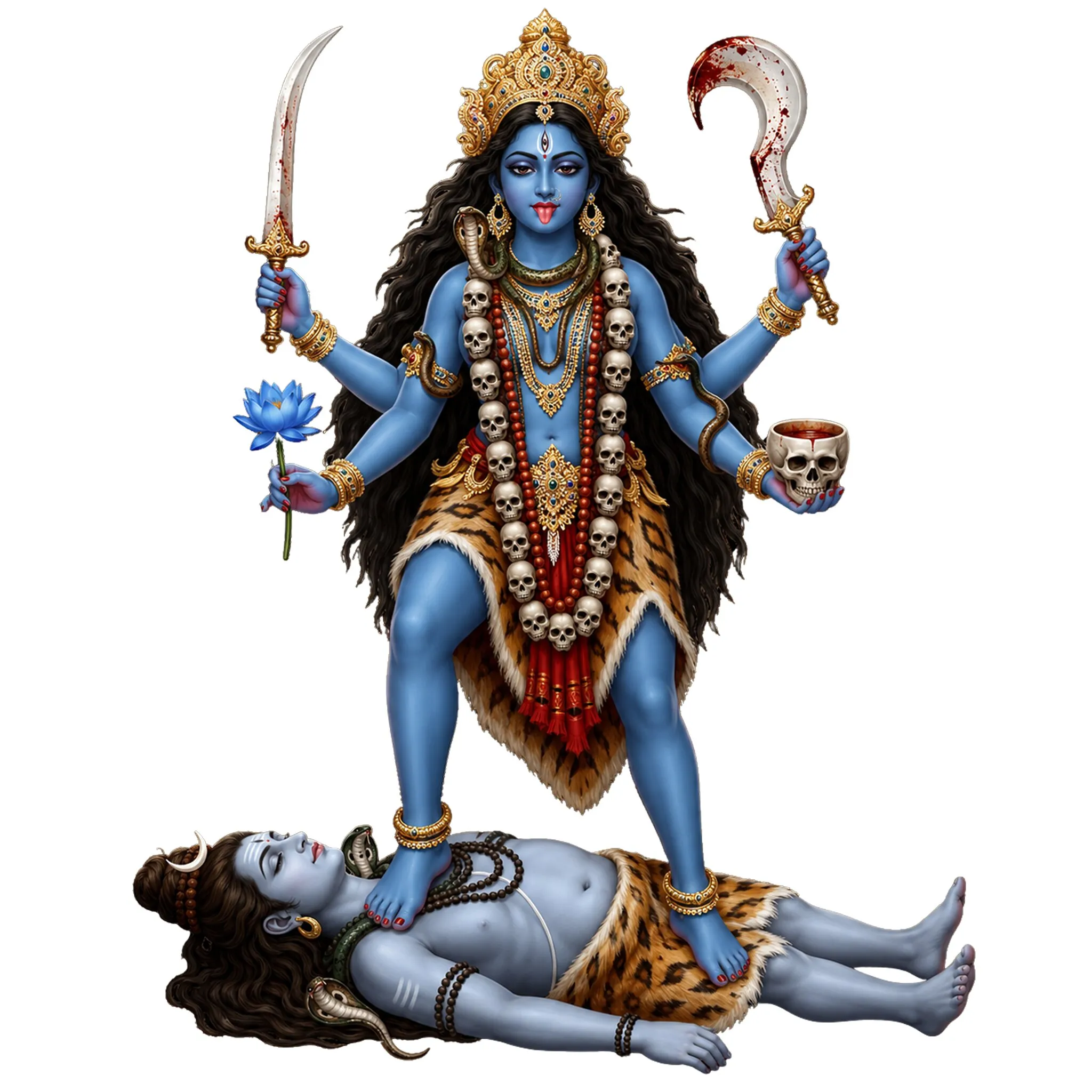
About Maa Tara
Maa Tara is considered the second of the ten Mahavidyas. In Hinduism, Maa Tara is worshipped as the goddess of protection, knowledge, compassion and spiritual liberation. The word “Tara” means saviour or one who brings salvation. Maa Tara is believed to free her devotees from fear, danger and ignorance and guide them to the right path.
According to the Hindu Tantra and Shakti tradition, Maa Tara has both fierce and compassionate forms. She is considered a goddess who gives inner strength, confidence and divine knowledge to her devotees. Maa Tara’s form is especially associated with Tantra practice and spiritual awakening.
The Story of Maa Tara
In the Hindu Shakti and Tantra tradition, the story of Maa Tara holds great mystical and spiritual significance. According to a famous story, during the churning of the ocean, when the gods and demons churned the ocean of milk to obtain nectar, the first thing that came out was a terrible poison called Halahal. The flames of this poison caused an outcry in the entire universe.
To save the universe, Lord Shiva drank the Halahal poison. Lord Shiva began to lose consciousness due to the unbearable heat and power of the poison. At that time, Adi Shakti took the form of “Maa Tara” and kept Lord Shiva in her lap and breastfed him.
The divine nectar-like milk of Maa Tara calmed the flames of poison in Lord Shiva’s body and he became healthy again. Hence Maa Tara is worshipped as the goddess of protection, compassion and deliverance from danger.
According to another Tantric belief, Maa Tara is the power that takes her devotees across the ocean of fear, darkness and ignorance. That is why the word “Tara” is considered to mean savior or liberator.
Meaning and Significance of Maa Tara
The word “Tara” means protector or one who takes them across the sorrows and fears of life. In the Hindu tradition, Maa Tara is considered a symbol of knowledge, protection and divine guidance.
It is believed that Maa Tara frees her devotees from negative forces, fear and ignorance and leads them towards spiritual progress.
The Gentle and Fierce Forms of Maa Tara
In the Hindu Shakti and Tantra traditions, Maa Tara is worshipped in both the gentle (calm) and fierce (fierce) forms. Both these forms represent different elements and spiritual powers of the Goddess Shakti. The gentle form of Maa Tara is seen as a symbol of compassion, protection and knowledge, while the fierce form is considered to be a symbol of the destruction of fear, the destruction of evil forces and Tantric power.
The gentle form of Maa Tara
The gentle form of Maa Tara is considered to be a compassionate mother and a goddess who protects her devotees. In this form, Maa Tara is believed to save her devotees from the dangers of life and lead them to a positive path.
In her gentle form, she is considered to be a symbol of knowledge, peace, spiritual guidance and stability of mind. Many devotees try to attain mental peace, self-confidence and divine grace through the peaceful worship of Maa Tara.
The gentle form of Maa Tara is worshipped more in Dakshinachar Sadhana. In this path, one tries to gain the grace of the Goddess through chanting, meditation, worship and sattvic devotion.
The fierce form of Maa Tara
The fierce form of Maa Tara is considered a symbol of power, fearlessness and the destruction of evil forces. In this form, the Goddess is depicted in a deep blue or dark color, with a sword in her hand and tantric symbols.
It is believed that in the fierce form, Maa Tara destroys the fear, ego and negative forces of her devotees, leading them to inner strength and spiritual awakening.
The worship of the fierce form of Maa Tara has special importance in the Vamachara Tantra Sadhana. In this sadhana, the importance of Guru Diksha, Mantra Siddhi and strict spiritual discipline is considered.
Spiritual meaning between gentle and fierce forms
Both the gentle and fierce forms of Maa Tara represent two important elements of life — compassion and power. The gentle form gives peace, knowledge and protection to devotees, while the fierce form destroys fear, ignorance and negativity.
According to Hindu tradition, both forms of the goddess ultimately lead devotees to spiritual liberation, self-knowledge and divine consciousness.
Religious significance of Maa Tara
In Hinduism, Maa Tara is worshipped for deliverance from danger, destruction of fear and spiritual enlightenment. In Tantra and Shakti worship, Maa Tara is considered a great protective goddess.
In the Puranas and Tantric texts, Maa Tara is described as a goddess who guides devotees in difficult times of life and bestows divine grace.
Maa Tara and Tantra Sadhana
Maa Tara is closely associated with Tantra Sadhana. Chanting of mantras, yantra, meditation and guidance of a guru are considered to be of special importance in Tara Sadhana.
Especially in the Vamachara Tantra tradition, Maa Tara is worshipped for spiritual awakening and secret Tantric power. However, Maa Tara is also worshipped peacefully in the Dakshinachar path.
Maa Tara's main festivals
Maa Tara is worshipped especially during Navratri, Gupta Navratri and special days of Tantric Sadhana. Tara worship is considered to have special significance in West Bengal and the Tantra tradition.
On these occasions, devotees try to seek the grace and protection of Maa Tara through chanting, worship and meditation.