






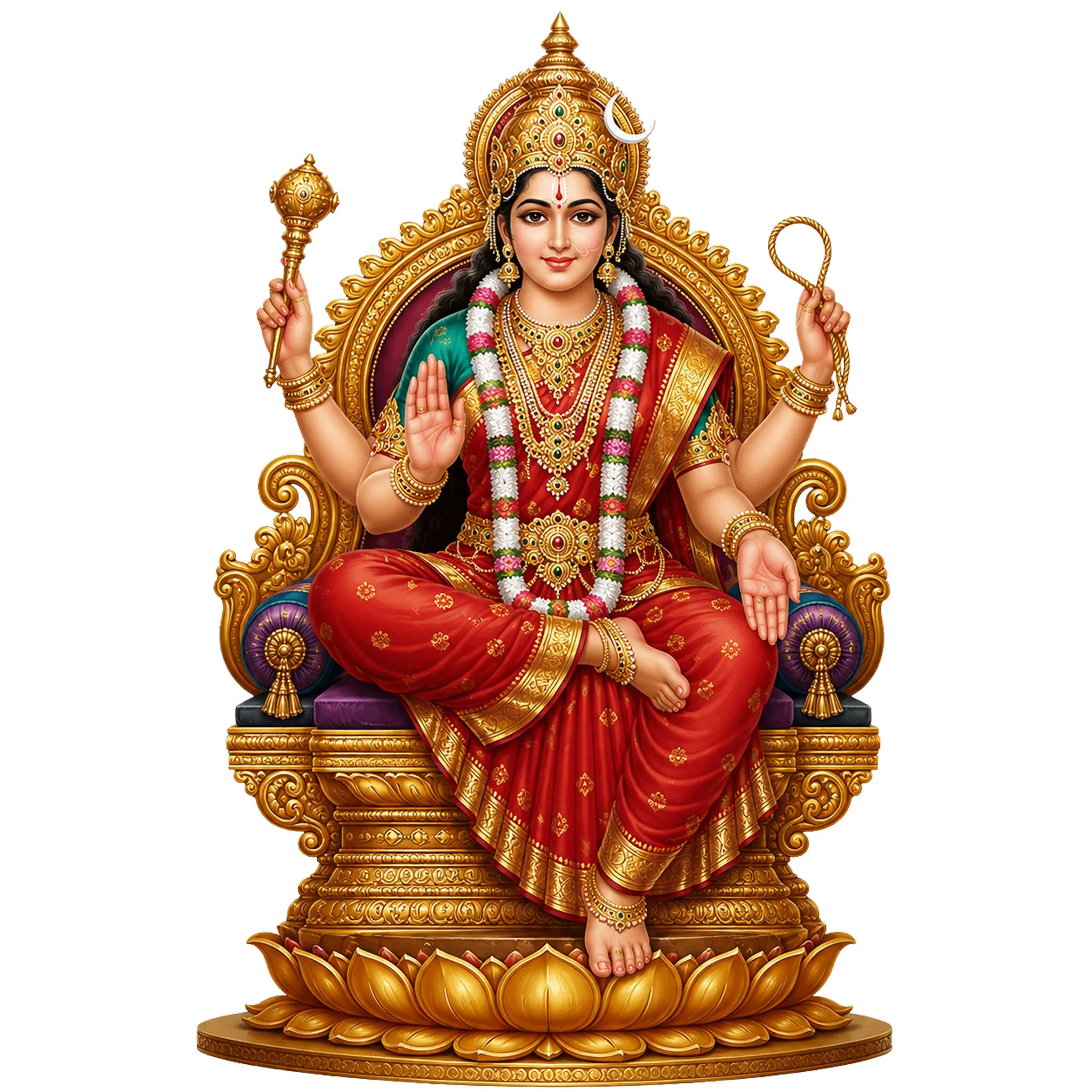
About Maa Bhuvaneshwari
Maa Bhuvaneshwari is considered the fourth Mahavidya among the ten Mahavidyas. In the Hindu Shakti tradition, she is worshipped as the presiding goddess of the entire universe and the divine form of creation. The word “Bhuvaneshwari” means the goddess or ruler of the entire world (world). She is considered to be the symbol of the universe, nature, illusion and divine consciousness.
According to Hinduism, Maa Bhuvaneshwari is considered to be the primordial power that sustains and governs the entire creation. It is believed that she bestows peace, knowledge, confidence and spiritual strength on her devotees. Maa Bhuvaneshwari’s form is considered to be a symbol of compassion, stability and divine radiance.
Meaning and Significance of Maa Bhuvaneswari
“Bhuvan” means world or universe and “Ishwari” means goddess or ruler. Therefore, Maa Bhuvaneswari is considered to be the ruler and symbol of the omnipresent power of the entire universe.
According to Hindu tradition, Maa Bhuvaneswari is considered to be the goddess of time, direction, nature and consciousness. It is believed that she leads devotees to inner peace and balance in life.
Form of Maa Bhuvaneswari
Maa Bhuvaneswari is usually depicted in a radiant and serene form. She is seated on a lotus seat and her hands are shown in the nāṣa, ankush and aashirva mudra.
Her divine form is considered to be a symbol of the infinite power of the universe, compassion and motherhood. The peace and radiance on her face inspire devotion and positivity in the minds of devotees.
Religious significance of Maa Bhuvaneshwari
In Hinduism, Maa Bhuvaneshwari is worshipped for peace, happiness, mental stability and spiritual progress. She is worshipped as the primordial power that sustains the entire universe.
In the Puranas and Tantric texts, Maa Bhuvaneshwari is considered to be a symbol of creation, nurturing and divine consciousness. It is believed that by her grace, devotees get stability and positive energy in life.
Maa Bhuvaneswari and Tantra Sadhana
Maa Bhuvaneswari is closely associated with Tantra and Shri Vidya Sadhana. Her worship is considered to have special importance in mantra chanting, Yantra, meditation and guidance of the Guru.
Maa Bhuvaneswari is worshipped peacefully and sattvically in Dakshinachar Sadhana. It is believed that she provides mental peace, spiritual knowledge and divine grace to the devotees.
Maa Bhuvaneswari and Spirituality
Maa Bhuvaneswari is considered to be a symbol of spiritual consciousness, peace and oneness with the universe. Many seekers try to get rid of mental instability, fear and negative thoughts through her worship.
According to Hindu tradition, devotion to Maa Bhuvaneshwari is believed to bring self-confidence, mental peace and spiritual progress.
The Story of Maa Bhuvaneshwari
According to Hindu Puranas and Shakti tradition, before the beginning of creation, there was only darkness and infinite emptiness in the entire universe. At that time, Adi Shakti spread the light of consciousness in the entire universe with her divine form. This omnipresent and universe-bearing power manifested as “Maa Bhuvaneshwari”.
According to the story, Maa Bhuvaneshwari created the entire universe with her divine maya and power. Time, direction, sky, earth and the entire nature manifested from her divine consciousness. Therefore, she is worshipped as the goddess who presides over the entire earth and the mother of the universe.
According to another belief, when the gods and sages meditated on the supreme power of the universe, Maa Bhuvaneshwari appeared in a radiant form. Her divine radiance illuminated all directions and the gods worshipped her as the supreme goddess of creation, sustenance and power.
In the Tantric tradition, Maa Bhuvaneshwari is also known as “Mahamaya”. She is considered to be pervading every power, time and consciousness of the universe. It is believed that by her grace, devotees attain inner peace, self-knowledge and stability in life.
Maa Bhuvaneshwari's main festivals
Maa Bhuvaneshwari is worshipped especially on special occasions like Navratri, Gupta Navratri and Dasha Mahavidya Sadhana.
On these occasions, devotees try to seek the grace, peace and spiritual power of the Goddess through chanting, worship and meditation.