





Beyond the Sparkle of Maya
Ever felt like life is just a series of shiny distractions keeping you from what really matters? I certainly have. In my years of practicing Vedic traditions, I've noticed that Mohini Ekadashi is like a cosmic reset button for exactly that feeling. Falling in the Shukla Paksha of the Vaishakh month, this day is much more than just skipping a meal; it is a profound opportunity to peel back the layers of 'Maya'—that grand illusion we all live in. Interestingly, after observing this fast for many years, I've realized it serves as a spiritual bridge. Just as we transition from the energy of Varuthini Ekadashi , Mohini Ekadashi invites us to embrace the enchanting grace of Lord Vishnu to find our true, untainted selves amidst the chaos of modern life.
The Divine Beauty that Saved Immortality
Who is Mohini?
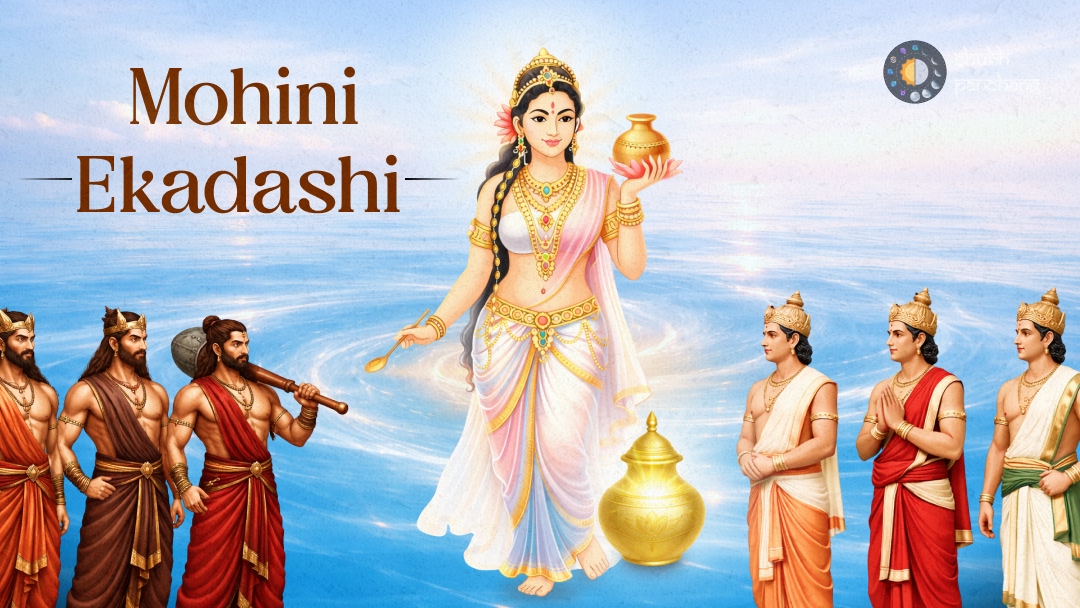
What's fascinating about this day is the specific form Lord Vishnu took. The word 'Mohini' comes from 'moha', meaning enchantment or delusion. Initially, I thought it was just a story about a beautiful woman, but then I realized the depth: Vishnu became Mohini to protect the 'Amrit' (nectar of immortality) during the Samudra Manthan. When the demons and gods were fighting, the Lord used this mesmerizing form to distract the asuras, ensuring the nectar reached those who would maintain cosmic order. It’s a vivid metaphor—sometimes we need divine intervention to distinguish between what nourishes our soul and what simply feeds our ego. In our lives, Mohini represents the wisdom to see through the 'attractive' distractions that lead us away from our higher purpose.
A Journey from Sin to Redemption
The Power of the Mohini Ekadashi Vratkatha
When Lord Krishna narrated this story to King Yudhishthira, he shared the life of Dhritabuddhi, the youngest son of a wealthy merchant named Dhanapala. Dhritabuddhi was, to put it mildly, a handful. He wasted his father’s wealth on vices and lived a life far from righteousness. But after being cast out and hitting rock bottom, he met Sage Kaundinya. The sage advised him to observe the Mohini Ekadashi fast. Can you imagine the transformation? This man, burdened by years of regret, found total redemption through a single, sincere fast. It teaches us a pivotal lesson: no matter how far we’ve strayed, the path back to the light is always open. It’s never too late to start your spiritual journey; the universe is remarkably forgiving when the intent is pure.
Your Practical Guide to the Rituals
Connecting with the Divine
I've noticed that people often get stressed about 'perfect' rituals, but the heart of the matter is devotion. Start your day with a holy bath (snan)—if you can’t reach a sacred river, adding a drop of Ganga Jal to your bucket works wonders! Lighting a lamp before Lord Vishnu and offering yellow flowers is a beautiful way to set the intention. Whether you choose a 'Nirjala' (waterless) fast or a partial one with fruits, the goal is to keep your mind fixed on the divine. Chanting 'Om Namo Bhagavate Vasudevaya' throughout the day acts like a rhythmic anchor, keeping your thoughts from drifting back into the mundane chaos of work or social media. I always suggest keeping a small photo of the Mohini avatar nearby to remind you of the Lord's protective grace.
The Discipline of the Soul: Dos and Don'ts
But what if I told you that what you say is just as important as what you eat? On this day, we avoid grains, beans, onions, and garlic—standard Ekadashi protocol. However, the real discipline lies in our behavior. I always tell my friends to treat this day as a 'speech fast' too. Avoid gossip, anger, and harsh words. It's a day for Satya (truth) and Brahmacharya (discipline). Interestingly, the physical restriction of food is meant to make the mind sharper, not grumpier! If you find yourself getting irritable, take a deep breath and remind yourself that this hunger is a tool for spiritual cleansing, not a punishment. Use that extra energy you usually spend on digestion to focus on prayers and self-reflection instead.
Why This Fast Matters in a Modern World
The Nectar of Inner Peace
In our hustle-culture world, we are constantly chased by 'wants'. Mohini Ekadashi is the perfect antidote. By observing this fast, we aren't just looking for 'punya' or merit points; we are actively training our brains to let go of attachments. The spiritual benefits are immense—it's said to remove the weight of past karmas that keep us feeling stuck. I've seen practitioners experience a sudden clarity in their personal lives after a sincere Ekadashi observance. It’s like clearing the fog off your car windshield during a heavy downpour; suddenly, the road ahead is visible. The liberation (moksha) promised by this Vrat isn't just something that happens after death; it starts with liberating your mind from anxiety and greed right now.
Crossing the Finish Line: Dwadashi and Parana
The journey doesn't end when the sun sets on Ekadashi. The following day, Dwadashi, is equally pivotal. The 'Parana' (breaking the fast) must be done within the specific Muhurat to complete the cycle and reap the full spiritual rewards. But here’s the thing: before you eat, it is customary to offer food and dakshina to the needy or a Brahmin. This act of charity grounds the spiritual energy you’ve cultivated. It reminds us that our spiritual growth is intrinsically linked to our service to others. After the Parana, I usually feel a sense of lightness and a renewed connection to the divine that carries me through the rest of the month. Remember, the goal is to carry that peace forward, not just leave it on the prayer mat.