


What is Kevada Trij and why is it celebrated?
Kevada Trij is a significant Hindu fast observed primarily by married women and unmarried girls to seek the blessings of Goddess Parvati and Lord Shiva for marital harmony and prosperity. This auspicious day falls on the Tritiya Tithi (third day) of the Shukla Paksha (waxing phase of the moon) in the Hindu month of Bhadrapada. While similar in theme to Hartalika Teej, Kevada Trij holds a unique cultural identity, especially in Gujarat and western regions of India, where the fragrance of the screw pine flower defines the spiritual atmosphere of the day. The core intent of the vrat is to honor the divine union of Shiva and Shakti, symbolizing the strength of devotion and the preservation of domestic peace. Participants often observe a strict fast, spending their time in prayer, chanting, and reciting the traditional Vrat Katha to internalize the virtues of patience and faith demonstrated by Goddess Parvati during her penance.
The symbolic importance of the Kevada flower
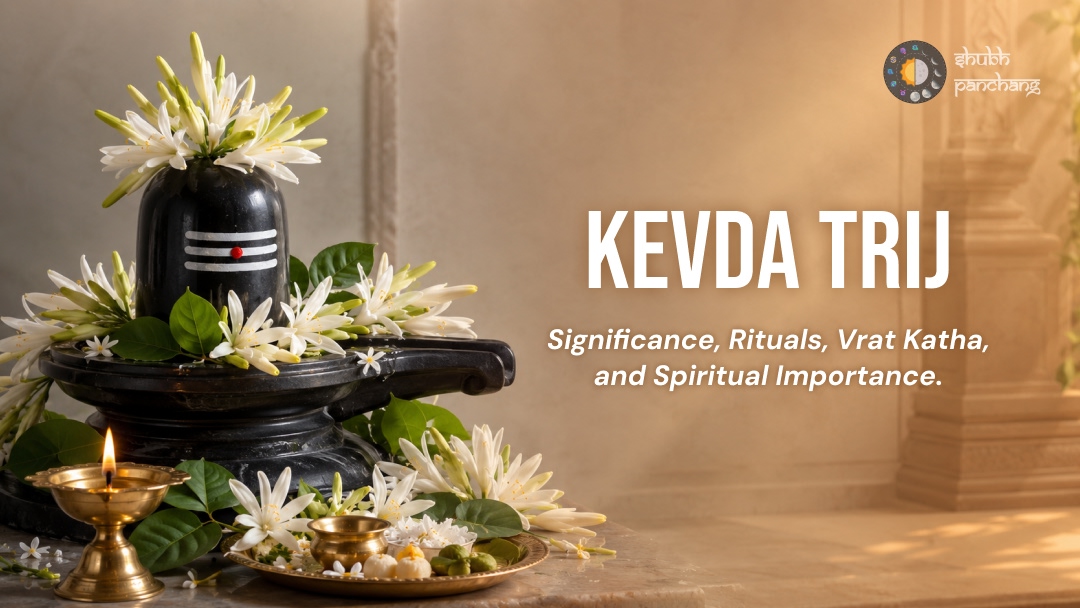
The name Kevada Trij is derived from the Kevada flower, also known as the screw pine or Pandanus, which is the central offering during this festival's rituals. In traditional Hindu worship, there is a well-known narrative from the Shiva Purana where Lord Shiva prohibited the use of Kevada flowers in his daily puja due to its false testimony in a dispute between Brahma and Vishnu. However, Kevada trij stands as a rare and sacred exception where this highly fragrant flower is specifically offered to the deity. This exception symbolizes the devotee's ability to offer even that which is rare or restricted when done with a heart full of pure intention and rigorous penance. The intense, lingering fragrance of the Kevada is believed to represent the soul's persistent devotion that permeates the surroundings, creating a meditative environment that facilitates a deeper connection with the divine during the Bhadrapada rituals.
The mythological background and Vrat Katha
The Vrat Katha of Kevada Trij centers on the epic penance of Goddess Parvati, who was determined to win Lord Shiva as her husband despite numerous challenges. According to the scriptures, Parvati performed intense austerities for many years, surviving on air and dry leaves while meditating on the banks of a holy river. Her father, King Himavan, initially intended to marry her to Lord Vishnu, but Parvati’s heart was set solely on the ascetic Shiva. With the help of her friends, she retreated to a forest to continue her worship undisturbed. Impressed by her unwavering resolve and the purity of her devotion on the third day of Bhadrapada Shukla Paksha, Lord Shiva appeared and accepted her as his consort. This story serves as the moral foundation for the festival, teaching devotees that through discipline, sacrifice, and steadfastness, one can achieve even the most difficult spiritual or worldly goals.
Detailed Puja Vidhi and rituals for Kevada Trij
The rituals of Kevada Trij begin before sunrise with a ceremonial bath and the cleaning of the household to welcome divine energies. Devotees establish a small altar (chowki) where idols or clay images of Lord Shiva, Goddess Parvati, and Lord Ganesha are placed. The worship follows the Shodashopachara method, involving sixteen steps of veneration including Avahana (invocation), Arghya (offering water), and Naivedya (offering food). The most critical part of the ceremony is the offering of the Kevada flower, along with Bel Patra, Dhatura, and seasonal fruits. Women stay awake throughout the night in many traditions, engaging in 'Jagran' where they sing bhajans and recite the Vrat Katha. The fast is usually broken the following morning after a final prayer and distribution of prasad. For those following a strict regimen, a Nirjala (waterless) fast is observed, while others may opt for a Phalahari diet consisting of milk and fruits, adhering to the principle of Sattvic living during the observance.
Spiritual significance and marital harmony
The spiritual essence of Kevada Trij transcends the physical act of fasting to focus on the cultivation of inner strength and family well-being. It is believed that observing this vrat with sincerity helps in removing obstacles within a marriage and ensures the longevity and health of the spouse. From a Vedic perspective, the alignment of the moon and the specific tithi in Bhadrapada creates a conducive environment for emotional balancing and the strengthening of 'Sankalpa' or willpower. By dedicating a full day to spiritual discipline, the practitioner undergoes a process of self-purification, where the focus shifts from external desires to internal peace. The festival acts as a reminder that a happy household is built on the foundation of mutual respect, shared devotion, and the divine grace that flows from disciplined living and gratitude.
Regional celebrations and traditional customs
In Gujarat, Kevada Trij is a vibrant community event where women often gather in temples or shared spaces to perform the puja together. These gatherings foster a sense of social cohesion and allow for the oral transmission of cultural values from older generations to younger ones. Special traditional songs, often in the local language, are sung to celebrate the love of Shiva and Parvati. In some households, elaborate rangolis are made at the entrance, and the house is decorated with fresh flowers to mirror the fragrance of the Kevada. While the core scriptural rules remain the same, the local flavors in the form of specific regional sweets and folk traditions add a unique layer to the celebration, making it a cornerstone of the western Indian festive calendar. These customs ensure that the historical and religious weight of the day is balanced with a sense of joy and communal celebration.
Common misconceptions and modern adaptations
A common misconception regarding Kevada Trij is that the effectiveness of the vrat depends solely on the rigors of the physical fast; however, the scriptures emphasize that 'Bhava' or the internal state of devotion is the most vital component. In modern times, many women who work or have health constraints adapt the rituals by focusing on the meditative aspects and the evening puja rather than the full twenty-four-hour waterless fast. The essence remains in the dedication and the conscious effort to improve one's character and family bonds. Younger generations are increasingly viewing these festivals not just as religious obligations, but as opportunities to reconnect with their roots and practice mindfulness. Adapting the tradition to fit a modern schedule involves setting aside specific hours for prayer and reflection, ensuring that the spiritual connection is maintained even amidst a busy lifestyle, thereby keeping the ancient tradition relevant in the contemporary world.