


What is Pithori Amas and When is it Observed?
Pithori Amas, also known as Pithori Amavasya, is a significant Hindu observance occurring on the new moon day (Amavasya) of the Shravan month. This festival is primarily celebrated by married women and mothers who seek the health, protection, prosperity, and longevity of their children. According to the Amanta calendar followed in Gujarat, Maharashtra, and Karnataka, Shravan Amavasya marks the conclusion of the holy month of Shravan. In the Purnimanta calendar used in Northern India, this day corresponds to the Amavasya of the Bhadrapada month. The day is deeply rooted in maternal devotion and the worship of various forms of the Divine Mother. Traditionally, Pithori Amas involves rigorous fasting and the performance of specific rituals to invoke the blessings of the Saptamatrikas and 64 Yoginis.
The Meaning and Origin of Pithori Amavasya
The term Pithori is derived from the Sanskrit word Pith, which literally translates to flour or dough. This etymology reflects a traditional practice where mothers would create symbolic representations or small idols of goddesses using rice or wheat flour. These flour-made figures represent the divine motherly energies that nurture and protect life. Historically, this festival highlights the cultural emphasis on the maternal role as a guardian of the family lineage. In regions like Maharashtra, the day is also closely linked with the Pola festival, where bullocks are worshipped, signifying a broader celebration of fertility, sustenance, and the agricultural cycle that supports family welfare.
The Traditional Vrat Katha of Pithori Amas
The Vrat Katha associated with Pithori Amavasya is found in regional traditions and emphasizes the power of maternal devotion and divine intervention. One popular narrative tells the story of a woman whose children did not survive long after birth. Deeply grieved, she sought spiritual guidance and was advised to observe a strict fast and worship the 64 Yoginis and the Saptamatrikas on the Shravan Amavasya. By following the rituals with total devotion, she was blessed, and her children were restored to health and granted a long life. Another version of the katha highlights how a daughter-in-law, who had lost her children, followed a secret ritual by going to a mountain and worshipping the goddesses there. When the goddesses were pleased, they granted her the boon of motherhood and protection for her children. These stories serve to reinforce the belief that the Divine Mother protects the progeny of those who approach her with a pure heart.
Spiritual Significance of Motherhood and Protection
In Hindu philosophy, motherhood is considered a manifestation of Prakriti (Nature) and Shakti (Power), embodying the qualities of unconditional love, sacrifice, and nurturing. Pithori Amas provides a dedicated time for mothers to acknowledge their spiritual responsibility toward their children's well-being. It is believed that the prayers offered on this day create a protective shield around children, shielding them from negative influences and obstacles. This observance is not merely about physical health but also about the spiritual growth and moral guidance of the next generation. By invoking the 64 Yoginis—demigoddesses representing various cosmic powers—devotees acknowledge that the upbringing of a child is supported by the entire universe's nurturing forces.
Rituals and Vidhi for Pithori Amas
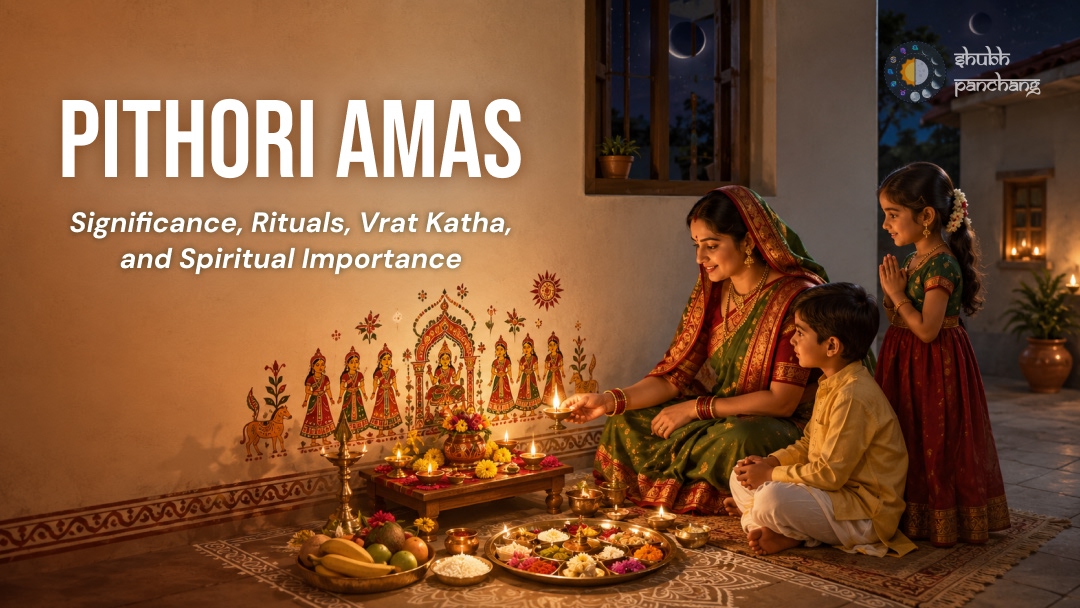
The observance of Pithori Amas involves several structured rituals designed to purify the mind and body. The day begins with an early morning cleansing bath, preferably in a sacred river or with water containing a few drops of Ganga Jal. Women observe a Vrat (fast), which usually lasts from sunrise to sunset or until the puja is completed in the evening. The main ritual involves drawing or placing symbolic figures of the 64 Yoginis and the Saptamatrikas on a piece of cloth or wooden platform. Offerings such as incense, lamps, flowers, and sweets made from flour (Pith) are presented to the deities. After the puja, mothers often distribute sweets to their children as a form of Prasad, symbolizing the transfer of divine blessings. Reading or listening to the Pithori Vrat Katha is a mandatory part of the procedure to complete the spiritual merit of the day.
Significance of Amavasya in Hindu Tradition
Amavasya, or the new moon day, holds a unique place in the Vedic calendar as a time for introspection, ancestral remembrance, and spiritual discipline. While some Amavasya days are considered heavy or caution-oriented, Shravan Amavasya is viewed as highly auspicious for seeking protection. It is a day when the veil between the physical and spiritual worlds is believed to be thin, making it an ideal time for Pitru Tarpan (ancestral offerings) and Kalsarp Dosha rituals if required. However, the focus of Pithori Amas is specifically on the living progeny and the continuity of the family. The dark night of the new moon is illuminated by the lamps of devotion, signifying the triumph of maternal love over any darkness or misfortune that might affect the children.
Regional Customs in Gujarat and Maharashtra
In Maharashtra, Pithori Amavasya is often celebrated alongside Bail Pola, where farmers decorate their bulls to thank them for their hard work in the fields. In Gujarat, the day is deeply spiritual, with many families visiting temples dedicated to Goddess Ashapura or other local Matrika temples. Regional sweets like 'Puran Poli' or 'Kheer' are prepared as offerings. The variation in celebration highlights how Hindu traditions blend agricultural gratitude with domestic spirituality. In many households, the elder women of the family lead the rituals, passing down the stories and specific family-specific customs to the younger daughters-in-law, thereby ensuring the cultural continuity of the Pithori Vrat across generations.
Modern Relevance and Common Misconceptions
In contemporary times, many families continue to observe Pithori Amas, though the physical flour idols are sometimes replaced by photographs or printed images of the goddesses. A common misconception is that the vrat is a rigid, fear-based ritual. In reality, the essence of the festival lies in gratitude and the conscious intention of a mother for her child's welfare. Modern lifestyle adaptations allow for partial fasting or simplified rituals, but the core focus remains on family harmony and the emotional bond between mother and child. It serves as a reminder to the modern generation about the traditional values of family protection and the spiritual significance of the parental role in Hindu culture.