


Is This the Most Challenging Day of the Hindu Calendar?
Imagine the peak of the Indian summer. The sun is blazing, the air is thick with heat, and your throat feels like a parched desert. Now, imagine choosing to stay away from even a single drop of water for twenty-four hours. Sounds intense, right? Well, that is exactly what Bhim Ekadashi , more commonly known as Nirjala Ekadashi, demands of a devotee. After years of observing the cosmic rhythms through the Panchang, I've noticed that while every Ekadashi has its own unique charm, this one is the heavyweight champion. It falls during the Shukla Paksha of the Jyeshtha month, and let me tell you, it is not just a fast; it is a profound spiritual detox. It is widely considered the most महत्वपूर्ण (important) and कठोर (rigorous) of all the twenty-four Ekadashis dedicated to Lord Vishnu. But why go through such a struggle? Because the rewards, as per our ancient wisdom, are equally monumental.
The Legend of the Hungry Hero: Why We Call it Bhim Ekadashi
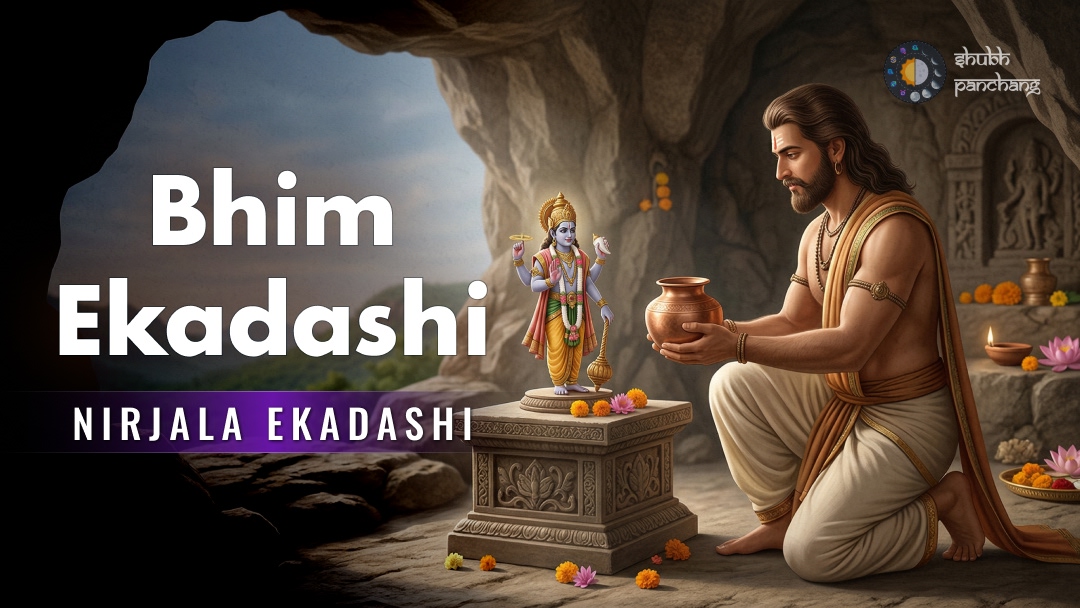
What’s fascinating is the story behind the name. We all know Bhima, the second Pandava brother, for his Herculean strength and his equally massive appetite. He had a fire in his belly called 'Vrik' which meant he simply couldn't handle hunger. While his brothers and Draupadi would fast on every Ekadashi, poor Bhima was constantly torn between his devotion and his stomach. One day, he approached the wise sage Ved Vyasa, feeling quite guilty. 'Grandfather,' he said, 'I want to honor Lord Vishnu, but I just can't skip meals twenty-four times a year!' Initially, I thought this was a bit humorous, but it actually reflects a very human struggle we all face—balancing our physical needs with spiritual aspirations. Ved Vyasa, with a gentle smile, told him that if he could observe just one fast—the Nirjala Ekadashi—without water, he would gain the spiritual merit of all the Ekadashis combined. And so, it became Bhim Ekadashi , a day where even the strongest man proved his devotion through sheer willpower.
The Vrat Katha: A Shortcut to Immense Spiritual Merit?
The Vrat Katha of this day is deeply inspiring. It tells us that by observing this one fast with absolute sincerity, a devotee can wipe away the sins of a lifetime. Think of it as a spiritual 'reset' button. The lore suggests that when Bhima successfully completed this fast, he attained the same पुण्य (spiritual merit) as someone who had meticulously observed every single Ekadashi throughout the entire year. It’s like a cosmic shortcut for those of us living busy, modern lives who might have slipped up on our spiritual practices earlier in the year. But don’t let the word 'shortcut' fool you; the lack of water makes it a grueling test of character. I’ve often felt that this story teaches us that it’s not about the quantity of rituals we perform, but the quality of our surrender to the Divine. When you are thirsty and still chanting 'Om Namo Bhagavate Vasudevaya,' your focus shifts from the body to the soul.
The Spiritual Core: Sacrifice and Self-Control
Beyond the physical abstinence, what is the real point of Nirjala Ekadashi? It is a masterclass in self-discipline. In our 'right now' culture, where every craving is satisfied with a click, waiting for water for a whole day is a radical act. It is about proving to yourself that your spirit is stronger than your biology. I’ve observed that people who regularly take on this challenge develop a certain 'stiffness of spine'—a resilience that helps them navigate the ups and downs of life with more equanimity. It is a period of deep introspection and devotion. You are essentially telling the universe, 'For this day, my love for the Divine is more vital than the water that sustains my body.' This level of sacrifice creates a powerful vibrational shift in the practitioner, clearing out mental fog and strengthening the intellect.
Rituals and Practices: How to Observe the Fast Properly
So, how do you actually do it? Here’s a bit of a roadmap I’ve refined over the years. It starts before sunrise with a पवित्र स्नान (holy bath) to cleanse the body. The resolve, or Sankalpa, is the most pivotal part—you must mentally commit to the fast without water. Throughout the day, we worship Lord Vishnu with yellow flowers, incense, and lamps.
Practical Tips for the Rituals
- Early Morning Prayer: Start with a clear mind and offer water (symbolically) to the Sun and Lord Vishnu.
- Mantra Chanting: Keeping the mind occupied with Vishnu Sahasranama or simple Beej Mantras helps distract from the thirst.
- The Katha: Reading or listening to the Bhim Ekadashi Vrat Katha is essential to connect with the day's energy.
- Keep it Quiet: I recommend avoiding heavy physical work; instead, engage in bhajans and gentle prayers.
It’s not just about the stomach; it’s about keeping the heart full of Vishnu's presence.
The Golden Rules: Dos and Don’ts for the Fasting Soul
Wait until you discover how much your mental state matters during this fast! It’s not just about 'not drinking.' You must maintain high purity in thought, word, and deed. This means no anger, no lying, and definitely no gossiping. If you spend the whole day complaining about how thirsty you are, you’ve missed the point! Truthfulness and charity are the pillars of this day. Interestingly, I've seen many people try to 'cheat' by sleeping all day, but the true benefit comes from being conscious and present in your sacrifice. Practice extreme patience. If someone irritates you, view it as a test sent by Lord Vishnu himself. Use this time to practice silence (Mauna), which can be just as refreshing for the soul as a glass of water is for the body.
Why We Endure: The Profound Benefits of the Fast
You might ask, 'Is it really worth the struggle?' The benefits are truly multi-layered. On a physical level, it’s an incredible detox for the digestive system. Spiritually, it is said to burn away negative karma and protect the devotee from future mishaps. I truly believe it helps in progressing toward Moksha (liberation), as it detaches us from our most basic bodily attachment. But there's also a psychological win—the confidence you gain from completing a Nirjala fast is immense. You feel lighter, more centered, and more connected to the cosmic whole. It’s like clearing the clutter from your spiritual attic, leaving room for grace to flow in.
The Importance of Dwadashi and the Art of Parana
Breaking the fast is just as important as the fast itself. The next day, Dwadashi, is when you conclude the ritual (Parana). But here is the catch: you don't just gulp down water and go about your day. Traditionally, you must first offer food, clothes, and most importantly, water in earthen pots (Ghada) to the needy or to a learned Brahmin. This act of giving water after having gone without it yourself creates a deep sense of empathy and gratitude. I always find the first sip of water on Dwadashi morning tastes like nectar—it reminds me never to take the basic gifts of nature for granted. Helping the less fortunate on this day amplifies the merit of your fast manifold.
A Global Tradition Rooted in Faith
It is heartening to see how Nirjala Ekadashi is observed across India and even globally. From the grand temples in Mathura to small home shrines in busy cities, the level of श्रद्धा (faith) is palpable. Many who cannot manage the strict rules for all 24 Ekadashis make it a point to stick to this one. It bridges the gap between those who are steeped in ritual and those who are just starting their spiritual journey. In our modern, hectic world, Bhim Ekadashi stands as a powerful reminder of our capacity for discipline and devotion. It teaches us that while our bodies have limits, our spirits are boundless. So, if you're looking for a way to deepen your spiritual commitment, why not give this ultimate test a try? It might just change your perspective on what you are truly capable of.