


What is Randhan Chhath and When is it Observed?
Randhan Chhath is a traditional Hindu observance celebrated primarily in the state of Gujarat on the sixth day of the Krishna Paksha in the month of Shravan. This day serves as a dedicated period for food preparation before the arrival of Sheetla Satam, a festival dedicated to Goddess Sheetla. Because the kitchen fire is traditionally kept extinguished on the following day (Saptami), Randhan Chhath is the final day of the year's Shravan cycle where elaborate meals are cooked. The timing of this festival aligns with the monsoon season, emphasizing rituals that promote health and cooling of the body according to regional traditions.
The Meaning and Linguistic Roots of Randhan Chhath
The term Randhan is derived from the Gujarati word for cooking, signifying that the essence of this day lies in culinary preparation. On Randhan Chhath, devotees engage in the intensive process of making various dishes that can be safely consumed the next day without being reheated. This practice is rooted in the belief that the stove or hearth must be rested to honor the cooling nature of Goddess Sheetla. By completing all cooking on this day, the household ensures that the kitchen remains a place of 'shanti' or peace, free from the heat of fire during the subsequent Saptami rituals.
Spiritual and Cultural Significance of the Observance
The spiritual significance of Randhan Chhath is centered on the concepts of cleanliness (Shauch) and discipline. It is believed that observing this tradition ensures the protection of children and family members from diseases associated with heat, such as smallpox or rashes, which are traditionally governed by Goddess Sheetla. Culturally, the festival serves as a transition into a more mindful state of living, where the act of eating 'Thadu' or cold food acts as a biological and spiritual reset. The preparation involves a high degree of organization and foresight, reflecting the Vedic emphasis on planning for health and well-being through seasonal dietary shifts.
The Connection with Goddess Sheetla and Sheetla Satam
Goddess Sheetla is the central deity associated with Randhan Chhath, even though her primary worship occurs on the following day, Sheetla Satam. In Hindu tradition, she is the personification of coolness and is often depicted riding a donkey, carrying a broom and a pot, symbolizing cleanliness and the removal of disease. The connection between the two days is structural: Randhan Chhath is the 'action' phase, while Sheetla Satam is the 'devotional' phase. It is believed that the Goddess visits every household on Saptami; if she finds the stove cold and the kitchen clean, she bestows blessings of health and prosperity upon the family.
Rituals and Traditional Dishes Prepared on This Day
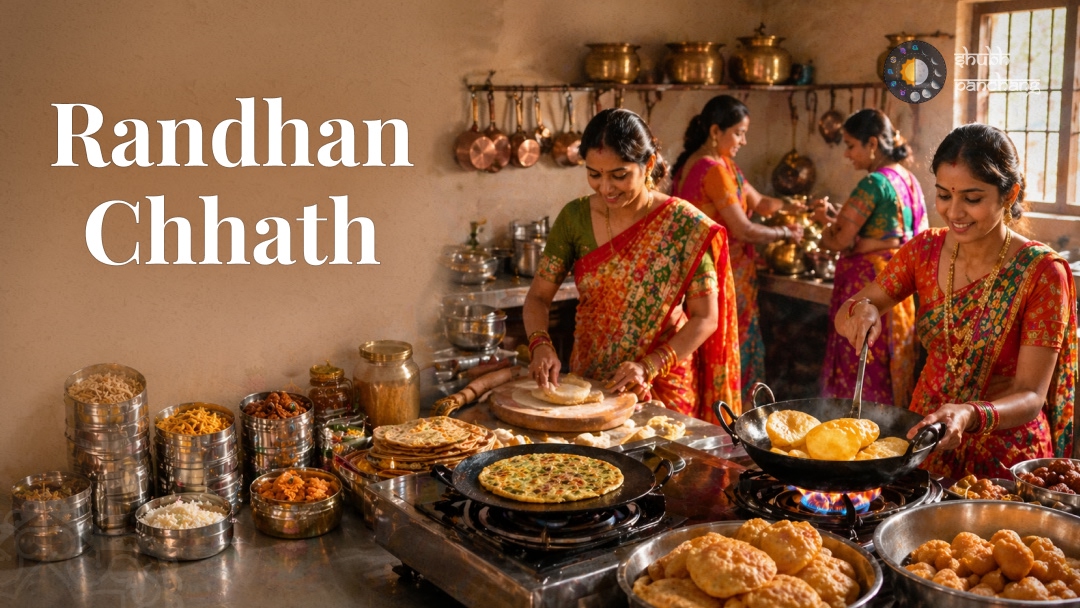
Rituals on Randhan Chhath involve waking up early to begin the preparation of several traditional Gujarati delicacies that have a long shelf life. Common items include Thepla, Bajra Rotla, Puri, and various dry vegetable preparations known as Sukhi Bhaji. Sweets like Ladoo or Shira are also made to ensure a complete meal. Hygiene is given the highest priority, as the food must remain fresh for over 24 hours without refrigeration in traditional contexts.
| Dish Category | Common Examples |
|---|---|
| Breads | Thepla, Bajra Rotla, Masala Puri |
| Vegetables | Sukhi Aloo Bhaji, Mixed Kathol (Pulses) |
| Sweets | Ladoo, Kansar, Shira |
| Snacks | Mamra, Namkeen, Pickles |
These dishes are specifically chosen for their nutritional value and their ability to stay palatable when served cold.
The Ritual of Cleaning the Hearth and Kitchen
A critical ritual performed late in the evening of Randhan Chhath is the thorough cleaning of the stove or 'Chulha'. Once all the cooking is finished, the fire is extinguished using water, and the stove is scrubbed clean. In rural settings, it is often coated with fresh mud or cow dung, and a small plant, such as Tulsi or a sprig of grass, is placed nearby. This process, known as Chulha Pujan, signifies that the fire has been put to rest. This act of ritual cooling is mandatory; lighting a fire in the kitchen after this point is considered an interruption of the sanctity required for the next day's worship.
Observing Sheetla Satam: The Day of Cold Food
Sheetla Satam follows Randhan Chhath and is marked by the complete absence of cooking or lighting any fire in the household. Devotees consume the 'Thadu Bhojan' (cold food) prepared the previous day. This practice is not merely symbolic but is intended to provide a break to the digestive system and the environment of the home. The day is spent in prayer and visiting temples dedicated to Goddess Sheetla. By refraining from the use of fire, devotees demonstrate their respect for the Goddess's cooling energy and adhere to a tradition that has been passed down through generations to ensure seasonal health during the humid Shravan months.
Regional Variations and Community Bonding
While Randhan Chhath is most prominent in Gujarat, similar traditions are found in Rajasthan and parts of North India under different names like Basoda or Sheetla Ashtami. In these regions, the core theme remains the same: preparing food a day in advance to honor the cooling deity. These festivals foster strong community bonds as neighbors and relatives often exchange the special 'cold' dishes they have prepared. This sharing of food reinforces social ties and allows for a collective celebration of cultural heritage, ensuring that the younger generation understands the logic behind ancient hygiene and dietary practices.
Modern Relevance and the Value of Tradition
In the modern era, Randhan Chhath remains highly relevant as it promotes the concepts of mindful consumption and domestic discipline. Even with modern appliances, many families choose to follow the tradition of keeping the stove cold to honor their cultural roots. It serves as a reminder of the importance of hygiene and the benefit of periodic dietary changes. Furthermore, it provides a much-needed break from daily household chores, allowing the family to focus on devotion and togetherness. The festival exemplifies how ancient Vedic lifestyle choices regarding health and environment can be integrated into contemporary living to promote physical and spiritual wellness.