






The Magic of the Right Moment
Have you ever felt like you were swimming against a powerful tide? No matter how hard you kicked or pulled, you just couldn't make headway. I've been there, and honestly, many of my clients come to me feeling exactly that way. After decades of studying the stars, I’ve realized that life isn't just about 'what' you do, but 'when' you do it. Think of Muhurat as your cosmic GPS. It’s that precise window of time when the universe isn't just watching but actively assisting you. In Hindu tradition, we don't see time as a linear clock but as a living, breathing energy. When we select specific muhurats for our ventures, we are essentially catching a cosmic wave rather than trying to paddle through a storm. It’s fascinating how a simple shift in timing can change the entire flavor of an outcome, transforming a stressful struggle into a graceful success.
Is Muhurat Science or Just Tradition?
Bridging the Gap Between Ancient and Modern
Initially, I used to think of Muhurat as just a set of rules passed down by my elders. But as I dove deeper into the Vedas , the sheer mathematical brilliance of it blew me away. It's not superstition; it's subtle energy management. Every moment, the planets are in a different configuration, casting unique shadows and lights upon our consciousness. When we talk about Muhurat, we are looking for a 'Shubh' or auspicious alignment where the five elements of the Panchang—Tithi, Vara, Nakshatra, Yoga, and Karana—harmonize. But what if I told you that even the most skeptical professionals I know now won't sign a contract without checking their Daily Horoscope or a favorable time? It’s because they’ve seen the results. Whether it’s planetary positions or cosmic vibrations, performing a ritual at the right time ensures that your intention is supported by the environment around you.
The Five Pillars of a Perfect Timing
What’s fascinating is how the Panchang works like a celestial calculator. It isn't just about avoiding 'bad' times like Rahu Kaal ; it's about finding the 'Golden' times. I often explain to my friends over tea that choosing a Muhurat is like finding the right frequency on a radio. If you're slightly off, you get static. If you're on point, the music is crystal clear.
- Tithi: The lunar day that sets the emotional tone.
- Nakshatra: The star constellation that influences the 'quality' of the action.
- Vara: The day of the week, each ruled by a specific planet.
Interestingly, I’ve noticed that when people ignore these pillars, they often find unexpected hurdles, even if their plan was solid. It’s as if the universe is saying, 'Wait, the door isn't open yet!'
When the Stakes are High: Marriage and New Beginnings
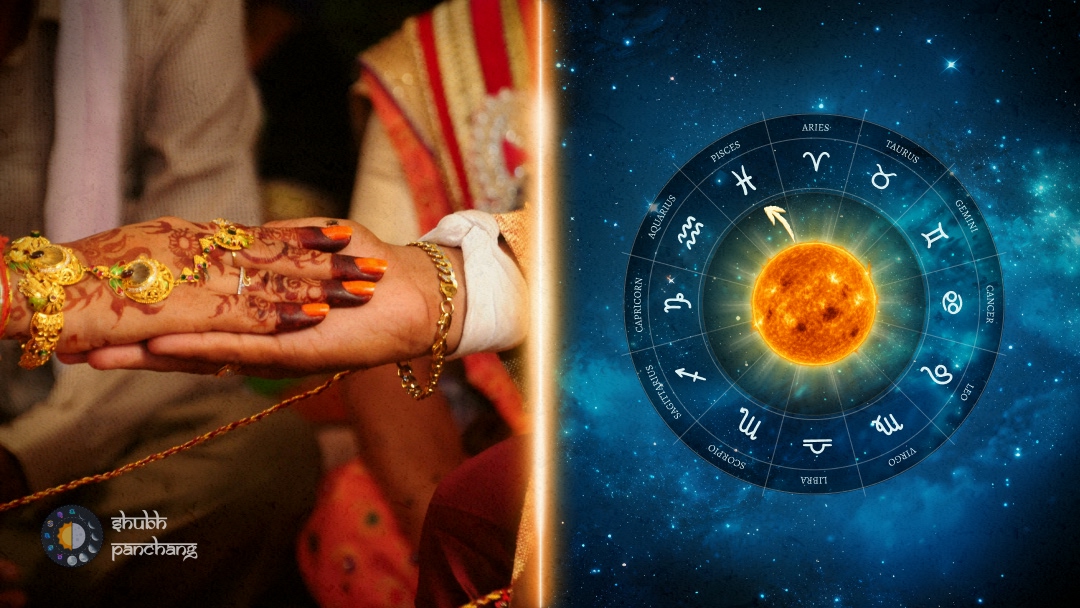
There is a reason why families spend weeks debating Marriage muhurats . Marriage isn't just a social contract; it’s a spiritual union. By picking a moment when Venus is strong and the Moon is waxing, we are seeding the relationship with growth and harmony. I once worked with a couple who insisted on a date that was astrologically 'heavy' because it looked good on the calendar. I gently suggested they wait just three days. They did, and later told me how everything—from the weather to the priest's mood—felt magically aligned. The same applies to a Property purchase . Buying a home is a massive life pivot. You want the foundation to be laid when the Earth energies are stable and the planetary lords of wealth are smiling. Why wouldn't you want the wind at your back when making such a huge leap?
Daily Success through Choghadiya
Wait until you discover how Muhurat applies to your everyday life! You don't need a major festival to use this wisdom. For busy professionals, I always recommend looking at the choghadiya . It’s a fantastic tool for those smaller, yet pivotal, daily decisions—like when to send an important email, start a short trip, or have a difficult conversation.
"Time is the most valuable currency, but auspicious time is the multiplier."
I’ve used it myself for years. If I have to meet a new collaborator, I look for a Shubh or Amrit window. It’s not about being obsessive; it’s about being mindful. It’s about respecting the rhythm of nature. When you align your small actions with these windows, life starts to feel less like a grind and more like a flow.
The Spiritual Gravity of Your Intentions
Beyond the logic and the charts, there’s a deep spiritual truth here. Performing a ritual or starting a project during a Muhurat is an act of humility. It’s us saying, 'I recognize that I am part of a larger whole.' This alignment fosters a sense of peace. When we do a Griha Pravesh or a Puja at the right time, we are inviting divine energies to reside with us. I've observed that rituals done in haste or during inauspicious times often feel hollow or meet with distractions. But when the time is right? The atmosphere changes. The incense smells sweeter, the mantras resonate deeper, and everyone present feels a sense of collective elevation. It’s the difference between a house and a home, or a ceremony and a sacred experience.
Stepping into the Cosmic Flow
So, why does Muhurat matter? Because you deserve to succeed. Because your efforts are precious, and they shouldn't be wasted on moments that are naturally resistant to growth. In Hindu Dharma, we believe that we are microcosms of the macrocosm. When the stars and planets move, something inside us moves too. By honoring Muhurat, you aren't just following an old tradition—you are practicing a form of spiritual intelligence. I challenge you: next time you have something important to do, don't just pick a random Tuesday. Look at the alignment. Check the energies. You might just find that the universe has been waiting to open doors for you all along. Let’s stop fighting the tide and start sailing with the cosmic winds.