





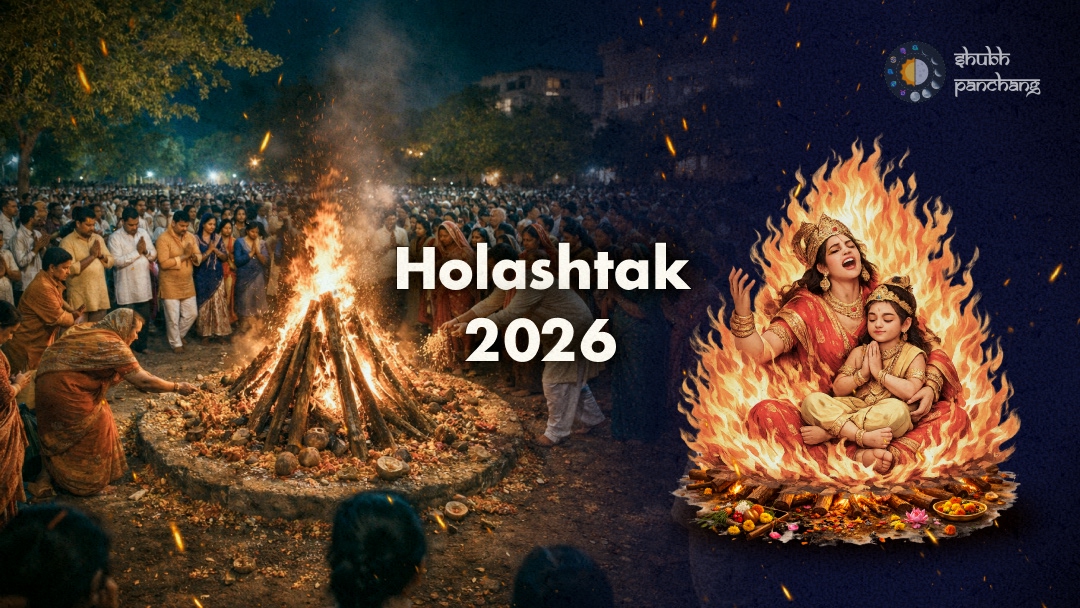
The Pre-Holi Pause: Understanding the Eight-Day Wait
Ever felt a sudden shift in energy just as the winter chill begins to fade? I’ve noticed it every single year—that strange, heavy stillness that descends eight days before Holi. In my practice at ShubhPanchang, clients often ask me, 'Pandit ji, why can't we just start the business now? Why wait?' Well, that's the mystery of Holashtak. In 2026, this period begins on February 25th (Phalgun Shukla Ashtami) and lasts until the night of Holika Dahan on March 3rd. It’s not just a 'bad time'; it’s a cosmic speed bump designed to make us look inward before the explosion of colors. While the world sees it as a time of restriction, I've come to see it as a necessary deep-clean for the soul.
The Legend of Prahlad: A Story of Inner Trials
What’s fascinating is how our myths mirror our inner psychology. Think about Bhakta Prahlad. For these eight days, he was tormented, tested, and pushed to his limits by his own father. Initially, I thought this was just a story of suffering, but after years of studying the Vedic texts, I saw it differently: it’s about the resilience of the soul. These eight days represent the period where the ego tries its hardest to crush the divine spark within us. When we observe Holashtak, we aren't just following an old rule; we are standing with Prahlad, proving that our faith is stronger than any external fire. It’s a time when our karmic baggage comes to the surface, asking to be acknowledged and cleared before the new season begins.
Why the Big No to Celebrations and New Ventures
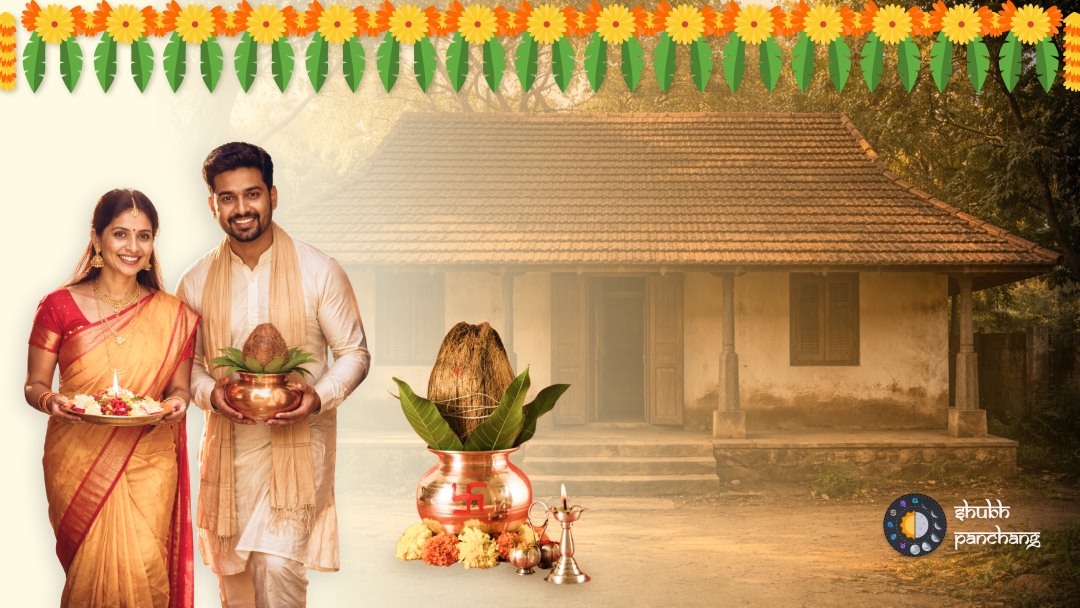
I’ll be honest, telling a young couple they can't have their Muhrat for a wedding during Holashtak isn't always easy. But here’s the thing—the atmosphere during these days is energetically 'hot' and volatile. Traditionally, activities like Griha Pravesh, naming ceremonies, or starting a new venture are avoided. Why? Because the planetary energies are in a state of flux. Imagine trying to plant a delicate sapling in the middle of a thunderstorm. You could do it, sure, but wouldn't you rather wait for the calm, fertile sun of the day after? That’s why we hit the pause button on materialistic milestones; we want our big life events to be blessed by stable, harmonious vibrations, not the chaotic energy of a transition.
The Astrological Tug-of-War in the Month of Phalgun
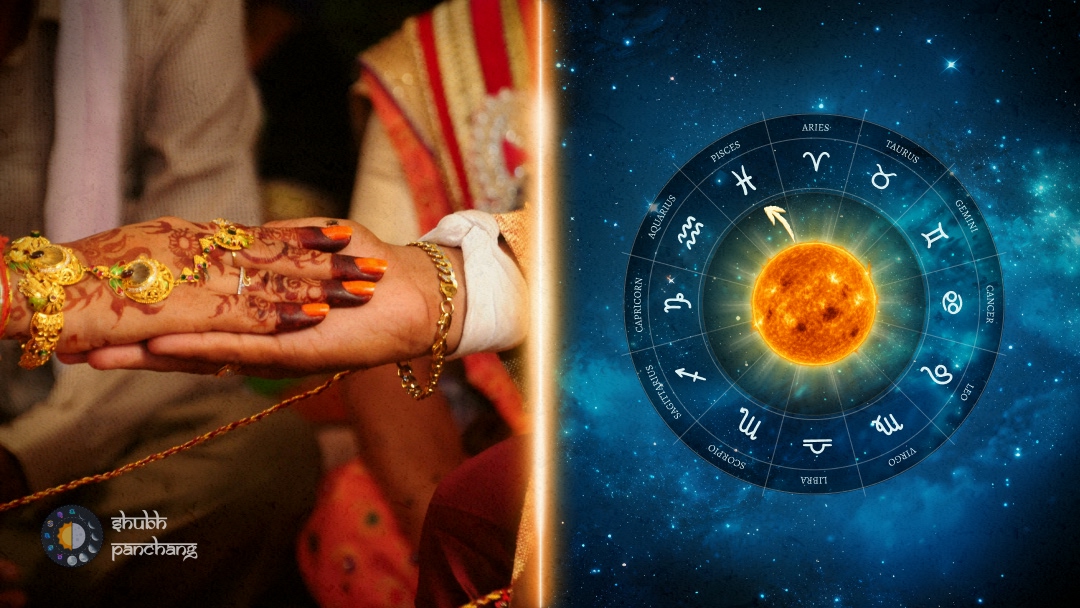
Interestingly, the astrology behind this is quite pivotal. As we reach the end of the lunar year in the month of Phalgun, the planets seem to undergo a 'cleansing' of sorts. From an astrological perspective, the sun, moon, and other grahas are believed to lose some of their 'Saumya' or gentle qualities during this eight-day stretch. This transitional phase can make our emotions feel like a bit of a rollercoaster. But wait until you discover the silver lining: while it’s not great for external success, it is a goldmine for internal breakthroughs. It’s like the universe is handing us a 'Do Not Disturb' sign so we can focus on our spirit. The planetary influences are intense, yes, but intensity is exactly what’s needed for real transformation.
Practical Wisdom for the Modern Professional
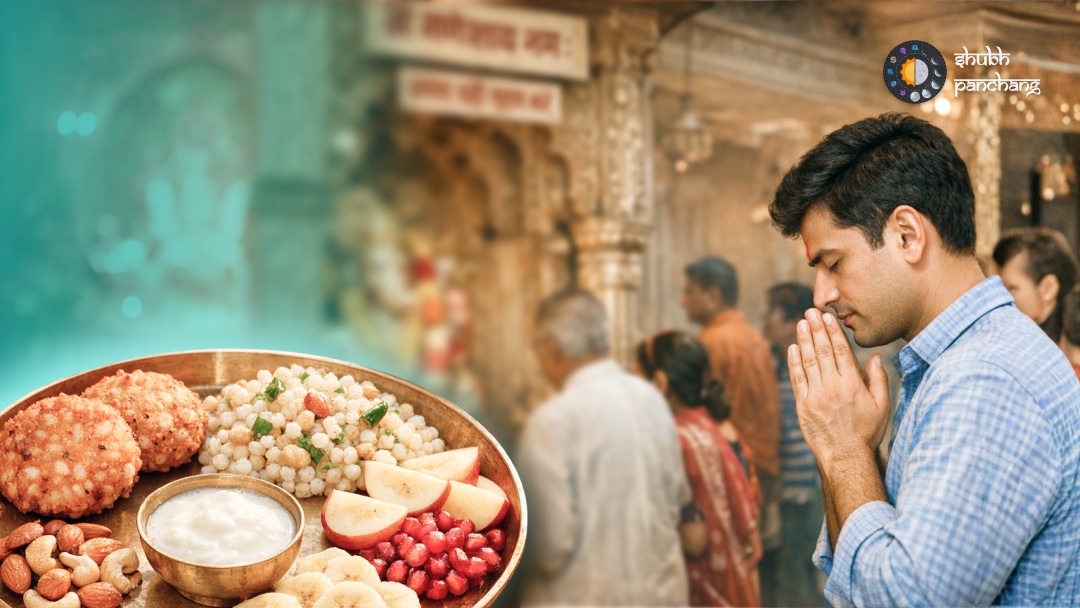
You might be thinking, 'I have a busy life, how do I manage this?' After years of practice, I’ve found that those who use Holashtak for mantra chanting and discipline experience a profound sense of relief. Instead of worrying about what you *can't* do, focus on what you *can*. This is the perfect time for 'Daan' (charity) and personal 'Sadhana'. If you’ve been feeling stuck in your career or relationships, use these days to burn away your mental clutter. I often suggest my clients perform a simple daily mantra japa or just spend ten minutes in silent reflection. It’s about burning the 'Holika' of your own negativity—your anger, greed, and ego—so that when Holi arrives, you are truly ready to be painted with the colors of joy.
Regional Flavors: From Gujarat to North India
In parts of North India and Gujarat, the traditions are even more vivid. You’ll see people preparing the site for the bonfire days in advance, symbolically gathering the dry wood and negativity of the past year. It’s a community-wide cleansing ritual that I find incredibly moving. However, even if you aren't in a region that observes this strictly, the cosmic GPS remains the same. The Tithis during this time are sensitive. I always recommend analyzing the complete Panchang and individual birth charts before labeling any period as entirely 'bad.' Sometimes, a specific Nakshatra might offer a window of opportunity, but generally, we lean towards caution and internal work during these eight days.
Embracing the Renewal of 2026
So, is Holashtak 2026 something to fear? Absolutely not. Think of it as the dark night before a glorious dawn. It’s a sacred opportunity for inner purification that we rarely get in our busy modern lives. When the fire finally roars on the night of the full moon, it’s not just wood burning; it’s the end of an old cycle and the birth of something fresh. My challenge for you this year is to embrace the 'inauspicious' as a gift of time. Use these eight days to heal, to pray, and to simplify your life. By the time the first bucket of water hits you on Holi morning, you’ll feel lighter, brighter, and genuinely renewed. Let the fire of Holashtak consume what no longer serves you.