





Wait, Why Do Our Festivals Dance Around?
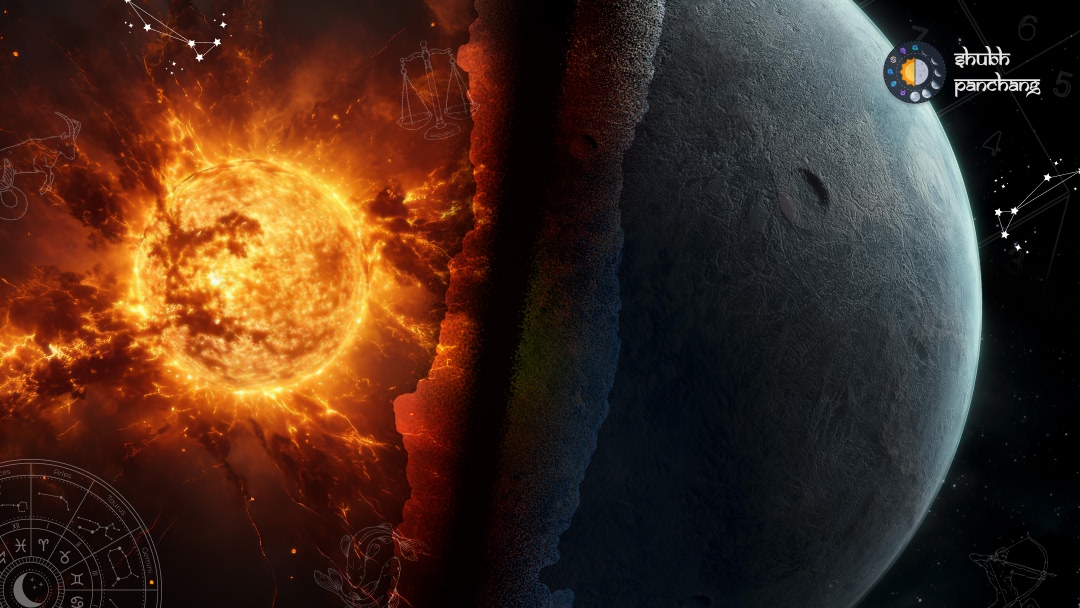
Have you ever noticed how your neighbor’s birthday is always on the same date every year, but your favorite Hindu festivals like Diwali or Holi keep hopping around the calendar? It used to baffle me as a child! I remember asking my grandfather why we couldn’t just pick a day and stick to it. He laughed and told me, "Son, the Sun tells your body when to wake up, but the Moon tells your soul when to celebrate." That was my first lesson in the dual-engine system of the Hindu Panchang. Unlike the Gregorian calendar, which is purely solar, our Panchang as your cosmic GPS uses a sophisticated blend of both Solar (Suryamana) and Lunar (Chandramana) calculations. It’s a bit like having two watches on one wrist—one for the external world of seasons and another for the internal world of spiritual energy. But what if I told you that this complexity is exactly what makes our system so incredibly accurate and spiritually resonant?
The Sun as Our Constant Cosmic Heartbeat
In the world of Vedic timekeeping, the Sun is the Pita or the father. It is steady, reliable, and provides the skeletal structure of our year. Solar calculations, or Suryamana , are based on the transit of the Sun through the twelve zodiac signs (Rashis). This is what determines our seasons. Every time the Sun moves from one Rashi to another, we celebrate a Sankranti . Most of us are familiar with Makar Sankranti, but interestingly, there are twelve such points in a year! After years of practice, I’ve realized that the solar calendar is the 'steady pulse.' It tells us when the harvest will come and when the heat will break. If we only followed the Moon, our seasons would eventually drift away from their natural months, and we’d be celebrating winter festivals in the peak of summer! Initially, I thought solar was just about agriculture, but then I saw how it governs our physical vitality and long-term life cycles.
The Moon and the Emotional Pulse of Tithis
While the Sun is the anchor, the Moon is the dancer. Lunar calculations are what give the Panchang its unique flavor. The Tithi (the lunar day) is calculated based on the changing longitudinal angle between the Sun and the Moon. What’s fascinating is that a Tithi isn't exactly 24 hours; it can be shorter or longer, which is why sometimes a Tithi starts in the middle of your workday!
The Power of Nakshatras
Each day is also defined by a Nakshatra , the lunar mansion the Moon is currently visiting. I’ve noticed that when people align their emotional tasks with the right Nakshatra, things just... flow better. For instance, checking your daily horoscope predictions can help you see how these lunar movements are affecting your personal energy. The Moon reflects our Manas (mind), and its phases—the Waxing (Shukla Paksha) and Waning (Krishna Paksha)—dictate the auspiciousness of our rituals. This is why your favorite festivals are tied to the Moon; they are spiritual appointments for the soul, not just markers on a wall calendar.
When Two Worlds Collide: The Adhik Maas Magic
Here’s the thing that really blows my mind: the solar year is about 365 days, but the lunar year is only about 354 days. That’s an 11-day gap every single year! If left unchecked, our calendar would completely fall out of sync with nature. This is where the genius of our ancestors shines through with the Adhik Maas or the intercalary month. Every three years or so, we add an extra month to the lunar calendar to 'catch up' with the Sun. It’s like a spiritual leap year, but much more profound.
It’s a beautiful reminder that while we are emotional beings (Lunar), we must remain grounded in physical reality (Solar).
Without this correction, the profound relationship between our rituals and the changing seasons would be lost forever. It’s a pivotal mechanism that ensures our traditions remain timeless.
The Spiritual Marriage of Fire and Water
In my practice, I always tell my clients that the Sun represents Agni (Fire/Soul) and the Moon represents Soma (Water/Mind). The Panchang is the sacred marriage of these two forces. We use solar calculations to define the Masa (month) and the Ayanas (solstices), providing the 'where' and the 'when' for our physical lives. Meanwhile, we use lunar calculations to find the Muhurat , the precise slice of time where the cosmic energy is most receptive to our prayers. Wait until you discover how much more centered you feel when you start paying attention to both!
Living in Harmony
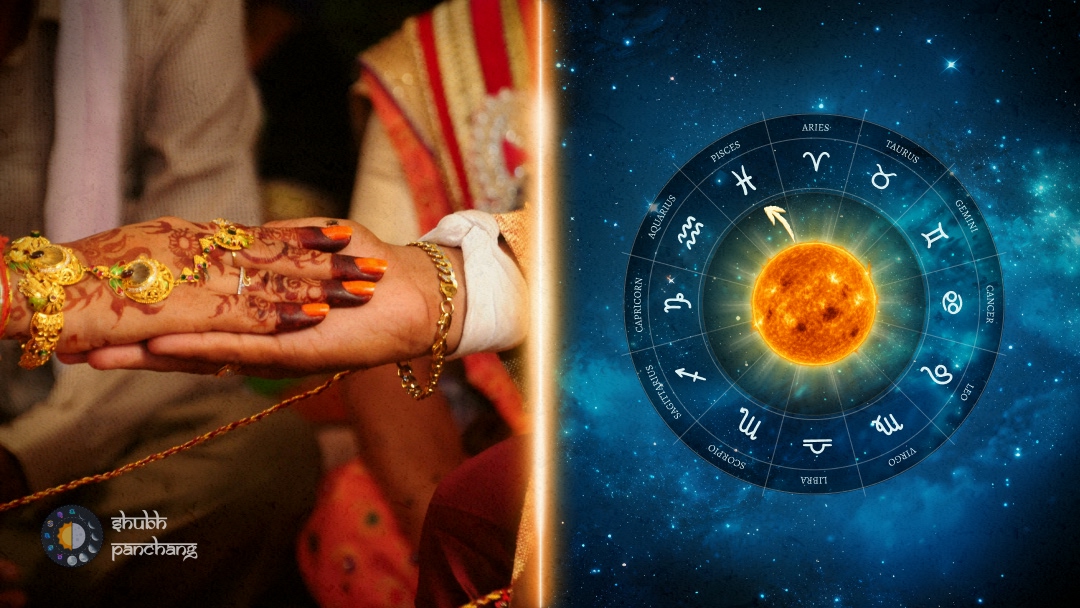
For example, a wedding might be planned during a solar-defined auspicious season, but the exact moment of the ceremony is chosen based on the lunar Nakshatra. It’s this balance that brings harmony. It’s not about choosing one over the other; it’s about acknowledging that we live in a universe of duality. The Sun gives us the strength to act, but the Moon gives us the wisdom to feel. Together, they create a life of alignment and purpose.
Actionable Wisdom for Modern Living
So, how do you use this in your busy life? You don’t need to be an expert mathematician! Start by observing the Tithi. Is the Moon growing? That’s the time to start new projects, to be expansive, and to plant seeds. Is the Moon shrinking? Use that time for introspection, clearing out clutter, and finishing old tasks. At the same time, keep an eye on the Sun’s transit—the Sankrantis—as markers for major life shifts and seasonal health changes. The balance of solar and lunar timekeeping is more than just math; it's a philosophy of life. It teaches us that there is a time for steady growth and a time for rapid change. I challenge you this week: look up at the night sky and find the Moon, then feel the Sun on your face the next morning. Recognize that both are working together to guide you. That, my friends, is the true heart of the Panchang.