






Understanding the Importance of August 15 in India
India celebrates Independence Day annually on August 15 to commemorate the nation's liberation from nearly two centuries of British colonial rule in 1947. This day stands as a primary national festival, symbolizing the birth of the world’s largest democracy and the formal end of the British Raj. Unlike religious festivals that follow the lunar calendar, Independence Day is observed according to the Gregorian calendar, uniting citizens across all regions, religions, and backgrounds in a shared expression of patriotism. It serves as a moment of collective reflection on the sovereignty of the nation and the heavy price paid for the right to self-governance.
Historical Background of the Indian Freedom Movement
The historical journey to independence was a protracted and arduous struggle involving decades of resistance against the British East India Company and later the British Crown. This movement gained significant momentum in the early 20th century, characterized by two primary schools of thought: the non-violent civil disobedience led by Mahatma Gandhi and the revolutionary approach advocated by leaders like Subhas Chandra Bose and Bhagat Singh. Key milestones such as the Non-Cooperation Movement, the Civil Disobedience Movement, and the Quit India Movement of 1942 systematically weakened the colonial administration's grip. The persistent efforts of leaders like Jawaharlal Nehru, Sardar Vallabhbhai Patel, and Maulana Abul Kalam Azad, alongside the sacrifices of millions of unnamed citizens, eventually forced the British Parliament to pass the Indian Independence Act 1947, which transferred legislative sovereignty to the Indian Constituent Assembly.
The Significance of Freedom and Democratic Values
Independence Day signifies more than just a political transition; it represents the restoration of dignity and the fundamental right to self-determination for over a billion people. The significance lies in the transition from being subjects of an empire to becoming citizens of a free republic. This day honors the democratic values of liberty, equality, and fraternity that form the bedrock of the Indian Constitution. It is a time to remember the sacrifices made by freedom fighters who endured imprisonment, exile, and physical hardship to ensure a better future for coming generations. The essence of the day is rooted in unity, reminding a diverse nation that despite differences in language or culture, the identity of being Indian remains the unifying force.
Historic Events of August 15, 1947
The midnight of August 14 and 15, 1947, marked a pivotal turning point in world history as India emerged as an independent sovereign state. In the Central Hall of Parliament, Jawaharlal Nehru, the first Prime Minister of India, delivered his iconic ‘Tryst with Destiny’ speech, articulating the end of a long period of suppression and the beginning of a new era. He famously stated that while the world slept, India would awake to life and freedom. Following this declaration, the national flag was hoisted, replacing the British Union Jack, signaling the official start of a new chapter. While Republic Day would later mark the adoption of the Constitution in 1950, August 15 remains the day the physical shackles of colonialism were broken.
National Celebrations and the Red Fort Ceremony
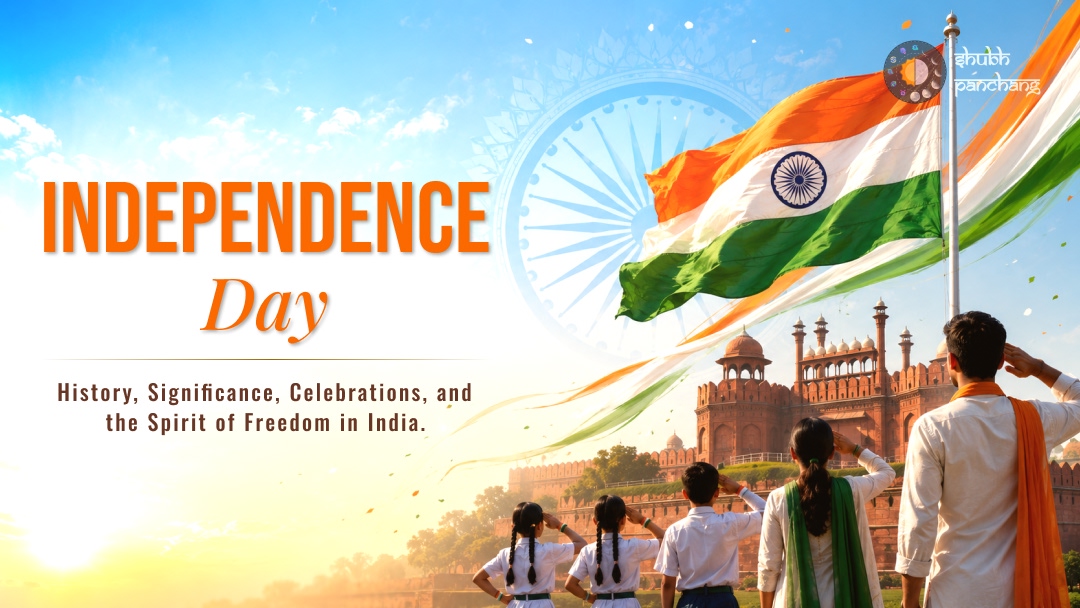
The primary national celebration of Independence Day takes place at the historic Red Fort in Delhi, a site deeply intertwined with India's struggle for power and freedom. The ceremony begins with the Prime Minister hoisting the national flag (Tiranga), followed by a 21-gun salute and the singing of the national anthem, 'Jana Gana Mana.' The Prime Minister then addresses the nation from the ramparts of the fort, highlighting the government’s achievements, outlining future goals, and paying tribute to the martyrs of the freedom struggle. This event is broadcast nationwide and is followed by a series of cultural performances and parades by the Indian Armed Forces and paramilitary forces, showcasing the country's military strength and cultural diversity.
Symbolism of the Indian National Flag (Tiranga)
The Indian National Flag, or the Tiranga, is a potent symbol of the nation's identity and its colors carry deep philosophical and historical meanings. The top band of saffron (Kesari) represents courage, sacrifice, and the spirit of renunciation. The middle white band signifies peace, truth, and purity, while the bottom green band represents fertility, growth, and the auspiciousness of the land. In the center of the white band is the Ashoka Chakra, a navy blue wheel with 24 spokes, which represents the 'Wheel of the Law of Dharma' as depicted by the Mauryan Emperor Ashoka. The chakra symbolizes constant movement and progress, reminding citizens that life is in movement and stagnation is death.
How Citizens Celebrate Across India
Beyond the official ceremonies in the capital, Independence Day is celebrated with great fervor in every state capital, district headquarters, school, and residential society. Common traditions include:
- Flag Hoisting: Local leaders or elders hoist the flag in neighborhoods, often followed by the distribution of sweets.
- Kite Flying: In many parts of North India, the sky is filled with colorful kites, symbolizing the soaring spirit of freedom.
- Cultural Programs: Schools and colleges organize patriotic song competitions, dramas depicting the lives of freedom fighters, and debates on national issues.
- Patriotic Attire: Many people choose to wear the colors of the national flag or traditional khadi to show their respect for the nation's history.
The Role of Citizens in Preserving Freedom
Freedom brings with it a significant degree of responsibility, and the role of the modern citizen is to protect the hard-won independence through active participation in nation-building. Preserving freedom involves adhering to the rule of law, respecting the rights of others, and upholding the secular and democratic fabric of the country. Citizens contribute to the nation's growth by fulfilling their civic duties, such as voting, paying taxes, and maintaining communal harmony. True patriotism in the 21st century is reflected in efforts to eliminate social evils, protect the environment, and work toward the economic empowerment of all sections of society. By following the values of unity and integrity, every individual helps in ensuring that the struggles of the past continue to yield a prosperous future.
Reflecting on India's Progress and Future Goals
Since 1947, India has made remarkable strides in various sectors, transforming from an agrarian economy into a global hub for technology, space exploration, and pharmaceuticals. From the Green Revolution to the digital revolution, the nation has demonstrated resilience and innovation. However, Independence Day is also a time for honest assessment of the challenges that remain, such as poverty, education gaps, and infrastructure needs. The concept of 'Amrit Kaal' focuses on the roadmap for the next 25 years, aiming to make India a developed nation by its centenary of independence. It serves as an inspiration for every citizen to contribute positively to the country’s development, ensuring that the spirit of freedom is translated into tangible progress for every Indian.


