


Finding Your Cosmic Shield in Varuthini Ekadashi
Why This Day Feels Different
Have you ever felt like you just needed a cosmic reset button? I’ve spent years tracking the lunar cycles, and I’ll be honest—certain days carry a weight that you can almost feel in the air. Varuthini Ekadashi is exactly one of those days. Falling during the Krishna Paksha (the waning moon) of the Vaishakh month, this isn’t just another date on the Varuthini Ekadashi calendar; it’s a profound spiritual opportunity. Dedicated to Lord Vishnu, particularly in his Vamana avatar, this day is often overlooked by the casual observer, but for those of us who live by the Panchang, it’s a pivotal moment for spiritual cleansing and seeking divine protection. I remember when I first started my practice, I thought all Ekadashis were more or less the same. But the more I listened to the stories and observed the subtle shifts in energy, the more I realized that this specific day is like a cosmic GPS guiding us back to our highest selves.
The Meaning of Varuthini: More Than Just a Name
What’s fascinating is the literal meaning of the word itself. 'Varuthini' comes from the Sanskrit root for 'armored' or 'protected.' Think of it as a spiritual raincoat for your soul. But what if I told you that this protection isn't just about avoiding bad luck? It’s about shielding your consciousness from the noise of the world. In my personal experience, the energy of this Tithi acts as a barrier against the negativity we often absorb without even realizing it—the stress of work, the weight of past regrets, or even those nagging self-doubts. Initially, I used to focus solely on the physical fast, but now I see it as building an internal fortress. By observing this Varuthini Ekadashi , we are essentially asking the Universe to guard our path toward prosperity and spiritual growth, shielding us from the 'arrows' of our own past karmas.
The Legend of King Mandhata: A Lesson in Karma
A Story for the Ages
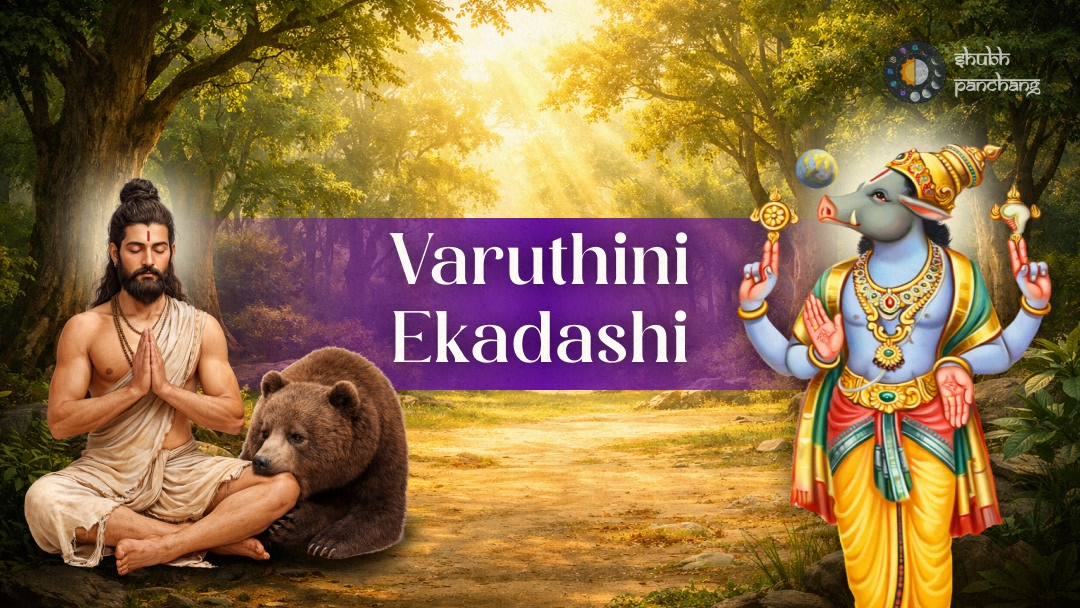
I often find that abstract concepts of 'sin' and 'merit' are hard to grasp until you hear a story that hits home. The Varuthini Ekadashi Vratkatha tells the tale of King Mandhata, a powerful ruler who found himself in a state of deep suffering because of a past mistake. While meditating in a forest, a wild bear began to chew on his leg. Instead of lashing out in anger or pain, the King remained calm and prayed to Lord Vishnu. The Lord appeared and explained that this was the result of a misdeed from a previous life. To find relief and regain his lost glory, he was told to observe the Varuthini Ekadashi fast in Mathura.
It is a reminder that even the most powerful among us are subject to the laws of karma, but there is always a path to redemption.
After years of practice, I’ve seen people find immense solace in this story. It teaches us that no matter how deep the hole we’ve dug for ourselves, sincere devotion and the right timing—the right Muhurat—can help us climb back out.
The Spiritual Discipline of the Fast
Here’s the thing about fasting: it’s not just about what you aren't eating; it's about what you are feeding. On this day, we are feeding our spirit. The spiritual significance of this fast lies in self-discipline and repentance. I’ve noticed that when we consciously choose to step away from our daily indulgences, our minds become incredibly sharp. It’s a purification process. You start to see your patterns—where you’ve been unkind, where you’ve been lazy, or where you’ve lost focus. This Ekadashi is like a mirror. It asks us to look at our connection with the divine and strengthen it. It’s not just a ritual; it’s a detox for the soul. And honestly, isn't that what we all need in this chaotic modern life? A moment to stop, reflect, and realign our internal compass with the cosmic rhythm.
Rituals and Practices: A Step-by-Step Guide
If you're wondering how to actually observe this, don't worry—it’s simpler than it seems, though it requires genuine intent. What I suggest to my friends is to start the day before, on Dashami, by having a light, simple meal. On the day of the Ekadashi:
- Holy Bath (Snaan): Wake up before sunrise. If you can't reach a holy river, a few drops of Ganga Jal in your bath at home works wonders.
- Sankalp: Take a moment to state your intention. Why are you doing this? Clarity of purpose is half the battle.
- Worship: Offer yellow flowers, tulsi leaves, and seasonal fruits to Lord Vishnu. I find that lighting a ghee lamp creates an immediate shift in the room's energy.
- Chanting: The 'Om Namo Bhagavate Vasudevaya' mantra is incredibly potent on this day.
Interestingly, reading or listening to the Varuthini Ekadashi Vratkatha is considered a vital part of the ritual because it connects you to the historical and spiritual lineage of the fast.
The Essential Dos and Don’ts
Let’s talk about the practicalities, because I get asked this all the time: 'Can I have tea?' or 'Is a little bit of rice okay?' Traditionally, this is a strict fast. No grains, no honey, no onion, and no garlic. But beyond the plate, there are behavioral rules that are even more pivotal. I always say that a fast of the tongue is more important than a fast of the stomach. Avoid speaking ill of others, avoid anger, and stay away from lying. It sounds simple, but try doing it for 24 hours! You’ll realize how much 'mental noise' we usually generate. If you have health issues, partial fasting with fruits and milk is perfectly fine. The divine cares more about your heart than your hunger pangs. Just try to keep your environment peaceful and your thoughts focused on gratitude.
Beyond the Fast: The Importance of Dwadashi
Closing the Loop
Wait until you discover that the most important part of the fast actually happens the next day. The 'Parana' or breaking of the fast on Dwadashi is a sacred ritual in itself. You shouldn't just wake up and grab a sandwich! The proper way is to offer food to someone in need or a Brahmin first. Charity (Daan) is the seal that completes your Vrat. I’ve found that the act of giving after a day of restraint feels incredibly grounding. It shifts your perspective from 'what I lack' to 'what I can share.' Check your local Panchang for the exact Parana timing, as breaking the fast at the wrong time can diminish the spiritual merits you’ve worked so hard for. It’s about respect—respecting the time, the tradition, and the discipline you’ve shown.
A Call to Righteous Living
At the end of the day, Varuthini Ekadashi is a beautiful reminder that we are not just floating aimlessly in the universe. We have tools—ancient, powerful tools—to protect ourselves and improve our lives. Whether you are looking for prosperity, peace of mind, or simply a way to reconnect with your heritage, this Ekadashi offers a clear path. Initially, I thought these traditions were just for my grandparents, but now I see them as essential for anyone trying to navigate the complexities of the 21st century. I challenge you to try it—even if it’s just for half a day. Feel the shift in your energy. Embrace the 'Cosmic Shield.' You might find that the protection you’ve been seeking was always just a prayer and a fast away.