


The Day the Sun Goes Dark: A Personal Reflection
Have you ever felt a sudden, inexplicable chill in the air as the bright afternoon sun begins to dim? I remember my first experience with a Solar Eclipse as a young student of Jyotish. It wasn't just the physical darkness that struck me; it was the profound silence that settled over everything. Even the birds stopped chirping, and the wind seemed to die down. It felt as if the universe itself was holding its breath. For years, people have looked at these events with a mix of awe and, let's be honest, a little bit of fear. But after decades of studying the Panchang and the movements of the Grahas, I’ve realized that an eclipse isn't a 'bad omen'—it’s a pivotal moment of cosmic reset. It’s like the universe hit the 'refresh' button. Initially, I thought these events were purely about astronomical alignment, but as I spent more time observing the energetic shifts in my clients and myself, I realized they are deeply transformative windows of opportunity. It’s a time when the celestial mechanics align to remind us of our place in the grand design. But what if I told you that the ancient stories we tell aren't just myths, but sophisticated metaphors for astronomical phenomena? Let's dive into why this event is so much more than just a shadow on the ground.
The Cosmic Dance: Science Behind the Shadow
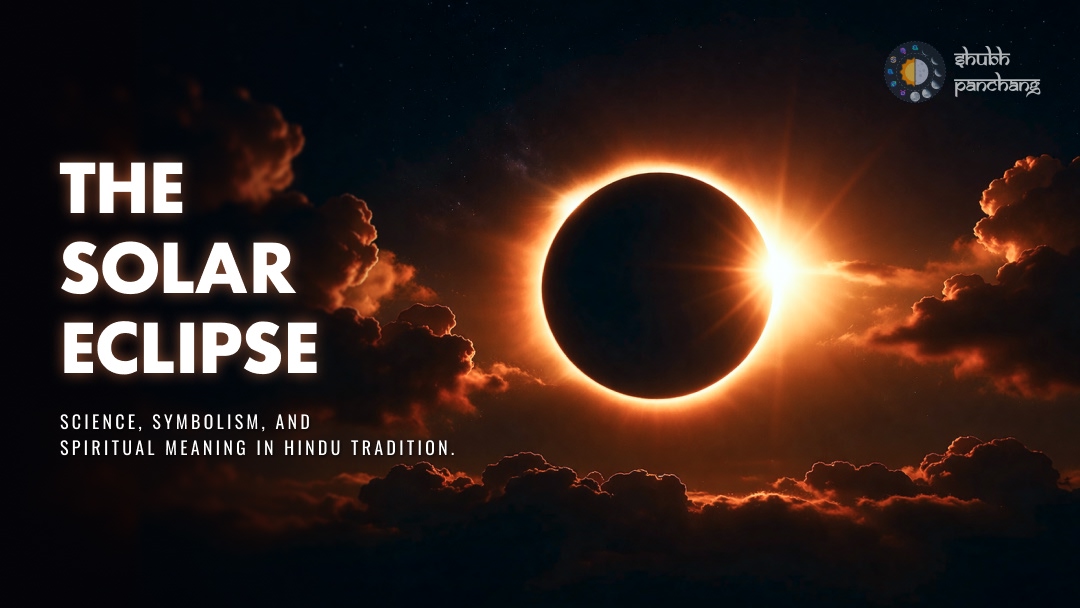
From a purely scientific perspective, the mechanics of a Eclipse are quite elegant. It occurs when the Moon, in its steady orbit, slides perfectly between the Earth and the Sun. For a few fleeting moments, it casts a shadow that turns day into a twilight-like dreamscape. Scientists talk about the umbra and penumbra, the path of totality, and the corona’s glow. It’s a masterclass in geometry. But in our tradition, we don’t just look at the sky with telescopes; we feel the shift in our Prana. Interestingly, while science explains 'how' it happens, our ancestors were deeply concerned with 'what it means' for our energetic well-being. Think of the Sun as our vital life force and the Moon as our emotional mind. When the Moon obscures the Sun, it symbolizes a moment where our inner emotions can overshadow our external vitality. It’s like a cosmic eclipse of the ego. What's fascinating is how the exact mathematical precision required for this to happen reflects a deeper order in the universe. This isn't just a random occurrence; it's a rhythmic, predictable dance that has been tracked by Vedic astronomers for millennia with incredible accuracy.
Rahu and Ketu: More Than Just Monsters
The story of the Samudra Manthan—the churning of the primeval ocean—is where we find the origins of Rahu and Ketu. After years of practice, I’ve come to see these 'nodes' as the most psychological points in astrology. In mythology, Rahu is the severed head of a demon who sought immortality, and Ketu is the remaining body. During an eclipse, Rahu or Ketu is said to 'swallow' the luminary. But let's look closer. These are the mathematical points where the Moon’s path intersects the ecliptic. They are shadow points, 'Chhaya Grahas.' This isn't superstition; it’s a symbolic representation of cosmic alignment. Rahu represents our unquenchable desires and the future, while Ketu represents our past karmas and spiritual liberation. When they align with the Sun, it’s a signal that our path is being recalibrated. I've noticed that during these times, people often face their deepest insecurities or hidden truths. It’s not a 'demon' attacking the sun; it’s our own shadow being brought to light. Here's the thing: we shouldn't fear these moments. Instead, we should see them as pivotal opportunities to confront what we’ve been avoiding. Isn't it poetic that a physical shadow can lead to such spiritual clarity?
The Energetic Shift: Why We Observe Sutak
One of the most common questions I get from busy professionals is, 'Why can't we eat during an eclipse?' Initially, I found it a bit restrictive too, but then I started observing the subtle changes in my own body. During the Sutak period—the time leading up to and during the eclipse—the atmosphere becomes charged with a different kind of energy. Think of it as a 'cosmic storm.' Just as you wouldn't want to be out in a physical storm without protection, we protect our internal digestive fire, or Agni, during this time. The gravitational pull and the sudden shift in light affect the fermentation processes in food and even the fluids in our bodies. By fasting, we allow our energy to be redirected from digestion to introspection. It’s a physical manifestation of a spiritual boundary.
In the silence of the fast, we find the strength of the spirit.
I often tell my friends that skipping a meal isn't a punishment; it's a way to keep your inner 'GPS' calibrated while the outer world goes through a temporary blackout. And believe me, the sense of lightness you feel afterward is well worth the short-term discipline.
The Silence Within: Meditation and Mantras
During the peak of a Solar Eclipse , the veil between the physical and spiritual worlds is said to be at its thinnest. This is why we emphasize meditation and the chanting of mantras. While the external world is in shadow, we turn our focus to the internal light. Chanting the Surya Gayatri mantra or even a simple 'Om' during this time is believed to be a thousand times more potent than on regular days. Why? Because you are working with the cosmic current rather than against it. I’ve seen people experience profound breakthroughs during eclipse meditations. It’s as if the temporary blockage of the Sun's rays allows the deeper, intuitive layers of the mind to emerge. But don't just take my word for it—try it. Sit in a quiet corner, close your eyes, and just observe your breath while the eclipse is happening. You might find that the 'darkness' outside leads to an incredible expansion inside. It's a time for Japa (repetition) and Dhyana (meditation), not for starting new business deals or traveling. Think of it as a mandatory spiritual spa day mandated by the heavens themselves.
Cleansing the Soul: Post-Eclipse Rituals
Once the Moon moves past the Sun and the light returns, there's a traditional rush to take a bath and clean the house. Is this just old-fashioned obsession with cleanliness? Not at all. It’s about clearing the 'energetic residue' of the eclipse. Just as a heavy rain leaves behind puddles that eventually dry up, an eclipse leaves behind a heavy, stagnant energy known as 'tamas.' Taking a bath with a pinch of sea salt or a few drops of Ganga Jal is a way to reset your aura. We also donate food or clothes to the needy after an eclipse. This act of Danam (charity) is crucial because it shifts our focus from the self-preservation of the eclipse period back to the communal spirit of the sun. It’s a beautiful way to ground yourself. After years of following these rituals, I can tell you that the feeling of fresh clothes and a clean home after an eclipse is incredibly liberating. It symbolizes that you have successfully navigated the shadow and have come out on the other side, renewed and ready for a fresh start.
Conclusion: The Harmony of Science and Soul
Ultimately, a Eclipse serves as a vivid reminder of the harmony between astronomical science and spiritual symbolism. It teaches us about impermanence—how even the brightest light can be obscured, but also how that darkness is only temporary. It’s a lesson in balance. We need the shadows to appreciate the light, and we need the silence to appreciate the song. As you look forward to the next solar event, don't just see it as a celestial anomaly to be photographed. See it as a cosmic invitation to look within, to fast from the noise of the world, and to meditate on your own inner sun. Will you be ready the next time the sky goes dark? I challenge you to treat the next eclipse not with fear, but with the reverence it deserves. After all, the universe is constantly communicating with us; we just have to learn how to listen. Use the Panchang as your cosmic GPS, and let these events guide you toward a more balanced and conscious life. The light always returns, but you are never quite the same after walking through the shadow.