


A Heavy Hush in the Cosmic Night
Have you ever stood under a crimson moon during a Moon Eclipse and felt a peculiar, heavy stillness? It is almost as if the universe is holding its breath. Over my decades of practicing Vedic astrology, I have sat through countless eclipses, and let me tell you—each one feels different. Some are quiet and reflective, others feel like a cosmic storm brewing just beneath the surface. Initially, I used to think of these events as just simple shadow-play, but experience has taught me they are pivotal moments for the soul. Think of an Eclipse as a cosmic reset button, a time when the ordinary laws of nature take a short, mysterious break to allow for deep inner work.
The Science of the Shadow Dance
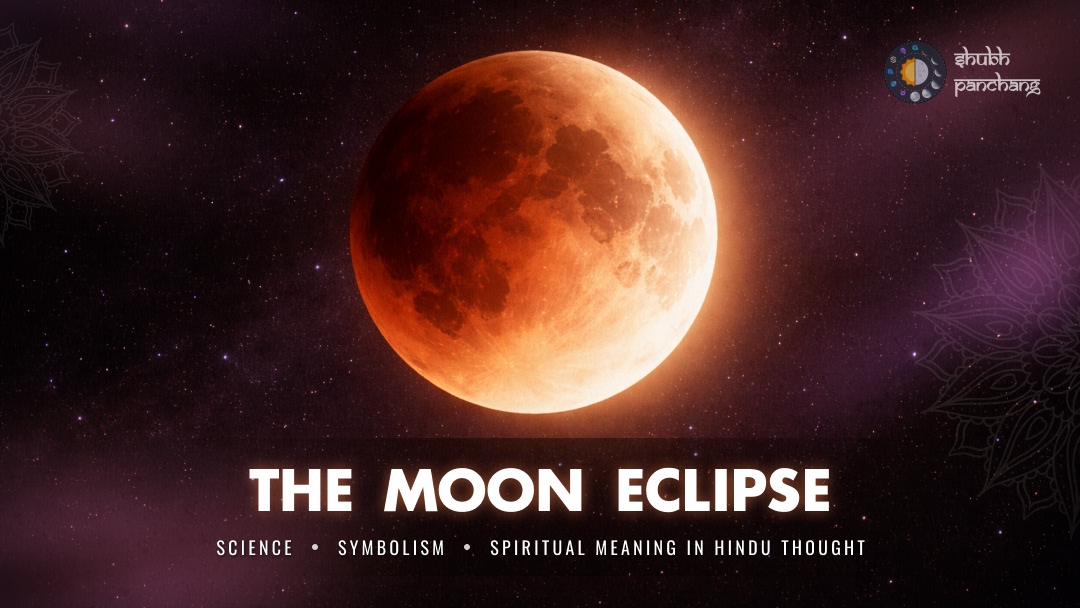
What is fascinating is how the physical and spiritual mirror each other so perfectly. From a scientific lens, we know that a lunar eclipse happens when our very own Earth slides right between the Sun and the Moon. It is a perfect alignment—astronomers call it syzygy. The Earth casts its long, dark shadow, the umbra, across the lunar surface. But instead of turning pitch black, the Moon often glows a deep, rusty red because our atmosphere bends sunlight around the Earth’s edges like a cosmic sunset. It is a breathtaking celestial dance, isn’t it? But for us in the Vedic tradition, that shadow isn't just physical; it is symbolic of the parts of ourselves we often hide from the light, brought to the surface for us to finally acknowledge.
Rahu Ketu and the Hunger for Light
Now, you might have heard the old stories about Rahu and Ketu, the shadow planets. In the Puranas, it is a tale of high drama—the churning of the ocean, the quest for Amrita, and a divine deception. Rahu, the severed head of a demon, tries to swallow the Moon out of vengeance for revealing his disguise. But here is the thing: these are not just folk tales. They are profound metaphors for the nodes where the Moon's path intersects the ecliptic. When Rahu 'swallows' the moon, it represents the temporary triumph of the shadow over our mind and emotions. But what if I told you this 'darkness' is actually a gift? It forces us to find the light within ourselves when the external moon—our emotional anchor—is temporarily obscured.
Why We Fast During the Sutak
I often get asked, 'Pandit ji, why can't we eat during these few hours?' It might sound like an archaic rule, but after years of practice, I see the logic clearly. If the Moon affects the tides of the massive oceans, do you not think it affects the water and fluids inside our own bodies? During a Moon Eclipse , the subtle energy of the environment shifts. We call the pre-eclipse period 'Sutak.' I have noticed that food cooked during an eclipse seems to lose its 'Prana' or vitality much faster. By fasting, we are essentially giving our digestive system a rest so our energy can be focused inward. It is not about religious punishment; it is about bio-rhythmic alignment with the universe.
The Power of Chanting in the Dark
Wait until you discover the power of chanting during these hours! The atmosphere becomes incredibly 'thin' and receptive. It is said in our Shastras that any mantra recited during an Eclipse is amplified a thousand-fold. Why? Because the Moon governs the 'Manas'—our mind. When the Moon is under pressure, our thoughts can become scattered or heavy. Chanting the Mahamrityunjaya mantra or the Gayatri mantra acts like an anchor in a choppy sea. It keeps your inner cosmic GPS locked on your higher self while the world outside goes through its shadow phase. I have seen clients find immense clarity by simply sitting in silence and repeating a seed mantra during the peak of the eclipse.
Ritual Cleansing and New Beginnings
Once the shadow passes and the Moon emerges bright and silver again, there is a beautiful tradition of taking a ritual bath. I always find this part so refreshing—it is like stepping out of a dusty room into the fresh morning air. We wash away the 'Grahana' energy and often make small donations (Daana) to those in need. This act of giving is a powerful way to acknowledge our interconnectedness. We recognize that even though we have just witnessed a temporary 'loss' of light, we can create our own light through kindness. It is the ultimate act of spiritual renewal, transforming a moment of darkness into an opportunity for collective merit.
The Harmony of Science and Soul
In the end, is an eclipse science or spirituality? I believe it is both, woven together like the threads of a beautiful silk saree. Science gives us the 'how,' but spirituality gives us the 'why' and the 'how to live it.' The Moon Eclipse reminds us that shadows are temporary, that growth often happens in the dark, and that the light always returns. So, the next time the moon begins to fade, do not just hide away in fear. Sit quietly, breathe, and witness the cosmic dance. What part of your own shadow is ready to be seen, accepted, and released into the light of your awareness?