





The Six-Fold Symphony of the Indian Ritu Chakra
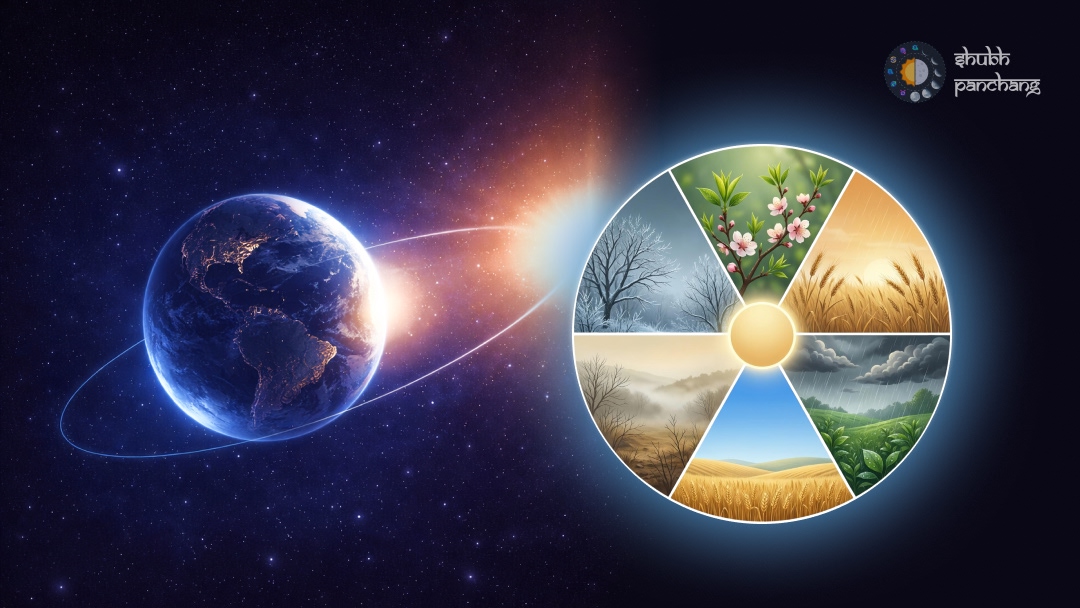
Have you ever stopped to wonder why your mood shifts so dramatically between a dusty June afternoon and a crisp November morning? I've spent years observing these cycles, and what I've discovered is that the West’s four-season model simply doesn't capture the nuanced heartbeat of our land. In India, we follow the Ritu Chakra, a magnificent six-season cycle that feels more like a living, breathing entity than a calendar. We start with Vasant (Spring), where nature wakes up with a flirtatious wink, followed by the intense tapas of Grishma (Summer). Then comes Varsha (Monsoon), the sky’s emotional release, leading into the golden clarity of Sharad (Autumn). But wait, there’s more—we have the cozy Hemant (Pre-winter) and the biting Shishir (Winter). Understanding the Indian Seasons isn't just about knowing when to carry an umbrella; it's about aligning your internal clock with the Earth’s agricultural pulse. I remember my grandmother telling me that each Ritu has its own ‘Rasa’ or flavor, and honestly, she was right. It’s a cosmic GPS for our daily lives.
Decoding the Science: The Earths Cosmic Tilt
Initially, I thought of solstices as just dates on a boring geography chart, but the science is actually quite poetic. Imagine the Earth as a slightly tipsy spinning top, tilted at about 23.5 degrees. As we orbit the Sun, this tilt means different parts of the world get varying amounts of 'solar love' at different times. The solstices are the extreme points of this dance. When the North Pole is tilted most towards the Sun, we hit the Summer Solstice , giving us the longest day and the shortest, most fleeting night. Conversely, when we tilt away, we descend into the Winter Solstice . It’s the shortest day, yes, but it’s also the pivot point where the light begins its slow, triumphant return. But what if I told you that these astronomical markers are the very reason our ancestors could predict harvest times and festive windows with such uncanny precision? It’s pure celestial mechanics meeting human survival.
The Winter Solstice: Embracing the Deepest Stillness
There is a specific kind of quiet that only comes with the Winter Solstice . In our Vedic tradition, this marks the beginning of the Sun’s journey into the northern hemisphere. After years of practice, I’ve noticed that this period is the ultimate time for introspection. It’s as if the universe is giving us a gentle nudge to slow down, look inward, and rest before the upcoming surge of growth. It’s the ‘Midnight of the Year.’ Interestingly, while the physical world seems dormant, the spiritual world is buzzing. This transition isn't just a cold day; it’s a pivotal moment of renewal. We often think of winter as an end, but in the eyes of a practitioner, it’s the fertile soil from which the next year’s intentions sprout. It’s a time to be like the seeds underground—quiet, gathering strength, and waiting for the first touch of the returning sun.
The Summer Solstice: When the Sun Claims Its Throne
On the flip side, the Summer Solstice is all about peak energy and outward expression. The sun is at its most potent, and the light lingers long into the evening, almost as if it’s reluctant to leave. What's fascinating is how this external abundance can sometimes feel overwhelming if we aren't centered. I’ve often advised my clients to use this maximum light to illuminate the dark corners of their own lives—projects they’ve ignored or habits they’ve hidden. It’s a season of 'Pitta' dominance in Ayurveda, where the fire element is roaring. While the Winter Solstice asks us to dream, the Summer Solstice demands that we do. It’s the time of year when the fruit is heavy on the branch and our own personal 'harvest' should be in full swing. Don't let this solar peak pass without acknowledging the sheer power of the light that sustains us.
Uttarayan: The Spiritual Dawn of the Soul
Wait until you discover the profound depth behind Makar Sankranti. While most people see it as a festival of kites and sesame sweets, it marks the beginning of Uttarayan—the northward movement of the Sun. In our culture, this is more than a direction; it’s a shift in consciousness. We believe that during Uttarayan, the 'gates of heaven' are open. It’s the transition from Dakshinayan (the southern path) to a path of light and clarity. I’ve always found it beautiful how we celebrate this by flying kites, physically reaching toward the ascending sun. It symbolizes our own aspirations rising above the mundane. But here’s the thing: it’s not just a religious ritual; it’s a psychological reset. We are symbolically leaving behind the 'night' of ignorance and stepping into the 'day' of wisdom. It’s a time when we feel a renewed surge of Prana, or life-force energy, coursing through our veins.
Living in Sync: Ayurvedic Wisdom and Seasonal Eating
After decades of looking at charts, I’ve realized that the best astrology is practiced in the kitchen. Our ancestors didn't just look at the stars; they looked at their plates. Each of the Indian Seasons dictates a specific diet to keep our Doshas in balance. During the cold Shishir and Hemant, we eat warming foods like ghee, ginger, and root vegetables to combat the 'Vata' and 'Kapha' chill. Come the scorching Grishma, we switch to cooling melons and cucumbers. It sounds simple, right? But in our modern, air-conditioned world, we’ve lost this touch. We eat mangoes in winter and heavy meats in summer, and then we wonder why we feel sluggish. Following the Ritu Charya (seasonal routine) is like swimming with the current instead of against it. It’s about recognizing that we are not separate from nature; we are nature. When the Earth breathes out, we breathe out. When she rests, we should too.
Conclusion: Becoming the Harmony of the Heavens
So, what’s the takeaway from all this cosmic movement? Whether it’s the deep stillness of the Winter Solstice or the blazing glory of the Summer Solstice , these cycles remind us that change is the only constant. Our Indian seasonal system is a profound bridge between the cold facts of astronomy and the warm reality of human emotion. By paying attention to the Ritu Chakra, we stop fighting the passage of time and start dancing with it. I challenge you this week: take a moment to step outside, feel the air, and look at the Sun. Where are you in your own seasonal journey? Are you in a time of resting, or a time of blooming? Remember, you are a part of this grand celestial design. When you align your lifestyle with these rhythms, life doesn't just get easier—it gets more beautiful. Let the Sun be your guide, and the seasons be your song.