


Govardhan Puja (Annakut) 2026: date and quick answer
Govardhan Puja, also called Annakut or Annakutotsav, falls on Tuesday, November 10, 2026. It is observed on Kartik Shukla Pratipada, right after Diwali, and the puja is done in the morning of that Pratipada. The tithi can start and end in the afternoon on two different days, so the date that counts is the one on which Pratipada is present at your city's sunrise. For a suitable time in your city, see the Choghadiya page.
The same morning is also the start of the Gujarati new year, so Annakut and Bestu Varas (Gujarati New Year) fall together. Many families go to the temple for Annakut darshan first and then greet relatives with Saal Mubarak.
The story of Krishna and Govardhan Hill
According to the Bhagavat Purana, the people of Gokul used to hold a big yearly worship for Indra, the god of rain. Young Krishna asked them to worship Govardhan Hill instead, since the hill gave their cows grass and the village its water and shelter. The villagers agreed.
Indra took offence and sent torrential rain over Gokul. Krishna lifted Govardhan Hill on the little finger of his left hand, and everyone, with their cattle, took shelter beneath it. After several days Indra's pride gave way and the rain stopped. Annakut is remembered as the thanksgiving for that protection, and the hill is worshipped as a symbol of nature that feeds us.
What is Annakut?
The word comes from anna (food) and kut (a heap or mountain). Annakut is a mountain of freshly cooked vegetarian dishes, such as sweets, farsan, vegetables, kadhi and rice, arranged before the deity as bhog and later shared as prasad. It is closely linked with Chhappan Bhog, the offering of 56 dishes to Krishna.
Many temples hold a grand Annakut on this day, including Krishna temples, Swaminarayan temples and ISKCON centres, and the arrangement is often opened for darshan through the day. Scale and customs differ from one temple and sampradaya to another, so check your local temple for its darshan timings.
How to do Govardhan Puja at home
Customs vary by family and region. A simple home puja usually goes like this.
- Wake early, bathe and clean the house. Draw a rangoli at the entrance and light a diya.
- Make a small Govardhan hill or a figure of Govardhan Nath from cow dung (many families use clay or a picture if cow dung is not available) in the courtyard or on a clean platform.
- Decorate it with flowers and place small diyas around it. Some families also add small figures of cows and Gwalas.
- Offer roli, akshat (rice), incense, flowers and a lamp.
- Place the cooked dishes before it as bhog, along with a tulsi leaf if you follow that practice.
- Do parikrama (a walk around the figure), chant or sing Krishna bhajans, and finish with aarti.
- Worship cows if you can, and give them some food. Then share the bhog as prasad with the family and neighbours.
What to offer
- Sweets such as laddu, halwa, kheer, shrikhand and other mithai.
- Farsan and snacks such as puri, kachori, mathiya and chorafali.
- Several seasonal vegetables, often cooked together, with kadhi, dal and rice.
- Milk products such as curd, butter and makhan mishri, which are dear to Krishna.
- Fruits and a tulsi leaf. All food is traditionally pure vegetarian, and many families avoid onion and garlic on this day.
Names in different regions
The same day is celebrated differently across India. In Maharashtra it is Bali Pratipada, also known as Padwa, when King Bali is remembered and husbands and wives exchange gifts in many families. In Gujarat it is Bestu Varas, the Gujarati new year. In Mathura, Vrindavan and Braj, it is Govardhan Puja at its grandest, and devotees walk the Govardhan parikrama. Names and customs differ, but the day is always Kartik Shukla Pratipada.
Where it fits in the Diwali days
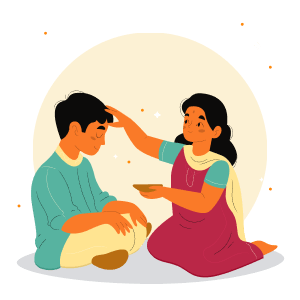
Annakut follows Diwali and the Lakshmi puja on the new moon night, which in Gujarati business families is also the time of Sharda Pujan (chopda pujan). Shops usually reopen on Laabh Pancham, and the sister's festival Bhai Dooj comes after Annakut. Check the individual pages for your year's dates.
Practical tips for the day
Plan the morning ahead, because the puja is meant to be done early on Pratipada. Prepare the dishes fresh, keep a little of each aside for the bhog before anyone eats, and avoid tasting during cooking if your family follows that rule. If you plan to see the Annakut darshan at a temple, expect crowds and check the opening hours in advance. Children usually enjoy this festival most, so it is a good day to tell them the story of Krishna and Govardhan in simple words and let them help decorate the small hill with flowers.
The lesson many people take from the katha is simple: look after the hills, rivers, cattle and fields that feed us, and do not let pride in wealth or power make us forget them.
Why Annakut matters
At heart, Annakut is about gratitude and sharing. It reminds us to thank nature, cattle and the land for our food, and to put the first share before God rather than ourselves. The food is distributed to everyone, so the day is also one of community seva. Whether you visit a temple or make a small Govardhan at home, offer with a quiet heart, and for the best time of the day look up the Choghadiya for your city.
Diwali Festival Days: Dhanteras to Labh Pancham
- Dhanteras: gold buying, Dhanvantari and Lakshmi-Kuber puja
- Kali Chaudas / Narak Chaturdashi: Choti Diwali, Kali puja and abhyang snan
- Diwali: Lakshmi Puja on Amavasya night
- Sharda Pujan (Chopda Pujan): new account books on Diwali night
- Govardhan Puja (Annakut): Kartik Shukla Pratipada
- Gujarati New Year (Bestu Varas): same day as Annakut
- Bhai Dooj: tilak for brothers on Kartik Shukla Dwitiya
- Labh Pancham: shops reopen on Kartik Shukla Panchami